Friday, August 18, 2006

Trailer logline frenzy

The Apple movie trailers page just went update crazy, adding 25 trailers in new films in the past three days. Sometimes you watch a trailer and get a gut feeling a film is going to suck like a black hole. Other times, the trailer will give that movie bounce and sparkle far beyond what you'll find in the finished feature. But if trailer creation is an art, writing loglines is an even harder nut to crack.

The logline is usually a single sentence that descrbes a film, its central characters and what's at stake. It has to summarise and entice, excite and encapsulate. Frankly, it's a bit of a bugger to get right. Anyway, here's a sampling of loglines for films that have just had their trailers posted online. On the basis of these three loglines, which of the films described are you in a rush to see at the cinema?
In Lucky You, a professional poker player (Eric Bana) gets a lesson in life from a struggling singer (Drew Barrymore) as he collides with his estranged father (Robert Duvall) at the World Series of Poker in Las Vegas.

In Sleeping Dogs Lie, Amy is a seemingly normal young girl, adored by her parents and golden-boy fiance. Her future looks bright until her fiance suggests they tell each other their darkest secrets…things they have never told anyone. When Amy finally relents and reveals her secret, everything falls apart.

In Sherrybaby, Sherry Swanson (Maggie Gyllenhaal) begins her first day of freedom, clean and sober, three years after entering prison for robbery as a 19-year-old heroin addict. A model prisoner who has undergone personal transformation, she immediately sets out to regain custody of her young daughter Alexis (Ryan Simpkins).

The trailer for Lucky You makes it look like The Colour of Money with poker substituting for pool, while Sherrybaby screams Oscar nomination from every frame. Sleeping Dogs Lie is a romantic comedy, but the trailer seems to be hinting it's a comedy about, well, bestiality. Oh yeah, that'll pack 'em in at the multiplex. Just a shame the film title Must Love Dogs was already taken...

Show Them the Funny

BBC Radio 4 is running a competition to find 10 funny writers for a new sketch show, called Recorded for Training Purposes. The winners will join a writers' academy to be mentored by leading comedy writers, and have work broadcast early in 2007. What's the entry criteria? You've got to be over 17 and have never had a commission on national radio. If you want to find out more, go here.

Thursday, August 17, 2006

Are you a mentor? Or a mentee?

Yesterday was induction day for the Scottish Book Trust's words@work mentoring project. It's the third year the scheme has been run, offering writers are various stages in their careers the chance to be mentored for a nine-month period while they work on a specific project. Among the new intake are a poet and short story writer working on a novel, a writer and illustrator of books for children looking to move her target audience up an age band, a poet wanting to focus on radio drama, a novelist seeking help with a new book, another novelist wanting to finish her first novel and a trio would-be TV drama screenwriters. No prizes for guessing where I fit in there.

I can't talk too much about where I'm going with my project, as confidentiality agreements and boundaries have to be fixed, but am excited by opportunity to be mentored by a working screenwriter. Much as I value all that I'm learning and experiencing on my MA Screenwriting course, the size of the class and its juxtaposition of full-timers with part-timers often precludes the chance of more focused tutoring. But by lunchtime yesterday I realised I would have to make some sacrifices to get the best out of the mentoring experience.

For a start, I suspect my income's going to take another hit. The MA is already a double-drain on finances, partly through the costs associated with the degree but mostly through the loss of time to do revenue-earning work. Participating in the mentoring project will also eat into earning time, but it's a sacrifice worth making. This is just nine months - I've got the rest of my working life in which to make money. [I suspect they'll be prising the keyboard from my dead fingers when the time comes, assuming we're not able to download stories directly from the cerebral cortex by that point.]

I suspect some of my spare time activities will also have to go for the next nine months. I enjoy amateur dramatics, but it swallows a huge amount of my spare time. Two rehearsals a week of several hours each, plus learning lines - and that's when I'm just acting. I certainly won't be directing any more shows until this time next year. If acting swallows spare time, directing is akin to having a black hole hovering beside your waking hours. So, no more directing for a while and probably no more acting once my current committments are met.

Time to get serious and focus on making my dreams of being a screenwriter into a viable career. Speaking of focus, I need to get back to http://thrillpoweroverload.blogspot.com/. I'm supposed to producing 6000 words a day and the last two days only added 3000 words in total. I've got some catching up to do!

New Dante cover artist revealed!

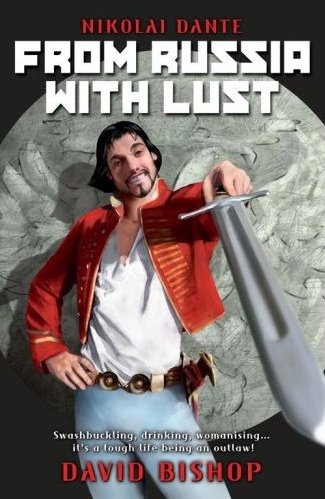
A few days back I posted the cover for my Nikolai Dante omnibus, From Russia With Lust. The book's being published next February and collects all three of my Black Flame romps featuring the Russian rogue under one cover. At the time, I wondered who the artist was, not recognising their style. The answer came courtesy of the comments section on this blog. Step forward Rachael Haupt. You can see more of her art by going here.

Wednesday, August 16, 2006

In cyberspace, no-one can hear you stream

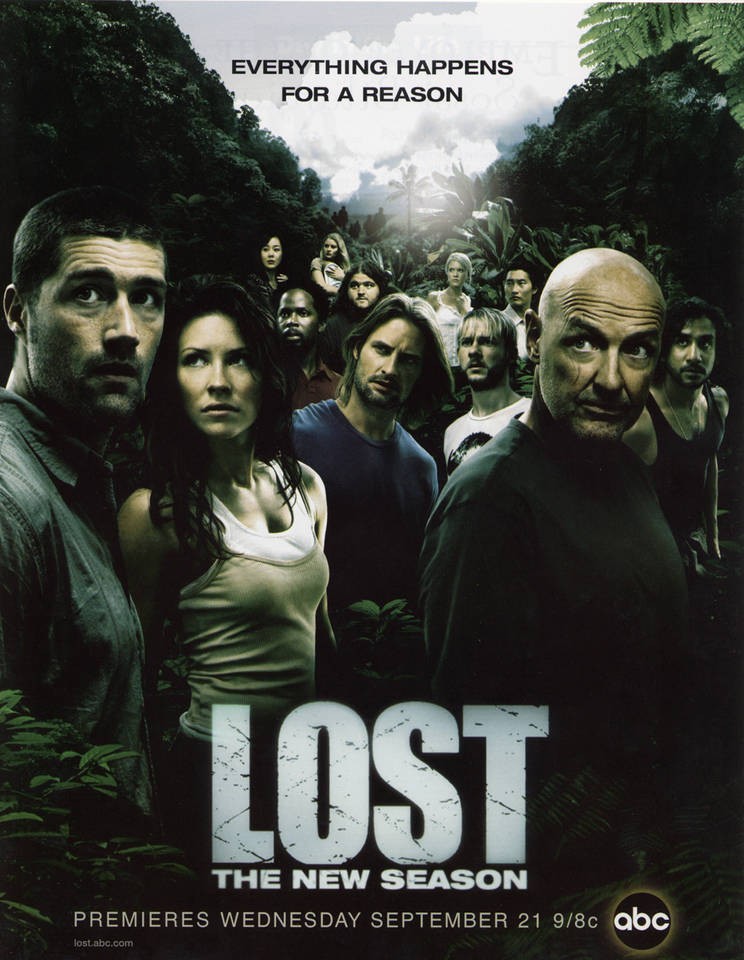
Variety reports that come September, American network CBS will streaming episodes of its top TV dramas online the day after they're broadcast - for free. That's all three strands of CSI, plus NCIS and Numbers too. [A quick digression: what's with all the initials in US TV dramas? Hell, even Brit shows like Spooks become MI5 when they cross the Atlantic, although that is mostly due to understandable cultural sensitivity.] CBS is following the example of ABC [see, more initials!] which streamed Lost, Desperate Housewives, Alias and Commander in Chief as an experiment for two months last spring.

Back in the UK, Channel 4 is committed to streaming and the rapid uptake of broadband makes this possible in a way that didn't exist three years ago. The BBC is experimenting with streaming broadcast footage live to air. It can't be long before we'll be able to watch shows online and on-demand, can it? The sooner the better, as far as I'm concerned. Reception round here sucks so badly, I only watch TV on DVD these days, particularly American shows. Why wait 22 weeks to see a whole season in tiny slices, further segmented by infuriating, badly inserted ad breaks? Import the Region 1 box set, that's my policy. The bootleg practise of torrent file sharing will soon by made redundant by online streaming.

Of course, there's one big, unanswered question that arises from this - what effect will it have on the BBC's licence fee? The corporation charges everyone in Britain who uses a TV, ploughing that money into programme making and other creative endeavours. But if we download Tv to our iPod or computer, does that mean they too are televisions?

Tuesday, August 15, 2006

Writing for the BBC Q&A report

Consider this your Wednesday blog entry, delivered a few hours early. I'll be busy getting inducted into the world of mentors and mentees tomorrow, so offer you this entra-long posting to fill the gap. The Q & A: Writing for the BBC event at Edinburgh's Filmhouse today was, in reality, a Writing for River City event. Suits me, as the show represents the best hope for new, wannabe TV drama writers based in Scotland.

I've been watching the show faithfully for six months now and am loving it. I get the impression a lot of people sneer at River City, but the show certainly doesn't deserve it. If you base your opinion of the show on a few episodes from when River City was first broadcast back in 2002, I suggest giving it another try - you might well be surprised how far it has come. My favourite new character has to be manipulative minx Iona [pictured], who's trouble with a capital T.

As for the Q & A report, you'll have to forgive any misspellings, faulty grammer or confusions in what follows. I was typing furiously on my iBook and struggled to keep up. Any mistakes are mine, all mine - sorry. Anyway, enough of my witterings: here comes the juice.
Q & A: Writing for the BBC – August 15, 2006 – The Filmhouse, Edinburgh

The 90-minute session was moderated by Katherine Beacon [KB hereafter], a project director with BBC North’s branch of the Writer’ Room [WR]. She was joined by River City [RC] executive producer Sandra MacIver [SM] and frequent RC writer Sergio Casci [SC]. The Head of Television Drama for BBC Scotland, Anne Mensah [AM], was in the audience and did contribute a couple of answers when asked. A seven-minute show reel of RC was screened, to give a flavour of it to those who don’t regularly watch it, before Katherine, Sandra and Sergio talked and took questions.

KB: Writers’ Room gets 10,000 unsolicited scripts a year. It accepts postal submissions only.

A second series of The Chase is being commissioned for 2007 and there will be an opportunity coming on the Writers’ Room related to that – watch the website!

The Writers’ Academy will be happening again in 2007. 25 writers will be invited to an intensive workshop, 16 carried on from there and finally 8 appointed to the academy, with guaranteed commissions for broadcast TV drama from that.

SM: River City is BBC Scotland’s flagship drama. It has a regular audience of 500,000 people, very good in Scotland. We’re very happy how the show is going. Next year will be our fifth year of production. We’re hugely ambitious for the show and where it’s going. All shows worked differently. I want to talk about how RC works, and opportunities for new writers on RC.

We have 14 writers in our team, and we commission eight episodes a month. RC has four storyliners. Writers in our team have an episode on air every other month, if not every month. The show has lots of long-term arcs – some run for two months, some will run for a year or two. The big, broad arcs are always shaped, but each month we have the finite job of shaping the next eight episodes.

We shoot 4 episodes in ten days, very fast. We write the strands for a block of eight episodes, before the storyliners prepare scene by scenes for the writers. That’s very important to establish the through-line of the stories.

We believe that liberates our writers, they’re don’t need to be scrambling about to develop the strands to hit the continuity beats in each story. What we’re looking for from our writers is fantastic dialogue. We’re very bold with our stories - I don’t believe there is a story we can tell. RC is a very character driven show, it’s all about the truth of the characters.

The structure we work to allows us to take risks and nurture new writing, because the system is so disciplined. We want to encourage new talents, that’s certainly been the case for the last two to three years.

We have a new writers’ workshop once a year, it’s a big beast to run. The next workshop will run in December this year. RC receives a huge amount of unsolicited material. We now have someone to go through that material, to work with us on that.

Anyone who wants to be part of the workshop needs to submit a piece of original writing and a critique of the show. Tell us what you feel about the show, the characters and the stories – all on a sheet on A4. Tell us your sense of the show.

If that is well received, we would give you some scenes to write, just a handful. That shows us what your dialogue is like. From that we invite people to attend a workshop. At workshops we have 15-20 writers, we could possibly cope with more.

There we take you through the rigours of RC, the deadlines that you have to hit, how the structure works. Everybody at the workshop writes a script for the same episode, from a supplied scene-by-scene document. They have one week to deliver first draft, just like the writer commissioned to script the actual episode.

When a commissioned writer delivers their first draft, they’ll get notes back and have a week to deliver their second draft. The process is repeated for the third draft – we only do three drafts. The stories are locked off before they go out to the writers. Our motto is story is king. We don’t develop story as writers write their episodes.

[Anyone in the UK outside Scotland can watch RC on 971 on Sky. The BBC Scotland feed can also be accessed via digital, by scrolling through the regional feeds. RC is also available on-demand via NTL.]

SM: We’re committed to new writers and developing new talent in Scotland – writing, directing, across the board. There are nearly 200 people in Dumbarton for half of the year, a huge team. About 120 the rest of the year when single banking. Double banking, we shoot 8 episdes in 15 days, two crews shooting simultaneously.

You need to be watching the show. Some of our writers are London or based in Ireland, but most are based in Scotland.

Sergio Casci [SC]: Started as a broadcast journalist in BBC Scotland. Didn’t like getting the facts right, stressed him. Sent to Italy to help with a documentary about Scots Italians and meet a director who got him into writing drama.

Sergio wrote the “worst screenplay imaginable”. But he carried on, writing short films and some radio drama, including a serial for Women’s Hour. That whetted his appetite for continuing drama. Chose to quit journalism for drama writing, and all his work promptly dried up.

Was involved with RC at the very beginning, wrote episodes 17 & 18 – didn’t enjoy it. A couple of years later Sandra MacIver came on board as executive producer and invited him back.

For people who are professional writers, the single best thing for creativity is discipline - the more somebody imposes that on you, the more creative you can be.

From the moment the writer is commissioned, there is only one month until you’re at director’s draft – there’s no time or margin for error.

On RC it’s about making the characters and the dialogue sing. I’ve never worked on a show that gives me so much freedom by giving you so much structure.

SM: There are four storyliners, two producers and me. We commission on a Friday morning. Then the seven of us will sit down and map out the next eight episodes. The storyliners beat out the stories. We have 6-8 strands across 8 episodes, 28-32 beats per episode. Once we’ve signed off the scene-by-scenes, they go to the writers.

All the writers have different styles and the scene-by-scenes are tailored for specific writers. The writer gets their scene-by-scenes on Wednesday night (or Thursday!]. We have a writers’ forum on Friday to sort out any problems. Sometimes they’ll get their own way, sometimes they won’t.

SC: ON RC, you’re all writing the same movie, so to speak. It’s about the characters, the stories, and the truth of the characters. It’s fundamental to how RC works. People feel a tremendous sense of ownership of their language, their city, their country. If you make dialogue too melodramatic or misuse the language, the audience will know.

SM: The character of Scarlett is such a good example. Her grabbing Andrew by the balls was so in character, so true to the character. You wouldn’t get away with that on most pre-watershed shows, but it was true to her character on RC.

SC: Very little cleverness gets under the wire at RC. Characters will always be true to themselves. If Bob isn’t chirpy, there’s a very good reason. When you’re true to your characters, it gives the series tremendous health. Living in Glasgow, I’ll hear a local phrase and work it into a script. “It smells like a busload of wet students” was one I overheard – and that made it on screen. That’s a tremendous source of satisfaction.

SM: You don’t have to write local dialect for RC scripts, just plain English. The actors will change the script to reflect their character’s particular accent.

We let the story drive the episode, we won’t force something into the cliffhanger just to get a balance of light and shade in.

Sample scripts - we want dialogue, not prose. A short film script is fine. If that seems promising, we’ll ask for sample RC scenes. If you get to the workshop, you’ll be asked to write an episode – one that’s close to transmission. Hopefully you’ll get a commission off the back of that.

Four or five of our core writers came through that workshop process. We have some very established writers on our team, but we’re committed to encouraging new writers. Send your unsolicited material to tahira.iqbal@bbc.co.uk

Be patient – we’re double-banking until the end of October, and programme making takes priority. The producers and SM like to be involved with that process, choosing people to go forward to the workshop.

SM: We haven’t supplied sample scripts of RC in the past. You’re much better to watch the show for at least six weeks to get a better sense of the characters, etc.

SC: RC uses Final Draft, but a very specific layout within that.

SM: We’ve a very loyal young audience, and an awful lot of men watching the show, despite the fact they say they don’t watch soap. Our message board is amazing!

SC: His mother was in hospital, said it went dead when RC was on – no doctors, no nurses, no porters to be found.

The immediacy of continuing drama is fantastic. You can’t change characters to suit yourself, and that’s a good discipline. I feel you need to have learned to write before you go on RC, but it’s a great place to develop. I have a tendency to overwrite and it shows up some much more on RC. Working on RC - you have to be continually match fit, otherwise it won’t be up to the standard required.

SM: You can tell any story and there is no end, there’s no limits put on you.

We storyline in house, but we also have blue sky meetings with our writers, inviting them to be involved with the story development process. Those ideas have to be for at least several months into the future of the show.

SC: Because RC is so well organised, you can spend time on the fun bit – dialogue. You have time to do other work as well. Anyone who is half competent can produce a facsimile of RC – one that looks, tastes and smell like RC. You can just join the dots…

SM: …but we want so much more than that. It is easy to write a bad RC episode.

SC: Producers want something a little bit unexpected. I always try to have something in a script that’s a surprise - a phrase, a moment of interaction, something that goes beyond what I’m given in the scene-by-scenes. I try to add value into every scene.

SM: Some of our writers will step out of the commissioning cycle and they can step back in again. That’s good, that’s healthy. People can take on too much. We don’t drop somebody if they step off the bus for a month.

Your critique: firstly, it shows you’re watching the show, that you have a sense of our stories and our characters. You have to be passionate about a show to write well for it. RC is not for everybody or for all writers.

SC: It has to be fun. If I’m not enjoying an episode as I’m writing it, that’s a signal to me that I’m going wrong, that I need to rethink.

Sandra: There are script editing internship opportunities via BBC Broadcasting House. At RC we have four script editors, and often a trainee. We negotiate funding for that trainee on a regular basis. Keep in touch about that. There’s a reasonably high turnaround in that area, because script editors want to be writers or producers. One of our script editors is leaving next week to become a writer.

AM: There is a push within the BBC to identify teen brands, teen audiences and get them on board. If you are based in Scotland, come and talk to us – we make a lot of drama, there are opportunities.

SM: We’ve got about 30 characters in the show, 15-16 of which are regulars. The editorial team decides whether to phase out characters. There’s always a real sense of consensus about who should stay and who should go. It takes a while for us to make a shout about whether a character should go.

Some characters are introduced to facilitate a story. DCI Hunter was originally just a one-episode character. But if the actor makes an impact, if their character makes an impact, they grow from that into regulars.

SC: Lots of different writers champion different characters, they’ll protect them.

SM: There’s no talk of RC going up to three episodes a week, despite what the papers might say!

Ends.

How long until Judge Dredd is reality?

Headline on the front page of the Guardian newspaper this morning sent a shiver down my spine. For nearly thirty years British science fiction comic 2000 AD has feature the adventures of future lawman Judge Dredd. In his world, the Judges are the ultimate cop - judge, jury and executioner, all in one. They are empowered to dispense instant justice.

Back when Dredd first appeared in 1977, his stories were set in 2099, 122 years in the future. The anti-hero seemed like the stuff of science fiction, his brutal style of law enforcement could never happen here, right? Here's the front page lead on today's Guardian newspaper: POLICE WANT POWERS OF 'INSTANT JUSTICE'.

Read it and weep, creeps...

Doctor Who vs Cross Roads mash-up

Busy, busy, busy

Got 3000 words to write this morning before racing north to Edinburgh for the BBC Q&A for new writers at the Filmhouse this afternoon. Speakers include the BBC's Creative Director of New Writing Kate Rowland [pictured] and River City executive producer Sandra MacIver. I plan to take copious notes and will hopefully share some of those here in the next few days. I'd say tomorrow, but I've got enough deadlines to contend with at the moment without inventing new ones. Besides, tomorrow is induction day for the Scottish Book Trust's words@work mentoring scheme - and that's an all-day extravaganza of stuff. And, quite possibly, things.

So, err, talk amongst yourselves until I get back.

Monday, August 14, 2006

Exclusive: unseen Frazer Irving art


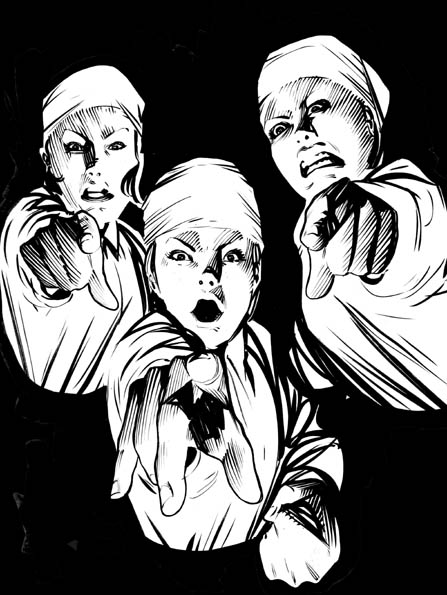
Frazer Irving is among the hottest talents in a new generation of British artists currently making a name for themselves in American comics. Inevitably, he got noticed thanks to some stellar work for 2000 AD. I wish I could claim to have discovered him, but it was my then assistant Andy Diggle who recognised Frazer's talents for what they were, not me. Anyway, after I'd left 2000 AD I commissioned Frazer for an illustrationn to appear on the poster for a local am-dram production of Arthur Miller's classic play, The Crucible. Above is the stunning image he produced. If you like the look of that, check out Frazer's website and blog by going here...

Sunday, August 13, 2006

Recommended: Rhodri Marsden

Journalist and musician Rhodri Marsden is currently on tour with Scritti Politti. He's also a rather droll soul, judging by his wonderfully witty online diary. It's well worth a read, so check it out here.

Friday, August 11, 2006

Now That's What I Call Elating

Get my groove well and truly on today. Progressed my current project [TPO book, see below] by more than 7000 words in a day, getting me back on schedule and nudging past the halfway point at the same time. Pleasantly surprised to get the application form for TAPS' scriipt editing workshop in my email inbox. As whispers had suggested, the workshop will probably be some time in October - a bit of a nightmare month for me. But I'll almost certainly apply and cross my fingers. A clash of dates will be utterly irrelevant if I don't get selected, but I'd be well irked if I was fortunate to be chosen and events elsewhere put the kibosh on it. Well irked!

In other news, I am now officially a member of the Writers' Guild of Great Britain. My membership card turned up today, along with a pile of papers I haven't had a chance to read yet [7000 words in a day will have that effect, natch]. I was kind of hoping for a secret decoder ring that would guarantee work as a professional broadcast writer, but maybe that comes later. Anyway, I'm kosher and can hold my head up high as I waft into BAFTA next month for the Guild's Interactive Writing event. Assuming my flight isn't cancelled down to London isn't cancelled by more madness and mayhem.

Sigh. What times we live in, eh?

Progress on some fronts; more to come?

August has turned into a furious slog to complete my revised, expanded and updated edition of THRILL-POWER OVERLOAD: The Official History of 2000 AD, the Galaxy's Greatest Comic. You can watch how that's going by visiting the TPO work in progress blog here. Somewhat insanely, I've set myself a target for each day of 6000 words. I can achieve that with fiction when I know my characters, have a strong and detailed plotline, and a pressing deadline to focus the attention. Non-fiction is much harder, simpler because it needs to be the truth - you can't just make some shit up, people expect accuracy. Juggling transcripts of 50 interviews and a vast pile of reference material does not make for a quick write. But when it all gets too much, I simply have to remind myself how much I want to see all this work collected under one cover. I've been involved with 2000 AD to one extent or another for 16 years now. This is no time to give in to laziness.

Of course, my 6000 words a day target will get well and truly shot to shit next week. Finally secured my ticket for the BBC Drama Q&A at Edinburgh's Filmhouse next Tuesday afternoon. Among the speakers will be Sandra MacIver, executive producer of the BBC Scotland soap River City. It'll be interesting to hear what she has to say about openings for wannabe scribes at the show. According to the blurb for the event, "there will be an announcement about several forthcoming TV writing opportunities open to new writers", so I'll be all ears for that.

Wednesday is induction day for the Scottish Book Trust's words@work mentoring scheme. I'm fortunate enough to be one of those chosen to take part in the project, and will spend the next nine months being mentored by Edinburgh-based writer-director Adrian Mead, as will two other writers. Wednesday is all about establishing the ground rules, getting to know each other and plotting the way forward. It's an exciting opportunity for me, and feels like another increment of progress on my goal to become a screenwriter. I got my first broadcast credit in June, thanks to BBC Radio 4. My aim for the next nine months is getting my first TV drama commission.

In the meantime, it's back to TPO for me. Didn't quite finish my 6000 words yesterday, got another 6000 to do today and I'm losing at least a day and a half to my Edinburgh excursions next week. But I'm almost at the halfway point on my 2000 AD book. Once I pass 60,000 words, the second half shouldn't seem so daunting...

Thursday, August 10, 2006

Groovy New York photos

Stumbled across the blog of New Yorker Steve Reed, who posts up lots of groovy photos of his city. You can see more by going here.

Andrew Orton is a fecking genius

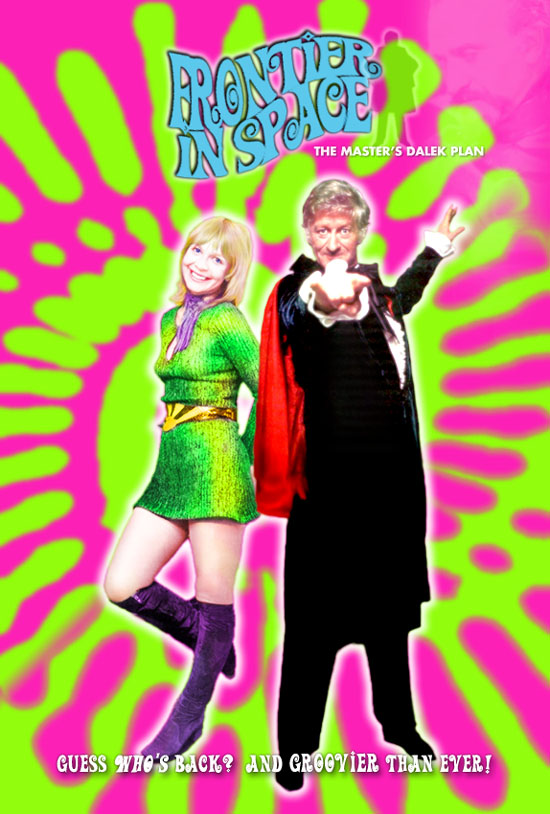
Andrew Orton is a graphic designer. Just for fun, he started creating mock-ups of movie posters for various Doctor Who stories, from both the new and old series. You can see them for yourselves by going here, but above and below is a selection of my favourites - enjoy!


Fiends of the Eastern Front: omnibus cover

Amazon.co.uk has posted the cover for my Fiends of the Eastern Front omnibus, coming from publisher Black Flame next February. The book collects the trilogy of novels inspired by the classic 2000 AD serial about vampires in World War II. Can't wait to get my hands on a copy. Find out more by going here.

From Russia With Lust cover revealed

Amazon.co.uk has posted a cover for my Nikolai Dante omnibus, due from publisher Black Flame in February. My, what a big weapon the Russian rogue is holding. He'll have somebody's eye out with that, if he's not careful. Insert your own double entrende here [fnaar]. Click here to find out more about this big, throbbing thriller, etc.

Wednesday, August 09, 2006

More on montages: eyedropper of doom

Hollywood screenwriter John August also has a handy bit about montage formats for screenplays on his site. Being a bear of very little brain, I managed to completely misinterpret the following:-
INT. MARY’S HOUSE - VARIOUS ROOMS

MONTAGE as Mary chases after the dog, trying to put in the eyedrops. Every time she has him cornered, he manages to escape, ducking under the coffee table or vaulting over the bed.
In my addled brain, I got this image of Mary chasing after the dog while trying to put eyedrops in her own eyes. Do one thing at the time, I thought, don't cripple yourself by multi-tasking! Then I realised she was probably trying to put the drops in the dog's eyes.

Like I said, a bear of very little brain.

Detente. Montage. Chocolate Mousse.

Lucy Vee has kindly answered some of my questions about the best use and practise when it comes to montage in screenplays. See what she had to say by visiting her blog here. Meanwhile, another correspondent in the blogosphere tells me the TAPS script editing course is looking likely for October this year, but exact dates and details are still being firmed up. The cost for that should be under £300, including VAT - a bargain compared to the only other professional script editing course in Britain, run by the BBC [a snip at £700]. I emailed the BBC Training website a month ago to find out when their next course was and never got a reply. But the relevant page on their site now says:
At present there are no dates scheduled for this course. If you're interested in attending please contact training@bbc.co.uk with your name, the name of the course and your contact details. We'll add you to a waiting list and get in touch once dates are confirmed. Alternatively check back here for further updates.
So, I guess it's the TAPS course or nothing.

Girls Aloud, Golden Brown & Clare Grogan's scar

It's both fascinating and worrying to discover what google searches have brought people to this blog. Traffic's doubled in the last few weeks - so why have people stumbled across Vicious Imagery? What were they really looking for? Here's a ten 10 of recent reasons, in no particular order...

The Girls Aloud video for Jump
The late, great letterer Tom Frame
Golden Brown texture like sun
Sometimes it Snows in April
Vicious movie
Suskind perfume imagery
Hawaii 5-0 theme tune
Cast list for BBC drama Sorted
"random facts to impress people with"
and, most worryingly, Clare Grogan's scar

What next? Shania Twain and wooden legs? Sex magic and the theme tune to Button Moon? Amputation fetish monkey spaniel Lily Allen shock horror cruelty?

The mind boggles. One search I do not understand at all. Can anybody explain 'show Street Hawk theme' for me? Plesae?

Tuesday, August 08, 2006

Sure beats working

Artist Sean Phillips has got a blog where you can see bits of his work in progress. He's one of the nicest and more obscenely talented people in comics, and has yet to get the recognition he deserves (IMHO). Happy to see Sean's doing more work with Ed Brubaker too, they were a dream team on Sleeper. Check the blog here.

A nugget of purest Green

Went to see Scritti Politti play last night in Edinburgh as part of the T On The Fringe concerts in the festival. Been a long, long, long time since I've been a gig without seating, proof of how old I've become. But it was joyous night, with Green in sweet, beautiful voice and a room full of love for him and his music. Well, if you don't count the arsehole who kept shouting out for the band to play Scritti Politti's hits from the 1980s. There's always one. Despite him, a gorgeous concert - lovely.

Support act was My Latest Novel, a serious bunch who could do with learning a little banter - or, at least, how not to mumble. And the occasional chorus might be nice. Green may opt for the verse, verse, verse, bridge, verse, stop structure sometimes, but I counted one chorus in seven songs by My Latest Novel. A bit of Charles Ives influence in one track. Some interesting music, but not many hooks on which to hand your appreciation. Still, I'm off to search iTunes, see if they're any better in the studio.

Best moment of the night? The Sweetest Girl, a song I never thought I'd hear Scritti Politti perform live. So, that's one less ambition to achieve. 993 to go.

Monday, August 07, 2006

Exclusive trailer for Judge Dredd: Origins

2000 AD has launched a new website to host trailers for forthcoming thrills in the legendary British science fiction anthology comic. First to get the treatment is Judge Dredd: Origins, by John Wagner and Carlos Ezquerra. After nearly 30 years of hints, half-truths and propaganda, the origins of Dredd's future-shocked world are being laid bare over the next six months in 2000 AD. Apparently the story will culminate in time for the comic's 30th anniversary next February.

Anyway, check out the site by going here.

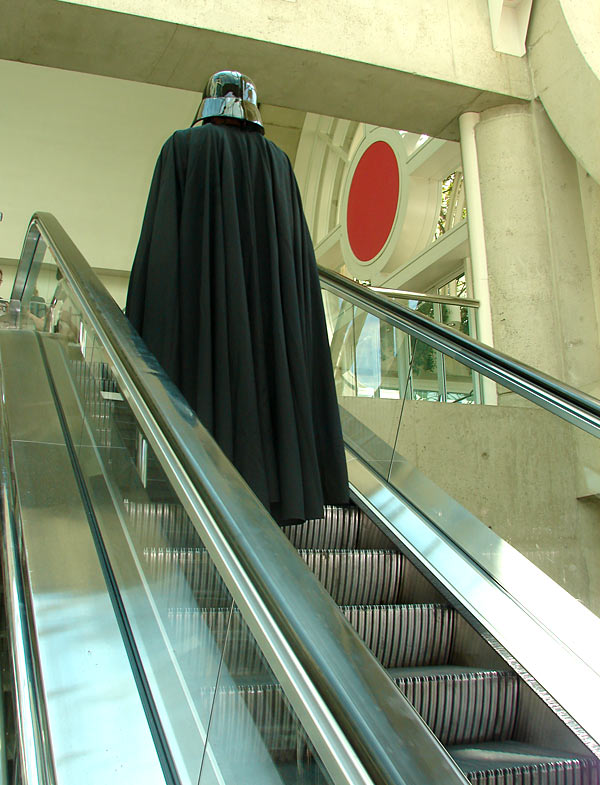
More daft Star Wars moments on YouTube

See Darth Vader taunting his staff here.

See a bloke play the Star Wars theme tune - on his banjo.

Savour forgotten 1930s serial Benjamin Kenobi: Space Knight.

More tickets available for BBC TV drama writing Q&A

Several weeks ago a Q&A session about writing for the BBC would be among the many, many, many events happening in Edinburgh during the many, many, many festivals that occur every August. Unfortunately, all the tickets were long gone by the time the BBC publicity machine started telling everyone on its wannabe writers mailing list about the event. Cue much sulking from me. Due to popular demand, the event's been shifted to a larger room and a fresh batch of tickets has been released - but they're going fast. Here's the PR blurb that sparked the ticket frenzy...
Q&A: Writing for the BBC 2pm - 3.30pm Tuesday 15 August, Screen 3, Filmhouse Interested in writing for the BBC? Want to find out about opportunities with BBC Scotland's Drama Department? Come along and put your questions on writing for BBC TV, Film and Radio to Kate Rowland, the BBC's Creative Director, New Writing, Anne Mensah, Head of Drama, BBC Scotland and Sandra MacIver, Executive Producer River City.

There will be an announcement about several forthcoming TV writing opportunities open to new writers. Free tickets can be reserved in person at the Filmhouse, 88 Lothian Road, Edinburgh EH3 9BZ. UPDATE: You can telephone for tickets. Call the main booking ofice after midday on 0131 623 8030. [Thanks to Barry D for the correction!] Capacity is limited so book early!

BBC writersroom identifies and champions new writing and diversity across all BBC platforms. For anyone interested in becoming a broadcast scribe, I recommend regular visits to the site.

Friday, August 04, 2006

La ballon rouge [aka The Red Balloon]

When I was growing up, we had a big, hardback picture book called The Red Balloon that told the story of the film, illustrated with remarkable stills. The story always broke my heart a little as a kid and, like everyone who's ever been lonely in their life at some time, I could empathise with the boy whose best friend is a balloon. So when the bullies attack the balloon...
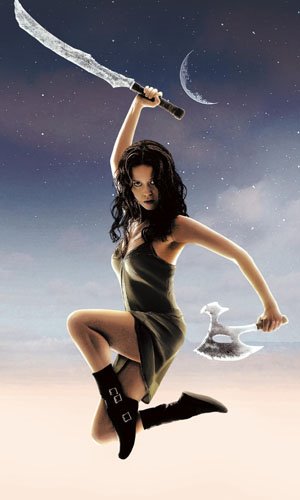
Anyway, I recently found a copy of the book [only softcover, sadly] and had to buy it. A quick surf of the interweb and I discovered three startling facts: it's 50 years since The Red Balloon was first released. The 34-minute film had no dialogue, only music, sound effects and ambient noise. Most remarkable of all, it won the Academy Award for Best Original Screenplay that year [beating Ealing comedy classic The Ladykillers, among others].

Who says you need great dialogue to write a great screenplay?

"Applying film standards to TV drama"

There's an interesting interview with John Yorke, the BBC's Controller of Continuing Drama Series and Head of Independent Drama, now up for viewing here. In between the moody shots of him strolling around a rain-lashed EastEnders set, Yorke reveals what he looks for in a new writer's script, where BBC TV drama is headed and offers a few tips on improving scripts. Much of this advice is familiar, but that doesn't make it any less important.

Key strengths new writers need to display are a grasp of structure, an ability to capture the voices of existing characters and having their own, distinctive authorial voice. Of course, there's a Catch-22 for new writers: to get the BBC's attention, you have to send them a script entirely of your own devising, and definitely not a spec script for an existing show. So how, then, do new writers display their ability to capture the voice of existing characters like Dot Cotton? I guess you have to wow the BBC Writers' Room with your own efforts first, and then you'll get the chance to say you can write for Dot Cotton in EastEnders or Mac in Doctors or Charlie on Casualty.

Yorke says the proof of a good character is they have a unique voice and a unique take on the world. Creating characters like that in your own, calling card script is the best way of demonstrating your own voice. Yorke also underlines the importance of theme, and how every storyline in a script should reflect on that one theme, whether the tone of the storyline is comedic, dramatic or tragic. Unsurprisingly, he name-checks fast-paced, younger, sexier shows like Life on Mars, Spooks and Hustle as examples of where the BBC is headed. But Yorke also gaves a bit of love to older audience shows like New Tricks, which has been a significant ratings hit.

Anyway, the interview offers a fascinating - if all too brief - insight into what Yorke wants. [Hmm, I wonder if he'd buy a series of Being John Yorke?] Go and see for yourself...
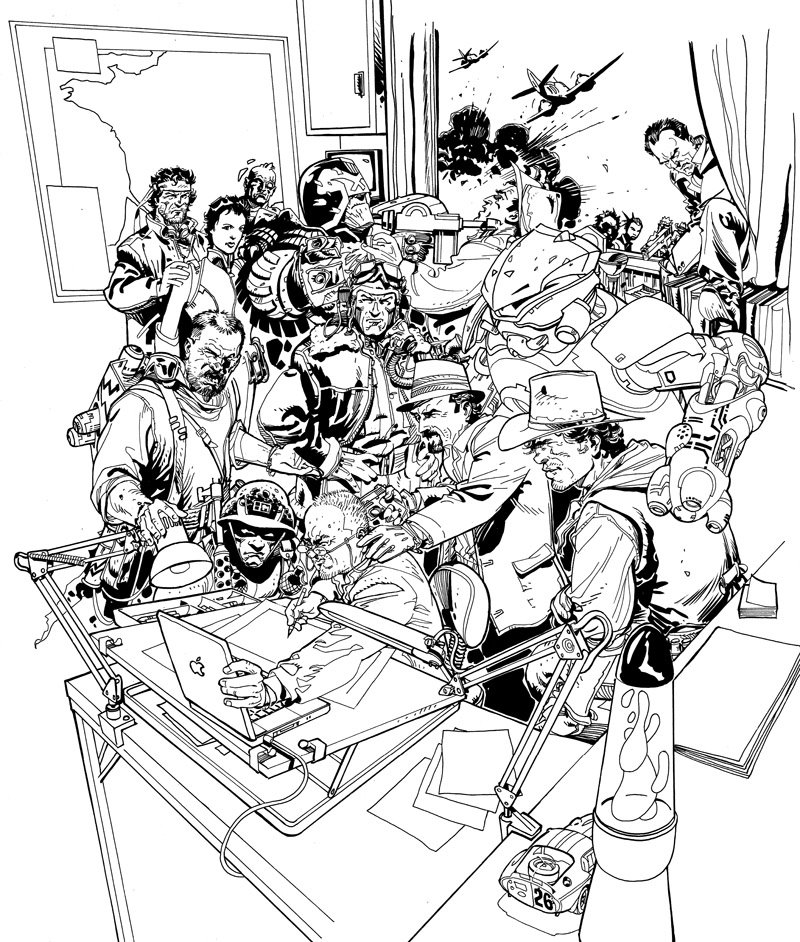
Thursday, August 03, 2006

Pale blinds drawn all day (nothing to do, nothing to say)

Going a bit stir crazy after four days shut in the house, working on my current tome. Nobody else home at the moment, so conversations are proving a little one-sided. Most weeks I'm out in the evening at rehearsals, but tis the summer break and the theatre's dark. Sigh. Might as well get on with work.

Meanwhile, if you like moody monochrome photographs, check out this site.

Wednesday, August 02, 2006

Sarah Jane Investigates - coming soon?

The BBC's in-house newspaper Ariel yesterday went public with news about a show that's long been rumoured. Children's channel CBBC is developing a Doctor Who spin-off series features the adventures of investigative journalist Sarah Jane Smith. The character played by Elisabeth Sladenwas a companion of the Doctor for three years in the 1970s and got reintroduced in a recent episode of the new series called School Reunion.

There's no mention of Sarah's robot dog sidekick K9, but the rights for metal mutt are held by its creators, Bob Baker and Dave Martin - not the BBC. Indeed, it was recently announced a K9 series was in development for the Jetix network of satellite and digital channels. All of which begs the question: if SJS does get her own series, will she have the services of K9? Perhaps the programme makers will opt for giving Sarah two human assistants, a sort of New Avengers combo - a bruiser for the action sequences, and an intelligent one for the obligatory computer hacking and exposition.

Or perhaps not.

Tuesday, August 01, 2006

Sorkin speaks (via satellite) at Edinburgh

The mediaguardian website reports that West Wing creator Aaron Sorkin will be speaking at the Edinburgh International Television Festival - via satellite. Sorkin and creative partner Thomas Schlamme will be discussing their new show, Studio 60 on Sunset Strip [pictured above], which debuts this Autumn in America. The pilot episode will be screened at the festival, although unscrupulous pirates have already uploaded it to the world as a torrent file.

All I can say is... arse. I'd love to have heard Sorkin but registering for the festival is £300 and change. That's a little bit outside my price range at the moment.
Ch-Ch-Ch-Changes: Tony Blair karaoke

See the British Prime Minister singing some David Bowie here. Warning: contains political messages.

Rain, Rocky films and River City

Well, it's August and summer has packed up its sunshine to go on holiday. After a seemingly endless spell of glorious sunshine [actually, about two weeks of mostly glorious sunshine, but that's an endless spell by Scottish standards], the rain is hosing down outside. If only I'd possessed the enthusiasm to cut the grass at the weekend. Guess it'll have to wait.

The digger is still hard to work on the vacant plot of land next to the house, its engine providing a constant vibration and background growl of noise - always a bonus when you're a freelancer writer at home, trying to concentrate on a complex job. I'm hopeful the excavations will be finished sooner rather than later, but that's probably self delusion. Must concentrate harder.

UK screenwriter Chris Parr is offering free script notes for those who want them. He kindly agreed to have a look at my script for Live and Let Live, despite the fact it was for a 10-minute short, not a full-length feature. Best of all, he made several cracking suggestions for improving the look and format of my script. Anybody who's interested in what Chris is offering, visit his blog here.

No word back from the world of CSI, but I imagine Danny Cannon is not lacking for demands on his time. I'm making slow but steady progress on the TPO book, gently inserting new material into the early chapters and rewriting the text as a I go along.

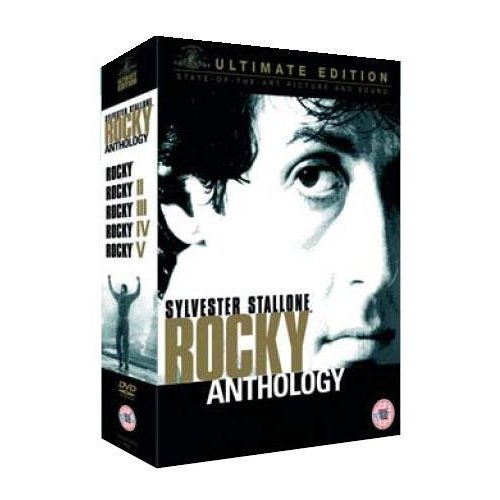
For fun in the evenings I've been watching the five Rocky films in reverse order. Everybody keeps getting younger and better looking, with the exception of Stallone. His physical conditioning in Rocky III and Rocky IV is, well... Let's just say he didn't stint on the gym-time.

Also been watching BBC Scotland's homegrown River City, having recorded Sunday's omnibus edition. The show has gone all gangster, with two Glasgow hardmen sneering and taunting at each other in a Chinese takeaway. It's done with just enough tongue in cheek to make the storyline enjoyable, unlike another soap that recently spent months trying to become Get Carter and only succeeding in becoming Get Real.

After several months of non-stop River City viewing, I've come to appreciate how adept the show's storylines are at slowly introducing and developing new plot threads. Things bubble away under the surface for weeks or even months before bursting through to the surface, making the resulting explosion both surprising and inevitable - a tricky combination to pull off.

This could simply be my imagination, but is River City inching towards having Fi and Shirley become more than just friends? The pair are spending an awful lot of time in each other's company of late, and Shirley didn't bat an eyelid at the news that Fi was a lesbian. I lack the encyclopedic knowledge of past shows some others possess, but a Fi and Shirley fling could be the first grey-haired lesbian relationship on a British soap. Even if the two don't end up together, I suspect Shirley's bull-in-a-china-shop husband George is going to be jumping to all the wrong conclusions before too long. Expect trauma, heartache and long, lingering reaction shots of tormented actors aplenty. As they say in Scots, there'll be greetin' before bedtime...

Monday, July 31, 2006

Getting a thrill from an email address

I'm hard at work revising, expanding and updating THRILL-POWER OVERLOAD, the history of legendary British science fiction anthology comic 2000 AD. TPO was originally published in the Judge Dredd Megazine during 2002 and 2003 to celebrate 2000 AD's 25th anniversary. The new version should be out next February as a big, shiny hardback to coincide with the comic's 30th anniversary. I'm estimating the book will contain 50% more material than appeared in the articles, and the original text is being completely rewritten.

As part of my labours, I'm endeavouring to interview all the people who eluded me during the original research. Some I've found, most I've persuaded to talk. Last time round, I didn't cover the Judge Dredd film in much depth. It's a huge topic, worth a chapter to itself, and there simply wasn't time or room to get into all of that. This time round, I'd like to give it a go. In an ideal world, I'd get interviews with the key players in the Dredd film - director Danny Cannon and star Sylvester Stallone. I figure my chances of getting Stallone to talk about the Dredd film are less than zero, so I'm starting with Cannon.

He was a longtime 2000 AD reader while growing up in Britain, and even sent the comic a mock-up film poster for a Dredd film in 1987. [Cannon opted for Harrison Ford as Dredd, Daryl Hannah as Anderson and suggested Ridley Scott should direct it - with Peter Gabriel providing the music.] Since the movie was released Cannon has become a key figure on America's top TV drama CSI. He's a writer, director and executive producer on the original CSI series and has contributed to both its spin-off, set in Miami and New York. Cannon has also continued directing films, most recently the first movie in the Goal trilogy.

I'm hopeful he might be willing to talk about the Dredd movie, now more than a decade has passed since its release. I can't remember how, but last year I tracked down a mobile number for Cannon's personal assistant. I called her on Friday and she asked me to send an email, detailing why I wanted to talk with Cannon and the book project. You know the best part of the conversation? When she gave me her email address at the production office of CSI, a show I love to watch. I've long since past the point of being starstruck, but sending an email to the home of CSI gave me a genuine thrill. It's nice to know something so simple can still make you smile.

For anyone who's interested, I've started a TPO blog to chart the book's progress - you can find it here.

Sunday, July 30, 2006

Hmm, iced fingers...

I adore iced fingers. No, it's not some kind of freakish desert for cannibals, but a finger roll that's been daubed with icing and had dessicated coconut sprinkled over it. They're even better with some spread inside, like butter or pro-activ, accompanied by a cup of coffee. The local baker, Gibson's, sells them for 45 pence each. I have one most weekdays. If the iced fingers aren't ready when I wander in, they'll often make one for me - isn't that nice?

Obviously, using low fat spread on an iced finger is a grand form of self delusion, but I like it that way. Then again, I sometimes to have Diet Coke with a Kit-Kat and call it a balanced diet. Self delusion, or just a little of something you fancy? You be the judge. I'm no expert - hell, I've had a craving for Turkish Delight since I read The Lion, The Witch and the Wardrobe thirty years ago. Hmm, Turkish Delight...

Time Trumpet on YouTube: "Come on, Tim!"

Revitalise an industry? Me?

Just finished my answers to a Q&A about the British comics industry for a scribe writing an article for Nude magazine [no, its not that kind of magazine - Nude bills itself as going beyond the counter-culture]. The first question kind of threw. Here's the question, with my endlessly wittering reply below it...
You are credited with revitalizing an industry in decline. What are your memories of the state of the comic scene you were entering and how did you begin to reverse the tide?

I wish I could claim to have revitalised an industry in decline. The harsh reality is that British comics were no better off when I resigned from editing 2000 AD in the summer of 2000 than they were when I became assistant editor on the soon to be launched Judge Dredd Megazine in the summer of 1990. I’d like to my efforts as an editor helped keep the Megazine and latterly 2000 AD going through a troubled decade for British comics.

When I joined the British industry in 1990, there was an upsurge of interest in comics. The hyping of graphic novels like Maus, Watchmen and Dark Knight Returns in late Eighties created media awareness that comics weren’t just for kids anymore. There were comics for grown-ups, like Deadline, Crisis and Revolver. American companies started setting up UK branches, while local publishers got excited about the opportunities. There was a bubble of genuine enthusiasm, fuelled by significant investment from the likes of Teenage Mutant Ninja Turtles co-creator Kevin Eastman. Comics were hip, thanks to characters like Judge Dredd, Tank Girl and The Bogie Man, all about to cross over on to film or TV.

Within five years the bubble had well and truly burst. The Dredd and Tank Girl films flopped, while the BBC’s adaptation of Bogie Man [starring a pre-Cracker Robbie Coltrane] sank without trace. All those British branch offices closed down or were sold off, all those daring new comics for grown-ups got cancelled. The second half of the Nineties was a shite period, which most of the British industry spent hanging on by its fingernails, hoping things would get better.

The Megazine spent much of the Nineties on Egmont Fleetway’s kill or cure list, never more than a few issues away from cancellation – but it survived. 2000 AD celebrates its 30th anniversary in February, something that seemed impossible in the Nineties. A managing director predicted the weekly would fall below breakeven by the end of 1996. Ten years on from that death sentence, it’s still going. I’d like to believe I had a role in keeping the last great British adventure comic alive. But I suspect my greatest contribution was finding and nurturing new British comics talent.

When 2000 AD was launched in 1977, it captured lightning in a bottle. There was a generation of new talent waiting for it, many of whom had been working for underground comics, unable to find an outlet for the sort of subversive, multi-layered stories they wanted to tell. Writers like Alan Moore, Grant Morrison, Peter Milligan, Mark Millar, Garth Ennis and Alan Grant could never have transformed US comics without 2000 AD giving them a place to emerge, to hone their craft and let loose their imaginations. Artists like Dave Gibbons, Brian Bolland, Kevin O’Neill and Simon Bisley became US stars thanks to their time at 2000 AD.

But by 1990, it appeared to many creators that 2000 AD had become a closed shop. My mentor Steve MacManus – who edited 2000 AD during its golden age in the early Eighties – told me when I joined the industry it was my duty to search out the next generation of great British talent. As a consequence, I helped launch and/or nurture the careers of Andy Diggle, Robbie Morrison, Frank Quitely, Trevor Hairsine, Dean Ormston, Peter Doherty and Simon Fraser. I’m happy to say my successors have carried on that responsibility, finding yet more wonderful talent, such as Frazer Irving, Simon Spurrier and Rob Williams.

What if Daleks did Karaoke?

Saturday, July 29, 2006

I heart Rocky Balboa

I was a kid when the first Rocky film came out and I fell in love with it: the characters, the fairytale story, the Bill Conti score - everything. I went to see it at the pictures with my grandad and we had a great time. When Rocky won the Oscar for Best Picture of 1976 [beating fellow nominees Taxi Driver, Network and All the President's Men, no mean achievement], it felt like the fairytale was complete. Hell, the first album I ever bought with my own money was going to the Rocky sountrack - until my brothers talked me into getting ELO's New World Record instead. Schmucks.

The success of the sequels - especially Rocky III with Mr T and the Cold War clash of Rocky IV - made a lot of people forget why the original film won three Oscars [it also got the statuettes for Best Director and Best Film Editing] and was nominated for another seven. Rocky is a brilliantly structured movie, with a remarkably downbeat tone. Rocky Balboa is a loser, a legbreaker for a minor Philadelphia gangster. He gets offered the chance to fight the world heavyweight champion - and turns it down. Even when he finally accepts the fight, Rocky knows he cannot hope to win. Ultimately, he decides to try and survive the experience, nothing more. Nobody has ever taken the champ the distance; that becomes Rocky's goal. He loses the fight, but achieves his goal.

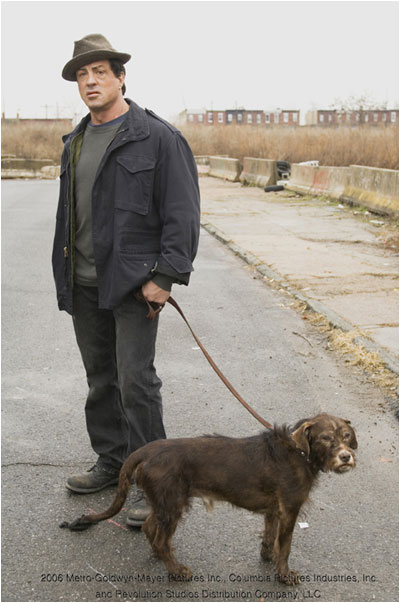
Thirty years on, there is a sixth film in the series being prepped for a cinema release this December, called Rocky Balboa. The days when it was cool or fashionable to like Sylvester Stallone and his movies has long since passed. Can Stallone make one last comeback? Will his greatest creation [Stallone wrote the Oscar-nominated screenplay for the first Rocky film] revive his career? I've no idea. But the trailer for Rocky Balboa is now up on the internet and it feels like an old friend is coming to visit. Frankly, I can't wait to see him again.

Sith City: Attack of the Revenge of the Hope

I don't know which of these two came first, but they're both fun. First, a mashup of the trailer for Stars Wars III: Revenge of the Sith, interpolating the music from Sin City's trailer into the mix...

Now, a new trailer for Stars Wars III: Revenge of the Sith, rendered in the style of Sin City. Enjoy!

Friday, July 28, 2006

What a difference a year makes for ITV drama

Here's an extract from a July 2005 report in The Stage:
Drama to flourish as ITV gains £20m programming boost
Drama will dominate ITV’s autumn schedule, with 12 new productions and more than five returning series, following an extra £20 million investment in programming by the Network.

The additional cash has been made available following last month’s announcement by industry watchdog Ofcom that the broadcaster’s annual licence payments will be slashed by £135 million. Nigel Pickard, ITV’s director of programmes, has decided to invest more in high-quality drama and star-led productions in order to win back dwindling audiences.
Now, here's an extract from a July 2006 report in The Stage:
ITV1 plans massive drama budget cuts
Drama on ITV1 is facing budget cuts of around £20 million over the next year as the network’s latest clampdown on costs begins to take effect.

However the network’s director of drama, Nick Elliott, was confident that the reduction in cash flow to £300 million a year would not have an impact on the quality of programming. He said: “It is just a matter of being smarter about what you commission. That’s not a bad thing.”
When it comes to drama, it seems ITV giveth and ITV taketh away...

Beware the Power of the Dark Bishop!

You Are 80% Evil

You are very evil. And you're too evil to care.
Those who love you probably also fear you. A lot.
I knew growing that demonic facial hair would come in handy. 80% evil, huh? I always pegged myself as at least 82% evil, maybe more...

'Who' exec to head BBC Drama?


The mediaguardian website reports BBC Drama controller Jane Tranter looks certain to be made head of the new BBC Fiction department, becoming one of the three super commissioners in BBC Vision. Tranter will have overall responsibility for all forms of fiction on the BBC - drama, comedy, films and programme acquisitions. If Tranter does vacate her current post, the woman tipped to replace her is Doctor Who's executive producer Julie Gardner.

Gardner and showrunner Russell T Davies successfully revived Doctor Who last year, turning a fondly remembered BBC series into a BAFTA-winning ratings smash that recreated the notion of family viewing. If Gardner does succeed Tranter, she will have power over a reported BBC Drama budget of £260 million. Her star has risen rapidly while head of drama at BBC Wales, thanks to Doctor Who, Casanova for BBC3 and her participation was crucial in rescuing the Kudos hit Life on Mars from years of development hell.

Tranter have overseen a revival in BBC Drama and Gardner's shows have been some of the most enjoyable British TV of recent times. Given the fact I'd one day like to be write TV drama for the BBC, the predicted change sounds like good news to me...

Thursday, July 27, 2006

Ninja reviews Pirates of the Carribean: DMC

This is priceless - savour the lunacy here.

Kiwi music care package

Got a package of New Zealand music in the post today from the lovely people at Marbecks. Inside was the new Dimmer album, There My Dear [can't recommend Dimmer highly enough - they've got an inevitable MySpace presence now, check them out here; Jenny Morris's acoustic set Clear Blue in Stormy Skies; the special edition of Bic Runga's most recent album, complete with a bonus DVD of her performances at the Civic in Auckland last year [already got the CD, but we've off to see her Edinburgh concert come September, so consider that prep]; the Katchafire Dub and Remix double album [because you can't go wrong with Pacific reggae in summertime]; and what I suspect must be Don McGlashan's first solo album, Warm Hand.

He's been a stalwart of the New Zealand music scene since the days of Blam Blam Blam in the early 80s, when I first starting going to gigs [yes, I'm that old, folks]. AFter that he was involved with quirky pipe hitters From Scratch, crafted some stunningly moving songs amid the comedy capers of The Front Lawn, and was a key figure within The Muttonbirds [they sing Don't Fear the Reaper over the closing credits of Peter Jackson's pre-Rings horror comedy The Frighteners]. Still giving Warm Hand a first listen, but I'm loving it so far. How can you resist an album where the second song opens with these words...
Here's Bart Simpson, with his arms all melted and twisted
And here's one of Big Bird, with his feathers all matted and black
And here are the rows of young women
Wrapped up in bolts of white nylon
And the families from the countryside come to take their daughters back

Find out more about Don and his music at this website.

Wednesday, July 26, 2006

Approaching milestones, busy working

Here's a frightening thought: I'm fast approaching my 300th posting on this blog is less than a year. Guess that once a day habit has turned into something else, something more... addictive. Sigh. Being a writer, you need to be a little in love with the sound of your own thoughts and sometimes they need an outlet - hence this place.

Vicious Imagery will be welcoming its 10,000th visitor in the next week, judging by the pace of visitations in recent times. Not sure who they'll be but thanks for dropping by, one and all.

Happily, I finally managed to make a start on writing THRILL-POWER OVERLOAD yesterday. I'm not sure which is easier: writing a non-fiction tome from scratch, or revising an existing work by trying to incorporate vast swathes of new material. Actually, nothing's easy when it comes to non-fiction. With fiction, you can literally make things up as you go along. For some reason people expect non-fiction to be accurate and truthful, or at least a balanced representation of memory and opinion.

I've got a long way to go on the TPO tome, but it's great to have made a start after weeks of preparation and procrastination. I've secured interviews with several creators who eluded me when I was researching and writing TPO as a series of articles for the Judge Dredd Megazine. Peter Milligan finally found time in his fiendishly busy schedule to answer my questions. Paul Kupperberg send me some helpful thoughts about his sole contribution to 2000 AD, an early 90s series called Trash. And Hilary Robinson gave me one of her first ever interviews about working for the Galaxy's Greatest Comic. All good stuff and all worthy additions to the narrative.

So, if it seems a little quiet here over the next few days, hopefully that's because I'm hard at work on the opening chapters of my magnificent octopus. Wish me luck!

What's on my desk?

Ever noticed all the things you keep on your desk? Ever wondered why some of there are still there? I've just down a 55-second stocktake and this is what I found...

My iMac G5 and its paraphenalia.

The phone.

Two hole punchers.

Box of used mini-discs from past interviews.

A stapler with a sticker of the Tellytubbie Po on it [a leftover from my days as an office drone, when all useful gear had a tendency to go walkabout - nobody ever dared steal Po].

Parcel tape and sellotape.

Playing cards.

Business cards I've been given, in a handy plastic business card box.

Cheque book.

Paying in card for council tax.

Old cheque book of stubs.

Local bus timetable.

16-year-old Filofax.

Seven different notebooks.

A ruler.

Three 2000 AD Micro-Gudies from 1992.

Two old desk diaries.

A plastic ruler.

My wallet.

Two pen tidies full of pens, highlighter pens, nail clippers, scissors, box cutters and pencils.

A digital camera.

Two boxes of two-piece metal file clips.

A pile of blank index cards for plotting.

A boxed scale model of Inspector Morse's Jaguar car.

Two pads of square, yellow post-it notes.

Old receipts from cash machines.

My business cards.

My coffee mug.

Interview transcripts.

Most interesting for me are the random notes or thoughts I've scribbled on to post-its and then stuck round the sides of my computer screen for later reference. Some are ideas for stories, some merely springboards, others defy easy description or explanation:-
quantum: an amount or quantity, esp. a specific amount
my American Express bill for this month, and when it's coming out of my bank account
the name of the new Doctor Who companion
alchemy: "the esoteric brotherhood"
fits and starts
"there are no little secrets"
psychopath who killed his twin in the womb
Snow Patrol
tatterdemalion - a person dressed in tattered clothes
Good plays: Laughing Stock; Women of Lockerbie

Tuesday, July 25, 2006

The Joy of Specs

In my review of Writing for Television, I said: Grud, I wish I'd read this before I decided to spend a month writing a Doctors spec script several years ago! It wouldn't have made my writing much better, but it would have persuaded not to send a spec script for an existing show to that show. As a result, Paul Crilley asked this: Why would it have convinced you not to write a spec for Doctors? I've been considering doing just such a thing when I finish with current novel deadline.

In American TV writing, one way to break in is by writing spec scripts for existing shows. In his book Crafty TV Writing, for instance, Alex Epstein suggests writing two different specs - one for a character-led series like Gilmore Girls and one for a more plot-led or genre-heavy show, such as Battlestar Galactica or CSI. You use these speculative works to demonstrate you're ability to write for a show readers already know, showing you can script for other people's characters and concepts.

Chances are, your first job in TV will not be on a show entirely of your own creation. [Note: you should never send a spec of, say, CSI to CSI itself - that's bad form, apparently. If your goal is to write for CSI, do a spec for a similar kind of show, such as Cold Case. If you're into medical drama, you could spec House and use it to target Grey's Anatomy, as another example.] Leastways, that's what all the books and TV screenwriter blogs seem to suggest - mileage may vary.

British TV takes a rather more perverse attitude to spec scripts. It seems you should never write a spec script for an existing show. [Grud forbid you should send your spec script to the show you spec'd, like I did with Doctors - that's even worse. Of course, if my writing had been good enough at the time, I'm sure the script editors at Doctors would have forgiven my gauche stupidity.]

Readers want to see your original script, your original ideas, so they can assess your ability to plot and give good characterisation. Most of all, they want to see the evidence of your distinctive voice. Why? So they can hire you to write for an existing series where you'll need to sublimate that voice so you can write somebody else's characters. Hell, write for most soaps and you won't even get to write your own plots, they'll have been carefully handcrafted by the storyliners first.

So, if you want to write for British TV drama, don't labour over a spec script for an existing show. Create your own witty, original and exciting script instead and use that as your calling card. With enough talent, luck and persistence, you might be given a chance to write for an existing show - and get paid for it.

****ing Deadwood: Is Swearing Big and Clever?

Go here if if you want to watch all the swearing from a single episode of HBO's marvellous Deadwood condensed into two minutes and 32 seconds. WARNING: this clip contains, well, swearing. A lot of swearing. More swearing than some people may have heard in their entire lives. If you find swearing and profanity offensive, this clip is not for you. If you think swearing is both big and clever [like me, sadly], prepare to laugh your *** off. Spoiler: the clips are all from the Deadwood season 2 finale, in case you haven't already seen it. Not that you'll be able to glean much just by watching this Al Swear-a-thon.

Separated at birth? Tracy & McKee


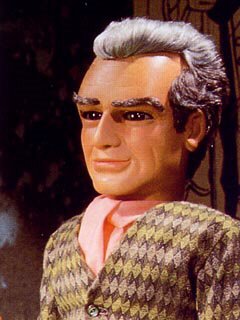
Is it just my imagination, or does Thunderbirds scion Jeff Tracy bear a startling resemblance to Hollywood story structure guru Robert McKee? More to the point, would the Thunderbirds film been better if McKee had acted as script consultant on it?

Writing for Television by William Smethurst

Doing the MA Screenwriting course at Edinburgh's Napier University has persuaded of the wisdom to be had from reading. I know, it's a bizarre statement for a freelance scribe and would-be screenwriter to make, but before starting the course I didn't bother reading many guide books about writing for film and/or TV. Frankly, there aren't that many books about writing for TV worth reading, but that's another matter. Obviously, I had my obligatory copy of Robert McKee's Story, but that's a rather dry transcript of his seminar and I did that back in '93 or '94 - the book now works best as a refresher. And I bought The Writer's Journey, after reading a piece about it in the Sunday Times years ago.

Since starting the MA course I've acquired a shelf-load of tomes of varying values. The latest I'd added to the stack is Writing for Television [4th Edition] by William Smethurst, published last year by How To Books [ISBN: 1845280261]. Grud, I wish I'd read this before I decided to spend a month writing a Doctors spec script several years ago! It wouldn't have made my writing much better, but it would have persuaded not to send a spec script for an existing show to that show. The book is full of useful advice about writing for TV and how to break in. There are no magic formula, just a lot of common sense and knowledge gleaned from Smethurst's years in the industry. [He worked on Boon, radio soap The Archers and devised the short-lived BSB space soap Jupiter Moon].

Where the book falls down is the constant use of shows from Smethurst's career as examples, particularly Jupiter Moon. That programme quietly died in 1991, making the text seem dated and behind the times. In truth, this revised edition is sprinkled with far more up to date references, but the constant referring back to Jupiter Moon [all the photos on the blandly designed cover are from that show] becomes wearisome. The book was published in February 2005, and in the fast-moving world of TV events have moved on since then. The rise of younger indies like Kudos and Red goes unmentioned, while including URLs for useful websites in reference books should always come with a caveat about how quickly such info can become out of date.

Despite these gripes, I think Writing for Television is worth it's £9.99 cover price - buy it from an online retailer were you can shave three quid off that price. A useful addition to my bookshelf.

TV Serials: Killer or Filler?

At the American TV Critics' Association press junket, Fox Entertainment prexy Peter Liguori has been fretting over the number of serials coming to US TV this autumn, according to trade paper Variety. Shows like Lost and 24 make for compelling viewing, but happens if similar shows flop?
'I think all of us have to ask the question, 'What do we do if these shows don't work?' Liguori said. 'If, in fact, some of these serialized shows are canceled and there's no explanation, there's no satisfaction, I'd have fear for next year (if) a bunch of serialized shows comes out. Will audiences now be really gun-shy about committing to these shows? This is going to be a really telling television season.'

The 22-episodes per season structure of US network TV drama only makes this problem worse. With the exception of soaps, few UK television shows are launched with a 22-episode order. The likes of Casualty and Holby have grown to the point where they are on virtually all year round, but they are series with ongoing soap elements, rather than serials in the Lost mode. Even 24 can have its plug pulled at the end of each season, if needs be, as it begins a new serial each year - Lost doen't have that luxury.

The simple fact is that Lost clones will wither and die - witness the profusion of shows like Threshold, Invasion and Surface last season on US TV. Viewers are smart enough to grasp the fragility of their favourite show's existence. If there's enough support, a show will survive - be it a drama series or serial. Even if it doesn't, DVD [and, increasingly, legal downloading] means there is a second life for shows that don't fulfil the 100-episode requirement that used to be a minimum for TV programme to get lucrative syndication deals.

Witness the revivals of Family Guy and Futurama, both brought back from cancellation after success on DVD. Even the prematurely cancelled Firefly made a comeback, albeit as a film that failed to find a wider audience beyong the show's hardcore enthusiasts, the Browncoats. Besides, it's kind of ironic to have a Fox exec waggling the finger of warning at other networks, since it's Fox who pulled the plug on shows like Futurama and Firefly.

Monday, July 24, 2006

Colin Wilson: Genius at work


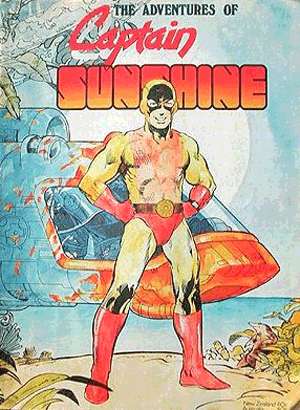
Colin Wilson is a true rarity, a comics artist who's work has been acclaimed in America, Britain and most especially in Europe. What makes that achievement even more impressive is the fact Wilson hails from New Zealand, a nation too small to sustain a comics industry. He now resides in Australia and drew the stunning illustration above to accompany a career retrospective interview in Australian comics fanzine Word Balloons [order your copy here].

Growing up in New Zealand, I used to read a lot of imported comics. Mostly they were Marvels from America, probably because they were full colour. At the time, DC Comics were being reprinted by an Australian outfit called Planet Comics in glorious monochrome, which never quite tickled my fancy so much. I did pick up the occasional issue of 2000 AD as well, little realising how much of my working life would become associated with it in the future. But in the late 70s something astounding happened - a full colour comic was published in New Zealand!

Captain Sunshine was apparently created as a promotional tie-in to a new solar-powered watch. I couldn't have cared less about that, all I wanted was more Captain Sunshine. At last, a Kiwi comic and in colour, too. I bought the first issue [the only published issue, it proved to be] from a corner shop in Auckland's Blockhouse Bay suburb. I was captivated - if only I'd had the sense to hang on to my copy. [What I wouldn't give to get a copy again!] Little did I realise Captain Sunshine was drawn by Colin Wilson, nor that I'd end up employing him on 2000 AD 20 years later. [The credit for that goes to Andy Diggle, who sought Colin out and persuaded him into working for the comic again after a 17-year hiatus. Clever bloke, that Diggle.]

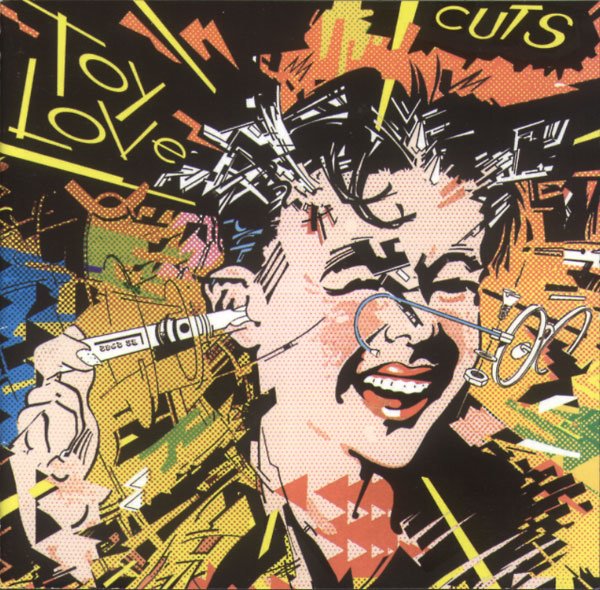
About the same time as Captain Sunshine appeared in my life, my elder brother Phil was heavily into Toy Love. Toy Love was an anarchic, post-punk Kiwi band fronted by career iconoclast and comics buff Chris Knox. I never got to see Toy Love in concert, but I loved their first [and only] album, nearly wearing a hole through my brother's vinyl copy of it. Recently that album was re-released on double CD, with 16 previously unreleased tracks and all manner of madness. The cover is a remastered piece of artwork originally created for a Toy Love poster by a young New Zealand artist of the time. His name: Colin Wilson, of course. Strange how life leads you around in these friendly circles sometimes, isn't it? You can find out more about Colin and his work by going here.

[Thanks to Mark's bad librarianship blog for the heads-up on this!]

UPDATE - SEPTEMBER 2009: Just had an email from artist Mark Harrison, correcting my faulty memory on how Pulp Sci-Fi got started and Colin Wilson's return to 2000AD> Mark writes...
The way I remember it I pitched the idea of Pulp Sci-fi to you in a hotel room at a comics con and that it would be a great way to get old 2000 AD talent back into the comic that couldn't commit to a full story to do little these little strips and I reeled of a list of names INCLUDING Colin Wilson (who i repeatedly asked Andy to get hold of and mentioned this to Colin when I did the cover for his Pulp Sci-fi strip) and have gone on record as saying the best thing that came out of Pulp Sc-fi WAS getting Colin Wilson back into the fold.

Andy might have done the leg work but I gave him the idea, so clever... hmmm? Resourceful yes. And attentive to artists.

Exclusive: Jock poster art for 'Children of Men'


Neatly tying together two recent postings, British artist Jock has just sent me a poster design he created for forthcoming film Children of Men. The image was given away over the weekend at the San Diego Comic-Con to promote the movie's release. Now Vicious Imagery readers can see Jock's stunning art for themselves...

San Diego a-go-go

The San Diego Comic-Con is over for another year, bringing with it a rash of announcements about new comics projects and fresh creative teams for ongoing titles. Like soap operas, superhero comics are all about the illusion of change. Some characters come and go, but the essentials always remain the same. You can burn down the Queen Vic in EastEnders, but somebody will soon refurbish and reopen. You can have Spiderman reveal his true identity, but that won't stop him fighting crime or slinging webs for long.

San Diego has become a significant event in the media calendar, particularly for certain kinds of TV shows and films. Unsurprisingly, movies based on comics are a big focus at the convention. This dates back 30 years, to when the first Star Wars film got its launch in front of 100 people at San Diego. Variety estimates at least 1000,000 people were at this year's convention. [That's right, Variety reports on the San Diego Comic-Con. My, how times change.] Spiderman 3 only finished shooting a fortnight ago, but director Sam Raimi and most of the cast were in San Diego over the weekend to pump up interest in the film [it doesn't open until Summer 2007]. They even screened several minutes of raw footage, complete with visible wires and green screen. But it's not just about the obvious crossover. Geek favourite Snakes On a Plane was previewed for the crowds, with star Samuel L Jackson hosting a screening of 10 minutes from the much-anticipated creature feature.

San Diego has now gotten so big it's close to becoming unmanageable. Director Kevin Smith missed the panel for his own film, Clerks II, because he was stuck in traffic trying to get to the convention centre. Even if he'd gotten out of the car, I doubt he'd ever have made it through the throng in time. On the two occasions I've attended the convention, it took an hour to get from one end of the main hall to the other. But that was back in '97 and '99, when the event and venue were a fraction of their current size. Grud only knows what it must be like now.


For a flavour of what the con is like, I recommend a column written by Augie De Blieck Jr on the Comic Book Resources website [see it here]. Above is a picture borrowed from that column, which neatly wraps up a little Star Wars thread that's been running in this blog of late for no apparent reason.

Saturday, July 22, 2006

All You Need Is Brains

What do you get if you cross the first Beatles' film with George Romero's zombie apocalypse features?
Why, A Hard Day's Night of the Living Dead, of course! That's right, it's another bizarre movie mashup, courtesy of YouTube.

Friday, July 21, 2006

This looks interesting...

The trailer has just gone online for Children of Men, a film set a generation in the future when mankind has become infertile. It's a classic science fiction concept, but looks like the story is being told on a personal scale - a cosy catastrophe this ain't...

Writing in computer games - WGGB event

The Writers' Guild of Great Britain is staging a computer games industry forum in September, to debate the future of games narrative. The event's taking place at the BAFTA building on Piccadilly in central London, and the Guild is inviting developers, publishers, scribes and all those within the games industry to attend [see more details here].

Among the questions up for discussion: Many publishers and IP brand managers now require professional writers to be involved in projects, but how can you get the most out of your writers? Can writers be a help or a hindrance? How do you find a writer? What does a writer expect from you and what should you expect of a writer? When in the games development process should a writer be employed?

My experience of writing for computer games is relatively limited, but I feel the sooner developers gets a writer involved, the better. Having a professional scribe on board when IP is being initially created and developed can help bring out the best from an idea. I get the impression [and I could well be wrong] that too many games get a long way down the road before they realise their initial inspiration only gets them so far.

They need somebody to put words into the mouths of their core characters and NPC, somebody to help propel the story. But by that point inherent flaws in the story have been built into the game that would be too expensive to retroactively eliminate - flaws that might have been avoided with the involvement of a good writer. As the redoubtable Jim Swallow pointed out to me yesterday, writers work differently from games developers. [He should know, he's contributed to a book on the subject - available here.]

You need a writer at various stages during a game's development, but you don't need them hanging around 24/7. Getting a writer in at the 11th hour to inject some character into your game is akin to hiring an architect to do your interior decorating after the building is finished. Sure, they can make it look better inside, but the basic structure may be fatally flawed - and it's too late for them to help fix that.

You get the best from a good writer by involving them early, not as an afterthought.