Wednesday, November 15, 2006

Films of Michael Caine #13: The Italian Job (1969)

Cast: Michael Caine (Charlie Croker), Noël Coward (Mr Bridger), Benny Hill (Professor Simon Peach), Raf Vallone (Altabani), Tony Beckley (Freddie), Rossano Brassi (Beckerman), Maggie Blye (Lorna), Irene Handl (Miss Peach), John Le Mesurier (Governor), Fred Emney (Birkinshaw), John Clive (Garage Manager).

Crew: Peter Collinson (director), Michael Deeley (producer), Troy Kennedy Martin (writer), Quincy Jones (music), Douglas Slocombe (cinematography), John Trumper (editor), Disley Jones (production designer).

Synopsis: A criminal mastermind called Beckerman is murdered by the Mafia as he tries to leave Italy. In London Charlie Croker departs prison after two years inside, expecting to see Beckerman. Instead he is met by the dead man’s widow, who hands over the plans for her late husband’s greatest scheme. Beckerman devised a way to steal $4 million from a security van travelling from Turin airport to the Fiat car factory in the city. The Italian metropolis has a sophisticated computer-controlled traffic system. Jam the computer and the resultant chaos creates an opportunity to steal the contents of the security van. Beckerman has mapped the only way out of the city during such a traffic jam. Within two hours the thieves could be over the Alps and in Switzerland. Charlie realises he needs help to enact such a plan and enlists the aid of Mr Bridger, a British crime boss who runs his business from inside prison. The robbery goes like clockwork, despite attracting the interest of the Mafia, spiriting $4 million of gold out of Turin in three Minis. But disaster strikes as the coach containing the thieves and their loot travels up the winding road into the Alps. The bus skids out of control and is left balanced over a precipice…

In 1967 Troy Kennedy Martin was a successful British television writer trying to get into movies. That breakthrough came with the concept of a robbery set amidst a traffic jam, which had originally conceived by his brother Ian. ‘My brother came up with it, but his idea was set in London around Regent Street,’ Troy Kennedy Martin told Esquire magazine in 2001. ‘We decided a financial agreement and I took it on. I decided to move the location to Turin, because it has a computer operated traffic light system. From the very beginning, I had set my sights on Michael Caine as the hero and wrote a draft treatment accordingly.’

Having got Caine interested, the writer pitched his completed treatment to Robert Evans, head of production at American studio Paramount. Evans wanted Robert Redford to play Charlie Croker but was persuaded to stick with Caine. Michael Deeley was appointed by Paramount as producer for The Italian Job. Deeley was keen to hire Bullitt director Peter Yates for the film, having seen the car chase in that picture. But Paramount opted for the less experienced Peter Collinson. Troy Kennedy Martin began writing his first draft screenplay.

The Italian Job was a $3 million movie, made during the second half of 1968. The production spent three months filming in Italy. Shooting in Turin was made considerably easier by help from Gianna Agnelli, who owned Fiat – the city’s major employer. He ensured the film received maximum co-operation from local authorities. Conversely, the production got little help from British car company BMC, which made the Mini. Even though the film was a 100-minute advertisement for the vehicle, BMC gave the picture almost no support. The company offered six Minis at trade price. The production had to buy more than two dozen further Minis at retail prices.

All the stunt driving was performed by a French team. ‘L’Equipe Remy Julienne were the best known and the best choice in Europe,’ Deeley says on the film’s DVD commentary. ‘They were able to do amazing work.’ In the 1990s the long chase at the end of The Italian Job was named one of the greatest car chases in cinema history by Total Film magazine. But Deeley says this sequence only came alive with the addition of Quincy Jones’ score in post-production. ‘It was vital, particularly the last 15, 20 minutes of the movie. It just didn’t hold together until Quincy put the music on. Like a tailoring job, it tied the whole thing in.’

Studio work was split between Twickenham and Isleworth, with further location shooting in England and Ireland, the latter for scenes featuring Caine’s co-star, Noël Coward. The legendary British performer was persuaded out of semi-retirement to play crime boss Mr Bridger. Most of his scenes were shot at Kilmainham, a disused prison just outside Dublin. Caine was full of praise for Coward when interviewed by Films and Filming before The Italian Job’s release in 1969. ‘He’s so warm … I think it’s his best screen performance.’ Caine was also impressed by the director: ‘Peter Collinson will go out and shoot things that other people won’t. He’s an extremely determined young man and took this film into both hands and really went out and did it.’

The film gave Caine a chance to lure his brother in front of the camera. Stanley Caine had already made brief appearances in Billion Dollar Brain (1967) and Play Dirty (1969). ‘I was trying to get him into acting and he didn’t really take any interest in it,’ Michael Caine told the Australian edition of Empire in 2002. ‘It wasn’t for him, which was very disappointing for me as I was so enthusiastic about it.’

One of the biggest problems facing the filmmakers was how to end The Italian Job. Troy Kennedy Martin wrote half a dozen different endings, but Deeley wasn’t happy with any of them. ‘They all ended up as dialogues in Switzerland,’ the producer says in his commentary. ‘I didn’t feel, after all the excitement with the cars and the chase and the whole business, we should end up with dialogue. We were really stuck because all the endings were boring – they bored me.’ Deeley flew to Hollywood to meet with Robert Evans about the problem. On the flight the producer developed an idea for the ultimate cliffhanger, creating the finale for the film. ‘I thought it was a potential lead-in to a sequel if this picture was successful.’ Evans quickly agreed and Deeley flew back with Paramount’s approval. The new ending was unpopular with the screenwriter, director and Caine. Collinson refused to shoot it, leaving the job to his second unit team.

The Italian Job reached British cinemas in 1969, rated U. Critics gave it a mediocre reception, with some dismissing it as just another crime caper with a good car chase. Reaction was just as muted in America, when the movie was rated G. In 2001 Caine told Empire magazine his biggest disappointment was the US publicity campaign. He believed the film was doomed when he saw Paramount’s poster of a machine-gun wielding gangster with a semi-naked woman. ‘So I got on the next plane and came back.’ Despite its failure to ignite the American box office, The Italian Job won the Golden Globe for best English language foreign film.

Like Get Carter (1971), The Italian Job underwent a long-term rehabilitation in the eyes of the public and critics. Countless repeats on television and a video release in 1988 (reclassified as a PG) introduced the film to a new audience. The brash style, swinging 1960s flavour and spectacular car chase helped create a cult following. Troy Kennedy Martin’s satire of British antipathy to Europe was downplayed in the comedy caper, but the red, white and blue livery of the Minis underlined the subtext. By the mid-1990s, Cool Britannia hype was making Caine a British icon with The Italian Job a key part of his appeal. The film has been spoofed numerous times in advertising and music videos.

The Italian Job’s reappraisal was completed in September 1999 when the picture was re-released to British cinemas for its 30th anniversary. The film grossed just over $250,000 but this was just a stalking horse for a subsequent VHS re-release. A BFI poll to find the Top 100 British movies of the twentieth century ranked The Italian Job as the fourth highest place of seven Caine pictures on the list, voted it 36th overall.

Matthew Field’s book The Making of The Italian Job was published in 2001, as a precursor to the movie’s DVD debut. The volume contains almost everything you could want to know about the film. The movie made its DVD debut in 2002. The disc includes a deleted scene, documentaries about the movie and the commentary track.

A new version of The Italian Job was filmed at the end of 2002 and is due for cinema release in 2003. According to advance reports, the bulk of the action takes place during a traffic jam in Los Angeles. American actor Mark Wahlberg plays Charlie Croker with Donald Sutherland as the older crime boss. There was talk of Caine having a cameo in the movie, but he expressed public doubts about this after his experience on the 2000 remake of Get Carter. A fan club devoted to the 1969 film expressed anger at the remake. Deeley told the Sunday Telegraph that shifting the setting to Los Angeles was ignoring the original’s anti-European subtext: ‘It seems like a complete waste of money to me.’

In 2003 Caine’s most famous piece of dialogue from The Italian Job was voted the greatest one-liner in cinema history in a poll run by a mobile phone company. ‘You were only supposed to blow the bloody doors off!’ won out over quotes from Gone With the Wind, Withnail and I, Taxi Driver and Apocalypse Now.

Reviews: ‘A thinly scripted, routine thriller of perfect crime and inevitable retribution, lifted off the ground … by some superb stunt driving.’ – MFB, 1969
‘A perfect blend of cheery xenophobia, chirpy Cockney antics and dry wit.’ – Total Film, 1999

Verdict: The Italian Job is like a postcard from the 1960s – swinging London, vibrant primary colours, great British inventions like the Mini – a snapshot of what you imagine life must have been like on King’s Road. Everyone’s on the make, anything is possible and all it takes is a dozen London wideboys to sting Europe for millions. This movie is a fantasy from start to finish, but it’s a warm, cosy fantasy full of memorable dialogue and automobile antics. The pace never drags, thanks to deft direction, dazzling design and a succession of clever cameos by British comedy actors. The characters may be one-dimensional, but you still want them to find a way out of the cliffhanger ending. Caine is perfectly cast as Charlie Croker, the ultimate lad icon. This movie is lightweight, xenophobic and dated in many respects, but it is still fun – just enjoy it…

DVD killed the Video Star, and other stories

Hollywood has called a time of death for VHS. The home-entertainment format has perished after 30 years, claimed by a fatal case of DVD infestation. The task of pulling the plug on VHS in the US fell to retailers, who decided they no longer want to give it shelf space in their stores.

The format hit its peak with Disney's film The Lion King, selling 30 million cassettes. But the writing has been on the wall since DVD overtook VHS in popularity three years ago. Now, like characters in Logan's Run, VHS has turned thirty and gone to Carousel. Press the eject and give me the tape, Gracie.

+++++++++++++++++++++++++++

In other news, work has begun on staging all 365 plays American scribe Suzan-Lori Parks wrote over 365 days between November 2002 and November 2003. The plays vary in length from a paragraph to several, and were written in disparate places over the course of a year. Apparently the last one is a dialogue free work of meta-theatre in which lights shine on a manuscript containing all 365 days.

Of course, deciding to write a new play every day for a year doesn't mean you can always guarantee inspiration will arrive in time. Titles for some of the plays include Going Through the Motions, Empty and - my personal favourite - This Is Shit. Interviewed by the Guardian newspaper, Parks says some days were tougher than others. 'I'd question my motives, but I'd still do it anyway. Writing is a spiritual practice. It's only by sticking with it that you get to the good stuff.'

Amen to that.

+++++++++++++++++++++++++++

MGM and New Line are talking about making not one, but two films out of JRR tolkein's book The Hobbit. MGM holds the distribution rights while New Line has the rights to produce film adaptations. According to Variety, MGM wants Peter Jackson to make a movie of The Hobbit, with a second film drawing on footntoes and source material linking The Hobbit to Lord of the Rings.

But Jackson is busy suing New Line at present, so don't hold your breath for either film to go into production any time soon. MGM is also prepping a new Thomas Crown feature starring Pierce Brosnan as the suave thief, while Daniel Craig is lined up for the 22nd Bond movie. Best of all, Casino Royale opens on Friday - back to basics and no cringe-inducing invisible cars. Bring it on!

Tuesday, November 14, 2006

A student's animation thesis project

No doubt most people have already seen this, but if you haven't, here's Kiwi.

Number 7 is great - try it now!

Yesterday I burbled about Maggie's list of 11 things you can do to get your writing going from a bad patch. Well, the one that resonated with me most was number 7, reproduced below. After weeks of banging my head against a creative brick wall that suggestion got me going again. Within a few hours I'd written several thousand words, plotting a way forward for my mentoring project. My mentor read it, came back with some brilliant suggestions on how to improve it but also praised how much my new idea was working. Two weeks ago I was down and depressed; today I've got my mojo working and all's well with the word. So, here's that number 7 in full - use it well!
7) This one is evil but fantastic: open a new file and write the thing again, without looking at your current draft, no matter how many times you've rewritten it. Oh, so evil! Because you'll hate it and you'll be so mad and then, oh my goodness, you write something SO GREAT! Because you've been working on that story for so long now, you're so ready to write that thing! You're a pro at writing that thing, but you're not letting yourself write it, only rewrite it.

It's like you've been practicing a piece of Bach. Only you recorded your very first time through, and you've been tweaking that recording all this time. Play it again! Write it again! Let your characters talk. They're sick of having the same conversation over and over. What would they do if they had the chance to live that scene over again?

The joy of everyday objects that work

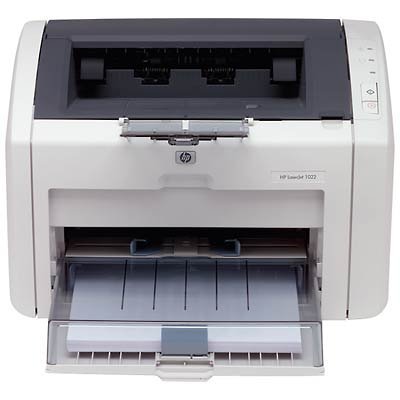
I've been having printer problems for months. The Canon I bought to accompany gave up the ghost waaay too quickly, and my old Epson Stylus has been dying on its arse for years. Finally, yesterday, I snapped. Having spent a smll fortune on cartridges for both bloody printers, neither of them was willing to work for more than five minutes. Back when I was still editing and designing the Judge Dredd Megazine, I needed a colour printer to do my job effectively - but that was five years ago. I'd say that 99% of my work is text these days, so a good, efficient B&W printer is all I need. Time to upgrade to a nice, shiny, new laserjet.

Yesterday I ordered the HP 1022 from Amazon.co.uk, with express delivery specified for a few extra squids. It arrived this morning before nine and took all of 23 minutes to set up. I've just printed my first few pages and they shot like a rabbit from a trap. Blimey, it's fast! And the print quality? Stunning. That's it, I am never going back to inkjet printing again. Let joy be unconfined, let there rejoicing in the streets and necking in the parlour. I have a printer that works and I feel fine. Amen.

Entitled [blame that Jim Swallow]

Over at his blog Jim Swallow has been contemplating the meanings hidden within titles of stories he's written. Let's see what - if any - sense I can make of my own titles, starting with the novels. The Savage Amusement was inspired by a comment my Irish grandmother once made, about work being the savage amusement. The words sounded so unlikely coming from her, that stuck in my memory. The book features Judge Dredd fighting a villain called Savage who caused chaos for his own amusement - a case of events being shaped to fit the title I wanted to use.

Cursed Earth Asylum: that was about events at an asylum. In the Cursed Earth. Natch. [Brings to mind one of my all-time favourite quotes from an Aaron Sorkin show, in this case Sports Night: 'What's a perfect game?' 'I know there's a lot of jargon but some of this is self-evident.']

Silencer: sounded cool. I think there was a conspiracy theme to the book, so it was about people being... well... silenced.

Who Killed Kennedy: A Doctor Who novel involving the assassination of JFK.

Amorality Tale: A pun of the notion of morality tales from the Middle Ages. This was a Doctor Who novel that deliberately took an amoral view of its characters. Vicious murderers acting like heroes, if it suited their needs, while good people died.

The Domino Effect: Another Doctor Who novel. It's all about cause and effect, what would happen if someone systematically suppressed the invention of the computer.

Empire of Death: Yet another Doctor Who novel. I wanted to call this Metempsychosis, as it sounded like a much cooler title and alludes to Pythagorus's theories about transmutation of the soul. The editor suggested Empire of Death. The editor won.

Bad Moon Rising: A novel that takes places over 13 hours, with each chapter representing an hour of real time. Yes, 24 had just become a hit in Britain, no prizes for spotting the obvious influence there. The story took place over one night, with a full moon overhead, hence the title borrowed from the hit single by Three Dog Night.

Kingdom of the Blind: A plotline kinda borrowed from Day of the Triffids where almost everyone in the Big Meg gets blinded. Dredd's got bionic eyes, so he is unaffected, making him king in a kingdom of the blind. That sounds better than the book was.

The Strangelove Gambit: My first Nikolai Dante novel. I wanted to call it The Faberge Experiment, but trademark infrignement concerns nixed that. My Dante novels tend to be spy-fi romps, so I was borrowing the naming conventions of authors like Robert Ludlum - you know, The Bourne Supremacy and all that.

Imperial Black: A title leftover from a rejected proposal by another author got slapped on to my second Dante novel. I managed to work it into the story okay.

Honour Be Damned!: Another Dante novel, another leftover title I inherited. It's one of Dante's catchphrases, but didn't really suit the story I wrote.

Suffer the Children: A Nightmare on Elm Street novel, inspired by a Biblical quotation. The book was akin to having Freddy torture characters from The Breakfast Club - nice.

Operation Vampyr: My first Fiends of the Eastern Front novel. It's about Operation Barbarossa in WWII and features vampires. This was suggested by the editorial team and much better than my dry, original title of Operation Barbarossa. Which stank.

The Blood Red Army: Originally The Bloody Red Army, but apparently some US book chains won't stock titles featuring the word Bloody.

Twilight of the Dead: Originally Twilight of the Undead, which made more sense. The last book of my Fiends of the Eastern Front trilogy, about vanquishing the vampire menace. Twilight of the Dead would work better on a zombie novel.

Coming soon: A Murder in Marienburg - my first Warhammer novel. It's a murder mystery. Set in Marienburg. You do the math.

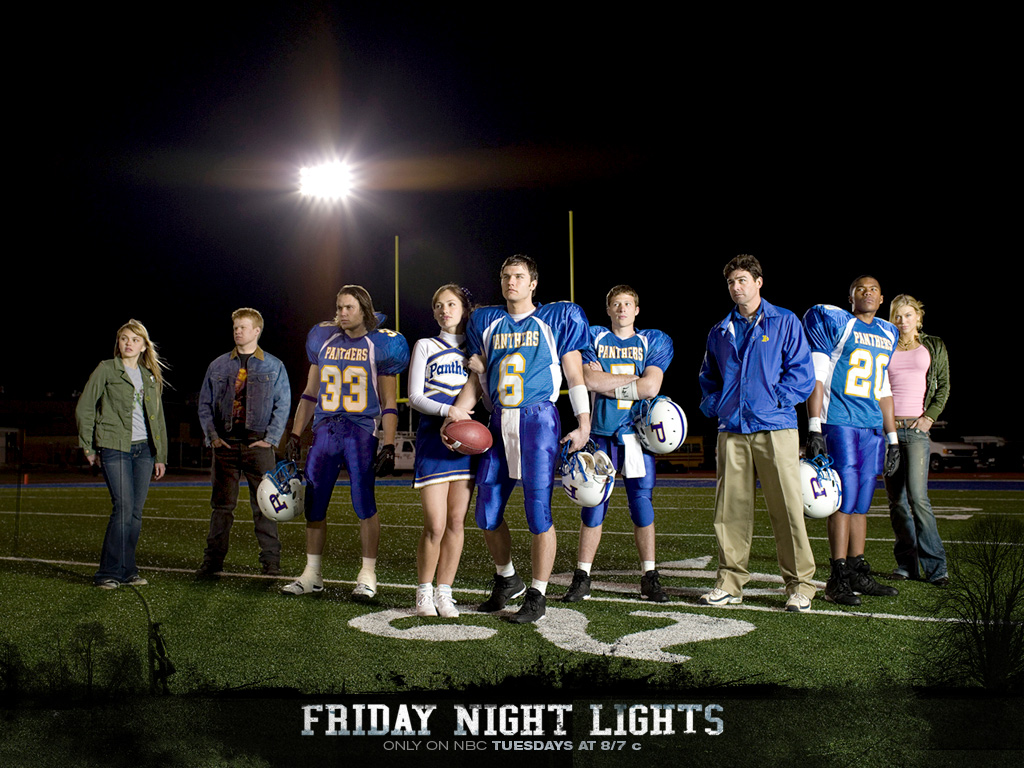
Friday Night Lights gets a full season

Good news from acros the Atlantic: Variety reports that new TV drama series Friday Night Lights has been picked up for a full season. The show about life in a small Texas town where everything revolves around the successes [and failures] of a local sports team has wowed critics but struggled for ratings.

The fact FNL is ostensibly about American football means it will struggle even more to find an audience outside the US. That's a shame, as it's one of the best things I've seen on TV this year - powerful and moving, with great, subtle writing. Bizarrely, I understand ITV has bought the UK broadcast rights to FNL. Grud alone knows when and where they'll schedule it. But it's well worth watching, if you get the chance.

FNL screens on NBC in America, a channel trying to climb out of a hole at the moment [much like ITV in Britain]. That may have saved the series, as NBC Entertainment president Kevin Reilly told Variety: 'We gave it probably the toughest hour on the schedule and yet, while it's been doing modest ratings, it's been holding its own. If you hang on to good work, eventually the word gets around.' [FNL's been up against the US version of Strictly Come Dancing, which is just as much a ratings juggernaut as its UK progenitor.]

Monday, November 13, 2006

Red-Hot and Filthy Library Smut

You love it, you know you do. You can't resist the lure of Hot Library Smut, can you? Can you?

Well, I know I couldn't. Link courtesy of Anna Louise's Journal.

Dylan Thomas, the science fiction years

Some genius has combined the best known work of Welsh poet Dylan Thomas with the latest effort from the Doctor Who production office in Cardiff. The result is Under Torchwood, a work of satirical genius. Here's a brief extract...

SECOND VOICE
Torchwood agent Gwen Cooper, the viewers' proxy.

FIRST VOICE
Plumply pop-eyed, gap-toothed and beyond her fringe, she tiptoes around her flat in the dark, trying not to awaken her boyfriend Barry Backstory, who is dreaming of future episodes where he gets a bigger part.

BARRY BACKSTORY'S DREAM
I'm telling you, Gwen, I have to know who you want: me, or Captain Jack, or several of the others.

GWEN IN BARRY BACKSTORY'S DREAM
Don't make me choose.

FIRST VOICE
Non-dream Gwen opens the door of her flat, where she finds

SECOND VOICE
Captain Jack,

CAPTAIN JACK
Hi. I'm Captain Jack Harkness.

SECOND VOICE
accompanied by

TORCHWOOD AGENT 1
Toshiko Sato. I'm an all-new kind of female sci-fi character for the twenty-first century. I can give computers insoluble equations in Algol.

TORCHWOOD AGENT 2
Doctor Owen Harper. I'm a weasel-faced would-be rapist and self-described twat. By dint of great effort, I have made myself even less sympathetic and more unlikeable than the other characters.

SECOND VOICE
and

TORCHWOOD AGENT 3 [plaintively]
Ianto Jones. I've got a Cyberlady in my wardrobe.

CAPTAIN JACK
Gwen, you've got to come quickly. It's the Rift.

GWEN
What is the Rift?

FIRST VOICE
The Rift is a kind of hellmouth that is sucking on a transcendental, transdimensional gobstopper. It is a double-egg MacGuffin served with large flies. It is

SECOND VOICE
an easy way for lazy writers to generate indulgence-straining plots, without ever troubling to think up anything new, or plausible, or to know or look up any science.

RUSSELL T DAVIES
Horizon doesn't bother. Why should we?

SECOND VOICE
Point.

Great quote in Stephen King interview

There's an interesting interview with scribe Stephen King in the Daily Telegraph that's worth well a read. In it he mentions a line from Philip Roth's novel Everyman that neatly sums up my attitude to writing for a living - sometimes it isn't pretty, but it gets done:

Amateurs wait for inspiration,
the rest of us get up every day and go work.


If that seems a tad bleak, I recommend reading this inspiring blog entry by Maggie about finding inspiration when the well of creativity is a yawning chasm of nothing.

Radio drama: the art of being clearly subtle

The BBC Radio drama lab I’ve been on has been a fascinating and inspiring experience, reigniting my enthusiasm for writing and – unsurprisingly – writing radio drama. Job done, I guess. We’ve met and talked with half a dozen radio producers and writers, all of whom have had interesting and valuable things to say about the medium and writing in general. Here’s a random selection of notes and quotes from the lab thus far…

5 THINGS TO THINK ABOUT
a. How will you tell your story?
b. What is at the heart of your story?
c. What’s the potential of your story?
d. What are the practicalities of your story?
e. What are the misconceptions of your story?

You must make the audience CARE. Radio drama has to be led by emotional action. Radio drama is about a moment of change – something is happening. What’s the difference between a monologue as a piece of prose and a piece of drama? Momentum, emotional change. Forces are pulling people apart or pushing them together. By giving characters something to do while they’re talking, you make the experience more aurally interesting.

In classic serial adaptations for radio, there’s an expectation of narration. 45 minutes of radio drama equates to a 7000-7500 word script.

ADAPTATION: Consider your favourite short story. What would you do if you were adapting it into a 14-minute radio play? How might you dramatise it? How would you break it into scenes? What would you keep? What would you omit? What’s the centre of the story, what’s the heart of it?

FROM THEATRE TO RADIO: Ultimately you can’t transpose theatre straight to radio. Radio is an intimate, individual experience where theatre is a shared, group experience. On radio you’re asking the audience to create so much in their imagination. Radio doesn’t have a captive audience, that’s why plot is so important.

You need to be telling a story on radio to keep the audience investing emotionally. Radio can be guilty of challenging the audience more than telling them a story – but story must come first on radio. The BBC wants stories that make you stop and listen. Mostly, it’s the human element within a story that achieves this. Producers wanted to be moved, rather than challenged.

The three most important things in radio drama? Story, story and story – but that story needs to have emotional content, texture and a convincing world. Reveal character through dialogue, but do it obliquely – not overtly. Space, silences and pauses impact massively on the sound of radio storytelling. Careful use of revelations propel an audience through your story.

When characters move into a different room in a radio drama, it becomes a new scene for script purposes, even if the audience follows the characters into that room. When a character leaves a room, you need to acknowledge this in your script e.g.
ROB: (Going) I’m leaving now, I’ll see you later – bye!

Another way of achieving this effect is:
ROB: (Recede) I’ll see you in hell, damn you!
MARY (Recede) Wait, let me come with you!

Equally, when a character is arriving into a scene, there’s a similar script shorthand:
ROB: (App.) Well, here we are in Hell. Hmm, it looks a lot like Slough.
MARY: (App.) Actually, I think this is Slough.
ROB: Really? I could have sworn this was Hell.

The above examples also point up another script transition trick. When two characters leave one scene and arrive in the next scene, the person who left first – in this case Rob – always arrives first at the next scene. It’s a convention of radio that works well.

If you’ve got three characters (or more) in a scene, don’t leave characters standing silently for too long, otherwise the audience is liable to forget the character is present.

In radio drama you should strive to be CLEARLY SUBTLE. Low-format is BBC Radio jargon for CHEAP e.g. contemporary domestic drama. The most important job in radio drama is to keep the audience listening. You are dealing with only one sense – sound. Radio suffers from the shit-click syndrome. People listen to a play, think it’s shit and click – off goes the radio. You have to grab the listener and keep them listening. A great character or story alone isn’t enough.

Writers are magicians using misdirection to keep the audience guessing. Your tools: character and story. But you can also vary the content and context of your scenes: monologues and narration mixed with crowd scenes; two-handers mixed with trios and four-handers; angry scenes followed by quiet moments full of pauses and silences. Use contrast to your advantage.

Think about how you COMPOSE a play as well as how you WRITE it. Think of the texture, the sensual experience of listening to it. Give the ear a variety of aural experiences: big settings (warehouse, train stations) and small, intimate settings; few characters and many characters. The listener’s imagination gets worn down by repetition, it likes variety. Remember you are writing for your dialogue to be SPOKEN and ACTED.

In radio drama actors don’t have a lot of rehearsal time, they don’t learn their lines or have the chance to delve deeply into their characters. Chances are they’ll only be getting to know their role by the time recording is finished. You should be AMBITIOUS in your writing. Aim to entertain, but also strive to shock, scare, to make the audience laugh and care. Good radio drama must have a real EMOTIONAL CHARGE.

SILENCES and PAUSES draw the audience in – they can make comic scenes funnier. SMALLNESS AND QUIETNESS can be vital ingredients, don’t deny the low-key. INTIMACY is powerful on radio, it reflects the listener’s experience. Ideally you should tell a story that can only work on radio e.g. Cigarettes and Coffee by Anthony Minghella was told entirely through answerphone messages. You can create incredible soundscapes on radio – induce audience panic with effects.

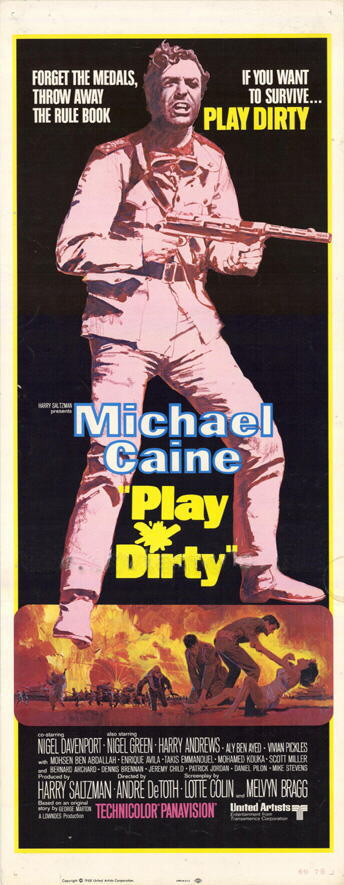
Films of Michael Caine #12: Play Dirty (1968)

Cast: Michael Caine (Captain Douglas), Nigel Davenport (Cyril Leech), Nigel Green (Colonel Masters), Harry Andrews (Brigadier Blore), Patrick Jordan (Major Watkins), Daniel Pilon (Major Allwood), Martin Burland (Dead Officer), George McKeenan (Corporal at Quayside), Bridget Espeet (Ann), Bernard Archard (Colonel Homerton), Aly Ben Ayed (Sadok), Enrique Avila (Kalarides), Mohsen Ben Abdallah (Hassan), Mohamed Kouka (Assine), Stanley Caine (German Officer).

Crew: André de Toth (director), Harry Saltzman (producer), Lotte Colin and Melvyn Bragg (writers), Michel Legrand (music), Edward Scaife (cinematography), Jack Slade (editor), Tom Morahan, Elven Webb and Maurice Pelling (art direction).


Synopsis: Colonel Masters runs an unconventional team of guerrilla warriors in North Africa during World War II. Brigadier Blore wants to close the operation down, but Masters gets one last chance. His men are to destroy a German fuel dump 400 miles behind enemy lines. An engineer on loan to the Allies from British Petroleum, Captain Douglas, is put in charge of the mission. He is shocked to discover his team is made up of murderers, junkies, homosexuals and thieves. The true leader of this rabble is Cyril Leech, who is offered £2000 to ensure Douglas gets back alive. The eight-man squad travels across the desert, surviving sandstorms, landmines and booby traps.

When they reach the fuel dump, it is just a decoy. The team heads for the nearest port disguised as German soldiers, planning to steal a boat. Douglas and Leech discover the real dump is at the port. They decide to blow it up as a diversion. Meanwhile, the Allied advance has broken through the German lines and wants to secure all the enemy’s fuel. Blore orders Masters to betray the squad’s location to the Germans. Douglas and his men attack the fuel dump but only Douglas and Leech escape. Next morning the Allies overrun the port. When Douglas and Leech try to surrender, they are gunned down by British soldiers…

Play Dirty started as a story by George Marton, inspired by a real life incident. Twelve Palestinians sent to blow up German fuel dumps during the Second World War, but were later betrayed by the British. The story was adapted into a screenplay by Lotte Colin and Melvyn Bragg. Producer Harry Saltzman already had Caine under contract and selected him to play reluctant soldier Captain Douglas. American actor Warren Beatty expressed in the other leading role, the guerrilla warrior Cyril Leech. After he pulled out Richard Harris was hired to play Caine’s antagonist. French director René Clément was chosen to shoot the gritty war drama, filmed on location in the south of Spain. Earlier plans to film in Israel were abandoned after insurance problems.

British actor Nigel Davenport was approached by Saltzman for the supporting role of Colonel Masters. In an exclusive interview for this book, Davenport recalled the troubled making of Play Dirty in early 1968: ‘Richard Harris was becoming a pop star, having recorded ‘MacArthur Park’ [a Top 5 hit single in 1968] and also been in the film musical Camelot. Because Harris never showed up for days on end, we shot all the scenes that could be shot without him. He arrived looking like a sort of pop-star, which was not really suitable for the subject. There were all sorts of to-ings and fro-ings. He finally left, as which point Harry Saltzman said to me, “Do you want to plan the part?” I said, “Sure.” He said, “Okay, we’ll have dinner later on, but now I’ve got to go and fire the director!”’

Nigel Green was brought in to take over the role of Masters and Davenport became Leech. It was a happy reunion for Caine, whose first major film appearances had been alongside Green, in Zulu (1964) and The Ipcress File (1965). Veteran director André de Toth was already on set as executive producer, so Saltzman had him take over helming the picture. Almost all the material already filmed had to be reshot with the revised cast.

Davenport had never met Caine before starting work on Play Dirty. ‘He was enormously supportive, an extremely generous man, very hospitable. We were working in very adverse conditions. For one of the sequence we were supposed to be in a sand-storm. We worked in a sand-storm for real. There was this howling wind, sand flying around and it was bloody uncomfortable. We started off with ten cameras covering it and there was one camera fit to use by the end of the day. It took much longer to shoot than it should have done because of adverse weather and all sorts of problems.’

In 1969 Caine told Films and Filming magazine about the troubled production: ‘I will never make another film in Spain, the conditions are so bad. I’ve got it in my contract from now on. André de Toth made an extremely good job of a very difficult situation. The script was never right, and a lot of it was done at the last minute, but it’s one of those things where I still think it’s a valid picture. No one was ever satisfied with the ending.’

Davenport said he and Caine discussed how best to conclude the film: ‘Between the two of us, he and I dreamed up the actual ending, that we should get shot, because of that irony in the film. Harry Saltzman thought that was a terrible idea, he said we should get saved. I remember talking to Michael about it and we both thought the ending we had dreamed up was a better one than marching off into the sunset.’

Caine had served in the Korean War during the 1950s. ‘One minute someone was there, then the next minute they weren’t,’ he told Films and Filming. ‘I couldn’t have those two men [Douglas and Leech] go through all that and then be treated like film stars at the end … coming back and getting medals.’ Caine and Davenport got their way.

The film was released to mixed reviews, with the BBFC requiring cuts before granting it an AA rating. In America the picture was rated M/PG. ‘It wasn’t particularly well received at the time,’ Davenport said. ‘I think the public were rather tired of war films. Since then I think it’s achieved a certain sort of cult position. All the people who have seen it that I’ve met think it’s terribly good. That was a great deal due to Michael.’ Play Dirty had to wait nearly 30 years for a video release, reclassified as a 15 in the UK. The tape has since been deleted. The film has yet to make its DVD debut.

Reviews: ‘It develops into a reasonably tightly made and suspenseful action film … Michael Caine and Nigel Davenport … play with their usual casual authority.’ – MFB
‘Play Dirty plods across the screen like a camel in a sandstorm.’ – Time

Verdict: Play Dirty is arguably the Get Carter of Michael Caine’s war films. Grim and gritty, the story is superficially similar to the likes of The Dirty Dozen (1967). But the movie’s relentlessly downbeat tone and abrupt, bleak ending mark it out as more than just an action romp. The idea that war is hell is hardly new but here the point is made with enough humour and excitement to maintain your interest. The script requires Caine to play the more passive role, while Davenport steals the show as the murderous, mercenary Leech. It is no surprise Play Dirty struggled to find an audience in the late 1960s, but this is a picture overdue for reassessment. Well worth a look, if you can find it.

Sunday, November 12, 2006

A good walk ruined: LOTR talks a short cut

Lord of the Rings is arguably the campest story ever told, as it's essentially the tale of two short guys who falling love with each other while taking some bad jewellery back to its place of manufacture. Of course, the whole thing could have been a lot shorter if they'd taking this option instead..

Nuke 'em from orbit - it's only way to be sure

Saturday, November 11, 2006

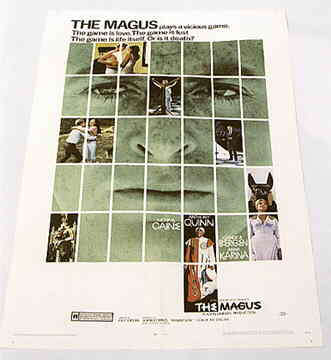
Films of Michael Caine #11: the Magus

THE MAGUS (1968) Cast: Michael Caine (Nicholas Urfe), Anthony Quinn (Maurice Conchis), Candice Bergen (Lily), Anna Karina (Anne), Paul Stassino (Meli), Julian Glover (Anton), Takis Emmanuel (Kapetan), George Pastell (Andreas-Priest), Daniele Noel (Soula), Jerome Willis (“False” German Officer), Ethel Farrugia (Maria).
Crew: Guy Green (director), John Kohn and Jud Kinberg (producers), John Fowles (writer), John Dankworth (music), Billy Williams (cinematography), Max Benedict (editor), Don Ashton (production designer).

Synopsis: Nicholas Urfe leaves England to escape a failed romance with Anne, an air hostess. He becomes a teacher on the Greek island of Phraxos. Nicholas encounters a mysterious local, Maurice Conchis, who puts the teacher through a series of tests, tricks and illusions. Conchis was thought to have died during the war. Anne visits Nicholas on the island and they make love, but he refuses to take their affair any further. Soon after he is sent a newspaper report about Anne has committing suicide. Nicholas finds himself in a recreation of an incident from the war, when the Germans occupied Phraxos. Conchis reveals he was made mayor of the island by the Nazis. When three Greek partisans from the mainland murdered four Germans on Phraxos, Conchis was given a stark choice – kill the partisans himself or see 80 local men murdered in cold blood. Conchis could not choose and the Germans killed everyone – except the mayor. Conchis staged his own death to escape the shame of what had happened. Just when Nicholas thinks he understands, Conchis forces him to experience yet another hallucination. Finally, Nicholas sees Anne, still alive. His journey of discovery is over…

British writer John Fowles’ chilling novel The Collector was made into a well regarded film in 1965, collecting several Oscar nominations. Caine had known one of the producers, John Kohn, for several years. ‘When I saw The Collector, I knew I wanted to do John Fowles’ next novel,’ the actor told Films and Filming in 1969. ‘That was before he had even written it. John Kohn and Jud Kinberg had the option on it, and I said, “I’ll do that no matter what it is” as part of my Fox contract.’ Caine had signed a non-exclusive two-picture deal with Hollywood studio Twentieth Century Fox. The first half was fulfilled by the poorly received Deadfall (1968). The Magus became the second picture in the deal. ‘When I read the book I was absolutely fascinated by it,’ Caine told Films and Filming. ‘It’s a very personal thing and I suppose The Magus can really be taken by each individual for what it means to them.’

Director Guy Green grabbed the opportunity to make the film when offered it by Kohn. ‘One seldom gets offered anything that one is really fascinated in…,’ he told Films and Filming. ‘Most films fit into the major categories like Westerns, spy stories, comedies … The Magus seems to be outside these customary limits; it is unusual, a different kind of picture.’ Green worked with Fowles to adapt the novel into a workable screenplay. ‘He was better for the job than anyone else, but being a first script it wasn’t easy to shoot what he wrote. It isn’t a routine straightforward plot, but one that is built up out of impressions; in fact, the kind of story that only the cinema can really tell.’

The production started shooting in Greece but political unrest forced the unit to shift to Spain. Scenes were also filmed on location in England. Fowles made a brief cameo appearance as a sailor in the picture’s opening sequence. In his 1992 autobiography What’s It All About?, Caine confessed he could not understand the script and admitted he had never finished reading Fowles’ novel. The actor also found it hard to cope with the entourage surrounding his co-star, Anthony Quinn.

The film was released late in 1968, rated X in the UK. Reviewers on both sides of the Atlantic slated The Magus, with Green and Fowles taking the brunt of criticism for failing to translate the novel’s magical essence on to celluloid. Billy Williams did receive a BAFTA nomination for his cinematography. The Magus was a box office flop and has never been released on video or DVD. {Update: it was released on Region 1 DVD in Octoner 2006/] Caine talked about the film in an interview with Time Out in 2000: ‘That was a contract picture for Fox so I had to do it. I didn’t know what it was about. Nobody knew what it was about. Still, it was nice filming in Majorca…’

American filmmaker Woody Allen was once asked what he would change if he could live his life over again. He is reputed to have said he would do everything exactly the same – except he wouldn’t see The Magus.

Reviews: ‘Both acting and direction are competent enough in an uninspired, workmanlike way, but this doesn’t prevent the film from being faintly ludicrous some of the time and painfully unexciting all of the time.’ – MFB
‘This may not be the most misguided movie ever mad, but it’s in there pitching.’ – US critic Rex Reed

Verdict: The Magus is like watching paint dry while being whipped with barbed wire – slow, boring and excruciatingly painful at the same time. Some novels should never be converted into movies, simply because the internal nature of the narrative defies easy adaptation into the predominantly externalised style of cinema. Green’s direction is flat, lifeless and pretentious, while attempts to inject fantasy sequences into a realistically shot film are laughable. The actors stumble through the production, with Caine plainly baffled by all that he beholds. Only once does The Magus come close to bringing alive the essence of Fowles’ novel, in the flashback sequence when Conchis faces his terrible dilemma with the Nazis. The rest of the time this film is just terrible - strictly for cinematic masochists.

Friday, November 10, 2006

Films of Michael Caine #10: Deadfall

DEADFALL (1968)

Cast: Michael Caine (Henry), Giovanna Ralli (Fe), Eric Portman (Moreau), Nanette Newman (The Girl), David Buck (Salinas), Leonard Rossiter (Fillmore), Carlos Pierre (Antonio), Vladek Sheybal (Dr Delgado), John Barry (Orchestra Conductor), Renata Tarrago (Solo Guitarist).

Crew: Bryan Forbes (director), Paul Monash (producer), Bryan Forbes (writer), John Barry (music), Gerry Turpin (cinematography), John Jympson (editor), Ray Simm (production designer).

Synopsis: Henry Clarke is an outstanding jewel thief who plans to steal diamonds from a rich man called Salinas. Henry poses an alcoholic to enter a Spanish clinic where Salinas is a patient. Henry is approached by a beautiful woman called Fe on behalf of her ageing husband Moreau. The couple want to collaborate with Henry on stealing Salinas’ diamonds. The thief agrees and moves in with them. Henry and Moreau burgle a private home as a test of how well they work together. Henry begins an affair with Fe, but she refuses to leave her husband – even though Moreau is gay. Fe says Moreau betrayed a lover during the war to save himself from the Nazis. Moreau reveals he is Fe’s biological father, as well as her husband. Henry attempts the Salinas job on his own, but is shot by a guard and falls to his death. Moreau commits suicide. Fe is taken away by the police…

Director Bryan Forbes wrote the screenplay for this £1 million feature, adapting a 1965 novel by Desmond Cory. Production began in the autumn of 1967, with location shooting in Spain and studio work at Pinewood. For Caine, the feature provided a reunion with Forbes and the director’s wife, actress Nanette Newman – the three had worked together on The Wrong Box (1966). It was the first half of a disastrous two-picture contract Caine had agreed with Twentieth Century Fox (the other half was The Magus (1968)).

During filming in Majorca Forbes described Deadfall as a horror story in sunlight. ‘I didn’t want to move into the Hitchcock field, all shadows and gloom,’ the director told Nova magazine. ‘I wanted everything clear and nasty under the sun – horrible because of that. The story’s about a jewel thief, but it’s also about the darker side of human nature: homosexuality and incest. It’s all good clean family fun.’ Forbes predicted Caine’s career would be altered by the movie. ‘This film could open up an entirely new landscape for him. He’s got to escape through one trapdoor to find the next one.’

Caine also felt Deadfall marked a change. ‘This is what I call my first handsome part,’ he told Nova. ‘Alfie and Harry Palmer were either downtrodden or treading on themselves. This character is tougher, more subtly brutal. More like me. I don’t let anyone take liberties with me. Filming’s all right when it’s going well, but when it’s going badly, it’s a bastard. Now I don’t let it bother me – after all the film’s being built round me. It’s how I feel that counts.’

Deadfall’s music was composed by John Barry, a frequent contributor to Caine movies in the 1960s. Unusually, Barry also appeared on screen as conductor of an orchestra. Forbes wrote about this in his 1992 autobiography, A divided life. ‘For Deadfall I asked him [Barry] to give me a guitar concerto of concert-platform standard, for it had to be performed in its entirety by Renata Tarrago and at the same time underline the drama of a robbery – the film being cross-cut between the concert and the working out of the crime.’ Forbes says Barry’s music complemented the picture, instead of swamping what was being shown on screen.

The film was released in the UK during 1968. It received an X rating from the BBFC, restricting entry to those aged 18 and over. Deadfall was panned by critics and a failure at the box office. Its reception was just as harsh in the US, where it was rated R. The film has never been released on VHS or DVD. [Update: In fact Deadfall was released on Region 1 DVD in the US during October 2006.]

Reviews: ‘The principal protagonists move like so many somnambulists through the turgid labyrinth of Bryan Forbes’ latest film, with Michael Caine’s performance … directly belying the emotional excesses attributed to him in the script.’ – MFB
‘An apparent attempt to pull off an Alfred Hitchcock suspenser, with added Freudian schleps, Deadfall falls dead as little more than ponderous, tedious trivia.’ – Variety

Verdict: Deadfall makes two hours seem so much longer. The three central characters talk and talk without saying anything of consequence. Since Forbes wrote and directed this, he must take the blame. Cinema is a visual artform, yet this film constantly has people talking about events instead of showing them. Everyone answers questions with more questions and melodrama crushes any real drama. Whenever the inaction flags, Forbes cuts away to an image of waves crashing on a stony beach or seagulls squawking overhead. In the midst of all this Caine is lost, unsure of how to pitch his performance and – unusually – unable to create a hint of empathy for his character. This film comes alive only during the cross-cut sequence of theft and concerto, which owes much to the classic French caper film Rififi (1954). Otherwise, Deadfall is a dead loss.

Studio 60 gets full season pick-up

Variety reports that Aaron (The West Wing) Sorkin's new drama Studio 60 on the Sunset Strip has gotten a full season pick-up from NBC in America. The show's fate has been the subject of endless speculation, thanks to being an expensive production with mediocre ratings. But Studio 60 attracts a wealthy, upscale demographic that works well for advertisers, so NBC has ordered a full set of 22 episodes. [Apparently the network also negotiated a cheaper price per episode, letting the programme makers carry more of the financial risk - nice work, if you can get it.] But the fate of critically acclaimed Friday Night Lights still hangs in the balance. Much as I love Sorkin's work, I'd rather have a full season of FNL - it makes me care about the characters and want to know what happens to them next.

Making the audience care about your characters is one of the key things that's come up again and again on the BBC Radio drama lab I'm on at the moment. We had an afternoon session with playwright Gregory Burke yesterday. Half the people attending the lab were in awe of him, his writing and what he's achieved. Sadly, I've never see one of his plays, so I wasn't meeting one of my heroes. But he was funny, genuine and full of enthusiasm for writing - just the sort of scribe you like to meet. He made mention of a an acclaimed writer who's not working at the moment, after losing their confidence, losing their bottle.

Bottle is such an important yet intangible part of the writer's armour. You've got to beleive you have something to say, a voice with which to say it and a story worth telling - otherwise it's all too easy to give up or find yourself doing hackwork to pay the bills. Two weeks back I had a couple of bad days back to back, and felt two key projects coming apart in my hands. If nothing else, going on the radio lab has done wonders for helping me rediscover my confidence. I've found my bottle and I know how to use it. I feel like James Brown - good.

Thursday, November 09, 2006

Films of Michael Caine #9: Billion Dollar Brain

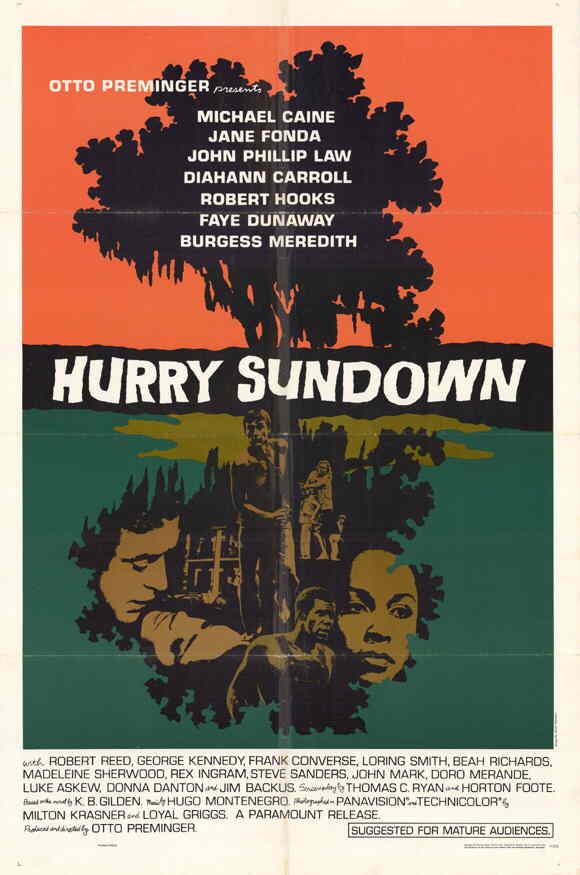
Well, it's back to Edinburgh for day three of the BBC Radio drama lab, so here's another excerpt from my book Starring Michael Caine. For those who are enjoying all the 1960s film posters [hi, Jock!] featured in these entries, you can see more by visiting the Michael Caine Film Poster Site. Love those groovy 60s graphics!

BILLION DOLLAR BRAIN (1967)

Cast: Michael Caine (Harry Palmer), Karl Malden (Leo Newbigen), Ed Begley (General Midwinter), Oscar Homolka (Colonel Stok), Françoise Dorleac (Anya), Guy Doleman (Colonel Ross), Vladek Sheybal (Dr Eiwort), Milo Sperber (Basil), Stanley Caine (G P O Special Delivery Boy), Donald Sutherland (Scientist at Computer), Susan George (Russian Girl on Train).

Crew: Ken Russell (director), Harry Saltzman (producer), John McGrath (writer), Richard Rodney Bennett (music), Billy Williams (cinematography), Alan Osbiston (editor), Syd Cain (production designer).

Synopsis: British spy Harry Palmer has resigned from MI5 and set up his own detective agency. An anonymous phone call offers Harry £400 to deliver a package to Helsinki. When he arrives, Palmer is met by a woman called Anya. She takes him to her lover, Leo Newbigen, a former CIA agent and old acquaintance of Harry. Leo invites Palmer to work with him for a covert organisation, Crusade for Freedom. Harry’s former boss, Colonel Ross, coerces him into rejoining MI5. The colonel says the package contained eggs filled with a deadly virus stolen from a British research laboratory. Palmer is assigned to get the eggs back from Crusade for Freedom. Palmer travels to Latvia for a meeting with local Crusade for Freedom agents. During the night he is visited by Russian General Stok, who warns him about Crusade for Freedom’s boss, General Midwinter. Stok says Midwinter is planning to create an anti-communism revolution in Latvia. Harry discovers the local agents are just gangsters. Harry and Leo travel to Texas where Midwinter shows off his super-computer, the Billion Dollar Brain. Leo is faking the existence of 300 agents in Latvia and pocketing their pay. Palmer convinces Midwinter of Leo’s duplicity. Harry returns to Helsinki and locates Anya when she collects the virus eggs. Anya leads Palmer to Leo, but she escapes with the eggs. Midwinter launches an invasion of Latvia from Finland, leading his army across the frozen water between the two countries. Harry and Leo try to stop the Crusade for Freedom forces. But the Russians are expecting the army and blow up the ice. Everyone drowns except for Harry. Stok and Anya arrive by helicopter. She was Stok’s agent in Finland. The colonel gives Palmer the eggs back as a gift for Ross…

The first Harry Palmer film, The Ipcress File, had been a hit for producer Harry Saltzman in 1965. A sequel, Funeral in Berlin, followed a year later. In 1967 the third film in the series was made, with Ken Russell as director. John McGrath was hired to adapt Len Deighton’s complex thriller into a screenplay. ‘Billion Dollar Brain was a complicated and difficult novel,’ Russell told Films and Filming in 1970. ‘When one came to analyse it and try to make a film script, it just didn’t add up. Probably one should have abandoned it then and there, but I was promised I could do other films … if I made Billion Dollar Brain.’ Russell had been a television director for a decade and shot only one previous feature film, French Dressing (1963). Billion Dollar Brain had a budget of $3 million, the biggest yet for a Harry Palmer film. Caine returned as the reluctant spy. Also back were Guy Doleman as his British boss and Oscar Homolka as Stok.

Almost all the location work was shot around Finland in sub-zero temperatures. In 1997 Caine told GQ about working with Russell. ‘British movie crews have a way of sussing things out. By the third day he was known as Rasputin.’ Studio work was completed at Pinewood, with Caine rushing away afterwards to Paris for filming of his short sequence in Woman Times Seven (1967) with Shirley MacLaine. Leading lady Françoise Dorleac died in a car crash not long after the Palmer film wrapped.

Billion Dollar Brain was released in the US during December 1967. In Britain the BBFC required minor cuts before granting an A certificate. The film hit UK cinemas in January 1968, accompanied by scathing notices from critics. ‘The worst reviews I’ve seen for one of my own films for a long time were those for Billion Dollar Brain,’ Caine told Films and Filming in 1969. He said the movie still make quite a lot of money. Three years later Caine criticised the picture in an interview with the Radio Times: ‘Ken Russell, who directed it, is a friend of mine. But he lost the story somewhere, and no one could care a damn about what was going on because they couldn’t follow what was going on.’

In 1968 Caine announced he was giving up the role of Harry Palmer. ‘After three films I don’t think the Palmer character holds anything for me anymore. The films have helped me a lot. I hope some new actor can give his interpretation of Harry Palmer and have the help I did.’ Plans were announced for a fourth Palmer film, based on the Deighton novel Horse Under Water, but nothing came of it. The character stayed in retirement until the 1990s when Caine returned for two ill-fated films made in Russia.

Billion Dollar Brain was released on rental video in Britain with a PG rating in 1985. But this tape was withdrawn soon afterwards and is now almost impossible to find. All the other Harry Palmer films are available but a problem with musical clearance rights for the Beatles’ song A Hard Day’s Night means an imminent VHS or DVD release for Billion Dollar Brain seems unlikely. [Update: Since this was written, Billion Dollar Brain has been released on DVD - but with the sequence featuring A Hard Day's Night excised.]

If you ever see the film, three cameo appearances are worth spotting. Caine’s brother Stanley makes his acting debut as a postman in the opening scene. A young Susan George shows up as Russian Girl on Train, eating an orange and offering Harry a newspaper as he travels to Latvia. Most noteworthy is Donald Sutherland getting one line as Scientist at Computer, asking Leo ‘What’s going on?’ in Midwinter’s HQ. Sutherland would become a major film star within three years thanks to films like The Dirty Dozen, MASH and Kelly’s Heroes. He later appeared with Caine in The Eagle Has Landed (1976) and takes Noël Coward’s role in the 2003 remake of The Italian Job.

Reviews: ‘I liked much of The Ipcress File, something of Funeral in Berlin, but little of this scarcely comprehensible rigmarole except, perhaps, the snow-covered Finnish scene and Oscar Homolka as a genial old communist.’ – The Daily Telegraph
‘Oscar Homolka inhabits, inimitably, a little film of his own in the middle … and Michael Caine’s presence counts for a lot. But everyone else sinks without trace.’ - MFB

Verdict: As you can tell from the detailed synopsis, Billion Dollar Brain is a film with an overly complicated plot. Ultimately, this gets in the way of everything else and makes the lavish spectacle difficult to enjoy. Russell’s direction has deft visuals, but suffers from sluggish pacing. Caine’s performance as Harry remains consistent, despite this film’s more baroque flavour. Previous pictures were determinedly small scale, but this veers dangerous close to 007 territory with massive sets and globe-trotting adventures. How much you enjoy it will depend on which style of spy film you prefer.

Wednesday, November 08, 2006

Writing tools, not rules - fifty of 'em

An interesting set of essays about elements of writing - fiction or non-fiction - can be found by going here. Everybody needs to have a little reminder of the basics sometimes, don't you think? Being a big fan of the number 27, I went straight to the riff.

It's official: A Murder in Marienburg

I've been all coy about the novel I wrote for Games Workshop's Black Library imprint due to non-disclosure agreements, but a quick Google reveals the official Black Library website has already posted news of the impending tome! The scamps. Here's what they said:
David Bishop is now half way through his debut Warhammer novel, A Murder in Marienburg. Dave has a long and distinguished career in fiction writing and journalism, so it's an honour to have him writing for the Black Library. Dave has had many books published under the Black Flame imprint, notably the Fiends of the Eastern Front trilogy and the Nikolai Dante books, so we can look forward to an equally entertaining read set in the murky (and wet!) port of Marienburg.

Elsewhere on the Black Library site mention is made of the fact A Murder in Marienburg will published in May 2007, runs to 416 pages and costs £6.99. Now all we need is the cover art. Tsk, so much for the Black Library omerta! Can I point out I hate being called Dave? My name's David Bishop - accept no substitutes.

What women [and men] don't want [at ITV]

Professional UK TV drama scribe English Dave has a fascinating post on his blog that includes information about what ITV doesn't want as new drama pitches. Apparently there are three specific non-starters: shows about cops and/or lawyers; shows about women in jeopardy; and shows about stalkers. Dang! So much for my great idea about a brilliant female barrister in jeopardy from a crazed stalker. Nah, only joking - it's a bumbling female barrister. Nope, joking again. She's a solicitor, not a barrister. [Enough unfunny jokes - Ed.] Anyways, English Dave's discussion about what ITV doesn't want sparked a mess of musings in my tiny mind.

Back in the late 19th Century when I was editor of 2000 AD, wannabe scribes would corner me at comic conventions and ask what sort of stories I was looking for. Strangely enough, the reply 'good stories, well told' wasn't enough for some people. I always found it easier to tell people what I didn't want and let them deduce the rest. In all honestly, I didn't know what I wanted, beyond good stories, well told. The few times I tried to create new series and farm them out to writers, the results were less than successful [e.h. Outlaw, Witchworld]. Eventually I realised it was better to let writers do what they do best - be creative and inventive with their writing - and then help them develop that idea into a workable series.

According to English Dave, ITV is looking for two things: classic adaptations [but you have to be an established writer to get those gigs - ideally Andrew Davis]; and 'bold, talked about contemporary drama with something to say about the world we live in'. I's sure it's no coincidence that my screenwriter mentor Adrian Mead has been saying almost exactly the same thing for the past year. It's one of the reasons why I abandoned the idea I had initially developed for the mentoring project. My replacement story is much closer to reality and much nearer the bone - and it's something I'm eager to write about. Let's hope it's something people will be eager to read, too.

Save the Cheerleader, save the world

Two new US TV dramas are going from strength to strength across the Atlantic. Heroes is continuing to build its audience, thanks to a recent catch-up episode marathon and strong word of mouth. All the promotion in the world might get people to watch the opening episode of a new show [witness the success of Torchwood on BBC3 in the UK], but it's word of mouth that encourages people to sample subsequent episodes. The first chapter of Heroes is good but by the end of chapter two it's got you hooked. Having worked in comics for a long, long time, this is what I've always wanted superheroes to be but have never found in print - compelling, exciting, human and gripping. Doesn't hurt that Heroes has got the best cliffhangers on any show on TV at present, bar none.

Regular British readers of this blog will probably be bored to death of me pimping for the other breakout hit of the new US TV season, Ugly Betty. Will, not long until you too get to see what all the fuss is about. Channel 4 is scheduling the show for Friday nights in January, probably using Celebrity Big Brother as a hammock to help the series get established and build its audience. No doubt there'll be lots of carping about how it's not as funny as people expected, but I think they'll grow to love the characters and care what happens to them. Ugly Betty has its big kitsch moments and plot threads, not unlike the first season of Desperate Housewives, but I also think it's got more focus. Anyway, you can see for yourselves come January.

On the UK TV front, I've managed to miss conspiracy thriller The State Within, a shame as its exactly the kind of show I like - guess I'll be waiting for the DVD on that one. Enjoyed the final episode of The Amazing Mrs Pritchard last night, but was frustrated by the cliffhanger ending to the series. Ratings for the series weren't huge, so I have my doubts it'll be recommissioned. That means I'll never know what she decided to do about her husband's old crime. Sigh. Guess now I know exactly how some people felt about being left hanging by the last episode of my Sarah Jane Smith audio dramas. Such is life.

In other news, I finished my first piece of course work for year two of my screenwriting MA yesterday, and did the final tweaks on my Warhammer novel. Today I need to write a three minute scene in prep for the BBC Radio drama lab I'm returning to tomorrow. Plus I could do with progressing some of my other, ongoing projects. Busy, busy, busy - still, that's a good thing, right?

Tuesday, November 07, 2006

First piece of MA year two work submitted

In an effort to stop myself flailing around between the dozen different projects I'm trying to progress simultaneously, I've decided to turn today into a Get Something Finished kind of day. I'm happy to report the choice is paying dividends as I've just submitted my first piece of assessed work for year two of my screenwriting MA. It was a 2000-word essay comparing and contrasting a particular sequence from film adaptation of a novel or play of my own choice with its source material, accompanied by a highly detailed shot analysis of that sequence.

I opted for the diner sequence from David Cronenberg's A History of Violence (2005), adapted from the graphic novel by John Wagner and vince Locke. It make for a fascinating case study, even if producing the shot analysis did take five bloody hours. Still, that's one less monkey on my back. Now, let's see which pesky simian I can consign to my past next, instead of it cluttering up my future...

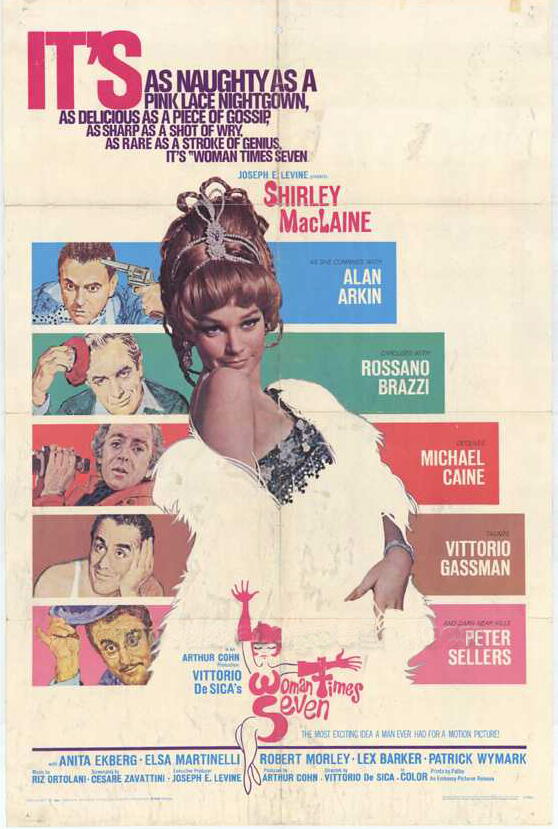
Films of Michael Caine #8: Woman Times Seven

In the hope of getting some work done today, here's another extract from Starring Michael Caine - and this one's quite the oddity.

WOMAN TIMES SEVEN (1967)


Cast: Shirley MacLaine (Paulette, Maria Teresa, Linda, Edith, Eve, Marie and Jeanne), Alan Arkin (Fred), Rossano Brazzi (Giorgio), Michael Caine (Young Man), Vittorio Gassman (Cenci), Peter Sellers (Jean), Anita Ekberg (Claudie), Elsa Martinelli (Pretty Woman), Lex Barker (Rik), Robert Morley (Dr Xavier).
Crew: Vittorio De Sica (director), Arthur Cohn (producer), Cesare Zavattini (writer), Riz Ortolani (music), Christian Matras (cinematography), Teddy Darvas and Victoria Spiri-Mercanton (editors), Bernard Evein (art direction).

Synopsis: The film is compromised of seven vignettes. In Funeral Procession, a grieving widow is wooed by her dead husband’s lawyer. Amateur Night sees an angry wife contemplate prostitution after catching her husband in adultery. Two Against One has two men competing for a disaffected woman’s attention. Super Simone finds a quiet wife making increasingly bizarre attempts to catch the eye of her preoccupied husband, until he concludes she is going insane. A fight for an exclusive gown turns murderous in At the Opera. Two lovers contemplate killing themselves in Suicide but both change their mind. Lastly, a handsome stranger follows two women across Paris in Snow. Jeanne and Claudie decide to split up, so they can discover which of them their stalker is pursuing. He follows Jeanne, the meeker woman who has never found a man with whom she felt it was worth having an affair. The stranger follows her home in the snow and lingers outside for a while. Jeanne’s husband Victor gets a phone call telling him what she has been doing all day. Victor is relieved to hear she is not having an affair and thanks the private detective. The handsome stranger leaves a nearby phone booth, having completed his job – he was being paid to follow Jeanne by her husband. She watches the stranger walk away, intrigued by him…

Italian director Vittorio De Sica was best known for his classic 1948 picture Bicycle Thieves (called The Bicycle Thief in the US), which won a special Oscar in the era before the academy had a regular award for best foreign language film. By the mid-1960s American actress Shirley MacLaine was a star in Hollywood, able to wield considerable power. She had chosen Caine as her leading man in Gambit (1966). For her next project MacLaine decided to collaborate with the acclaimed Italian director on a film made up of seven vignettes, each starring the actress as a different woman.

MacLaine called in favours from friends she had made in the business, persuading several significant actors to appear in Woman Times Seven for a fraction of their normal fee. Caine was among those who grabbed the opportunity of working with De Sica. Having just finished filming on Billion Dollar Brain (1967), Caine travelled to Paris for his wordless appearance as a private investigator stalking MacLaine in the final vignette, Snow. His part in the 12-minute sequence was shot on the city streets, with De Sica using a hidden camera to capture footage without alerting the public.

Woman Times Seven was released in the US during June 1967 but did not reach British cinemas for a year, when it was rated X. Critics were underwhelmed by the picture, considering it a minor work by all involved. The movie was released on video in 1986, reclassified 15 in the UK. This has since been deleted and no DVD version is available.

Reviews: ‘Most of the blame … must fall on De Sica, who has wasted such talented actors as Arkin, Sellers, Michael Caine … in a ponderously directed, flaccid work.’ – Time
‘Some funny moments, some perceptive comments, but what that cast and director, it should have been much better.’ – Leonard Maltin

Verdict: Woman Times Seven is a vanity project for MacLaine, showcasing her comedic talents. The vignettes are slight and most outstay their welcome, underlining how dated the style and social commentary are in each. The highlights are a wry opening sketch with Peter Sellers and the suicidal couple played by MacLaine and Arkin in the penultimate piece. Caine’s appearance is well handled but could have been played by any one of a thousand actors. This film is strictly for the most dedicated of Caine completists.

Monday, November 06, 2006

Have fun - throw rocks at boys!

Thanks to Pete for the link to this sick, twisted game.

When good ideas go Breasts Vertical

As mentioned a few posts back, I mentioned problems I'd been having on two key projects. The first was the feature I proposed to write for my script development workshop at college. In a stroke of genius I tried to turn a drama into a rom-com and screwed the pooch in the process. I'm still deciding whether to resurrect the original idea as a drama - it's definitely got legs, so I think I probably will. The second Breasts Vertical Incident involved the concept I'd been developing as a returning drama series for the mentoring project. I still like the central conceit, but the more work I put into it, the less comfortable I became with where it was headed.

My problem was a combination of clashing tone and mixed genres. The original idea was a high concept, outrageous slice of spy-fi - so far, so good. Light of tone, certain of genre. But in trying to invest this with depth and gravitas and characterisation, I starteds slowly twisting the project into something else. I had a light, fluffy souffle and I was trying to construct a skyscraper on top of it. It got to a point where I wanted to abandon my initial conceit and write a straight drama, but couldn't bring myself to admit it. The foundations weren't strong enough to sustain the story I wanted to tell.

Perhaps the problems started at the beginning of the mentoring project. All three of the mentees brought along a fistful of ideas, from which we each chose one to develop further. I honestly didn't know which one I wanted to write from my selection. Ultimately, I plumped for my high concept idea as it seemed to excite the most interest. But all my attempts to mind-map the central characters and find the essence of my story created more problems than they solved. I got lost in the process, couldn't remember what it was I wanted to achieve.

So, time to restate my objectives: by the end of the mentoring project I want to have a pilot script for a new returning drama series, along with some paragraphs describing how it could be developed. Crucially, I want a pilot script that demonstrates my voice, the best qualities of my writing, that acts as a calling card for my abilities as a writer. Doing things like radio drama labs and an MA in screenwriting have showed me that I write best when I write without worrying about trying to second guess what other people want. Don't overthink it, trust to instinct and whatever natural talent for storytelling I have.

One of my favourite films of all time is Ron Shelton's Bull Durham. Maybe you haven't seen it [hell, maybe you haven't heard of it], but don't let the fact the movie is sent in the world of minor league baseball put you off. The film isn't about sport and it isn't about baseball, minor league or otherwise. Bull Durham is about life, about being an adult, about falling in love, about sex and about so many other things. It's also chock full of great lines and observations. I recall lines from Bull Durham every week, as they fit so many situations. One such example applies here: 'Don't think - you'll only hurt the ball club.'

Anyways, I came to the conclusion that I was developing the wrong story for my mentoring project. I called my mentor and we talked about why it wasn't working for me, and what I wanted to do instead. I'd already made my decision, my choice, but it was good to have my mentor support that decision. So, I've gone right back to square one and am starting again. I should be dejected at having wasted three months to get this far, but sometimes you have to kiss a few toads to meet a princess, right?

Sunday, November 05, 2006

The King of Procrastination

I thought I was good, until I read this blog entry on work avoidance at the hilarious How to Write Screenplays. Badly. [Thanks to English Dave for the link.] At least I don't spend al my time scoffing cinnamon eggs, mostly because I don't like eggs. Now, cinnamon, that's another matter - you can never have enough cinnamon. Or lemon juice. Or chocolate. That's got to three major food groups right there, right?

The ubiquitous Michael Caine returns - again.

Regular readers will know I wrote a book about the films of Michael Caine three years back. It covered every feature film the iconic British actor had appeared in from Zulu up to The Actors, with brief anticipatory entries for Secondhand Lions [which turned out rather good, I thought] and The Statement [not so successful, IMHO]. Caine works in fits and starts, taking a year off every now and then before making another clutch of movies. So his only feature released in 2004 was Around the Bend [haven't seen it yet, got the DVD but reviews aren't promising].

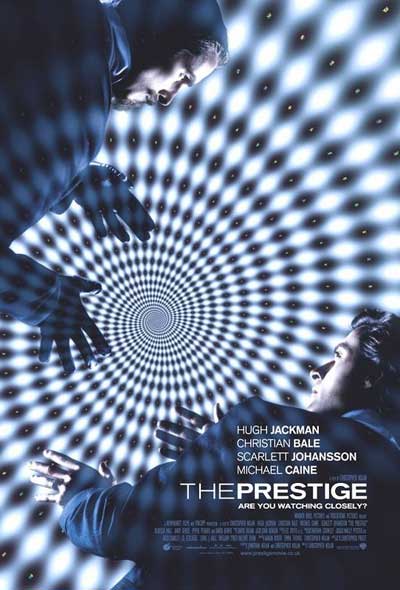
Last year saw three Caine movies in cinemas - Batman Begins [good], The Weather Man [flawed] and Bewitched [god awful, apparently - I've yet to see it]. Now Sir Michael is back with another Christopher Nolan-directed feature, The Prestige [see the groovy poster above]. The actor was on Parkinson last night, doing his bit to promote the movie and I've heard plenty of good things about it, so I must make the effort to see it. Despite a dozen recommendations, I've managed to miss on seeing Children of Men at the cinema, which also has a Caine appearance in it. Tsk! Guess I'll be waiting for the DVD of that one.

Hype: Criminal by Ed Brubaker and Sean Phillips

A few months back I was asked to write a guest column for the 200th issue of Comics International. I use to bash out a regular column every issue for CI when I first went freelance but eventually jacked it in when I got too busy with other projects and felt my interest in comics was waning. Anyways, CI #200 finally appeared a week or two back and I read my column, having little memory of what I had produced.

Among my comments I made mention of not having a reason to go into a comic shop regularly any more because none of the current crop of titles excited me. I'm content to wait for the trades on The Walking Dead, while i get 2000 AD and the Judge Dredd Megazine on subscription. Now those talented bastards Ed Brubaker and Sean Phillips have come up with Criminal, a grippng new crime title published through Marvel's Icon imprint. Issue two came out this week and it's even better than issue one. Bastards. Now I've got a reason to go back into comic shops. Damn you, Brubaker and Phillips!

Saturday, November 04, 2006

The things you see if you get up before dawn

Remembering that writing is fun, not a chore

So I spent Thursday and Friday at a BBC Radio drama lab in Edinburgh. It was the first section of what will be a five and a half day workshop about writing, creativity and writing drama creatively for radio. I wasn't sure what to expect and was almost dreading it a little when I walked in. I'd had a bad seven days with my writing, several projects were coming apart at the seams [I've save the details about that for tomorrow's blog posting] and I've got several deadlines looming in a particularly nasty fashion. All in all, the last thing I needed to be doing was spending five and a half days at a workshop about writing, when I should be at room doing some bloody writing, right? Wrong. So wrong.

The first two days of the lab have reminded me why I'm a writer - the joy of creativity, the moment when you have a notion that blossoms into idea and then grows into a story. I saw two words juxtaposed on Friday afternoon and my brain start ticking. Within twenty minutes I had a plot, an intriguing central character and even a great title for the story. I'm not sure if it's right for radio, but it's definitely a story I want to write for whatever medium it suits. It was such a breakthrough, to rediscover the joy of writing, the excitement of ideas colliding, the thrill of anything being possible, the thought that a blank page is an opportunity and not a thing of tyranny to be feared and fretted over.

Day one of the lab was full of games and roleplaying, listening and talking, exploring and discovering. The lab's being run by David Ian Neville - who produced, directed and nurtured my first radio play, Island Blue: Ronald - and another BBC Radio Scotland drama producer, Kirsteen Cameron. There are eight writers including me, all experienced in a variety of fields and most with at least one radio credit under their belt. It's an exciting group of people, all with different life experiences and backgrounds, but we're meshing remarkably well. Our homework after the first day was reading Angela Carter's short story The Kitchen Child and imagining how we would dramatise that for radio.

Day two started with our discussion about The Kitchen Child, before we heard the finished radio play [due for broadcast later this month and much recommended]. It was fascinating to hear how much the adapter had changed - and yet remained faithful to the spirit of the source material, the language of Angela Carter's prose and kept the essence of it at the heart of the radio play. I think it opened a lot of the writer's eyes [and ears, obviously] about how brave and bold an adaptation has to be. Funnily enough, adaptation is the subject I'm writing about for the first piece of assessed work on my screenwriting MA this term, so it was already much in my mind.

In the afternoon guest writer Louise Ironside came in and banished any post-lunch stupors with her vitality and passion for writing. I first met Louise at an Adrian Mead TV drama writing seminar and she was very helpful with advice about how fledgling scribes should approach the BBC Scotland soap opera River City. [Louise is a regular writer for the show and has an episode being broadcast on Tuesday.] She was also one of the writers on the Island Blue radio project, so it was great to meet her again and catch up. I think my schedule is busy but she puts me in the shade.

Her session was chock full of useful exercises and exciting methods of sparking creativity when you're feeling drained and hollow - brilliant stuff. Peerhaps my favourite sequence was when each of us wrote a short monologue based on 26 random supplied words, which had to be used in alphabetical order. I was in tears of hysterical laughter by the time I get halfway through reading mine out loud. The others were creepy, moving or twice as funny as my effort. By the end of the afternoon we were all buzzing, and would happily have stayed for more.

Our homework for next Thursday's session is writing a three minute scene that will - after much rewriting, I suspect - be recorded in a studio by professional actors. We're being asked to challenge ourselves, experiment, test our emotional levels, and not play safe or be lazy with this opportunity. My only problem now - what the hell do I write?

Second season of the sinister 'Dexter'

Excellent news in Variety yesterday - Showtime has ordered a second season of its quirky new crime drama series Dexter. The US subscription network has only broadcast five episodes of the first, 12-part season but the show is already Showtime's most popular drama. Dexter features a serial killing forensics expert who solves crimes and it's funny, dark and challenges so many of storytelling preconceptions about the nature of the protagonist - cracking stuff.

Friday, November 03, 2006

Films of Michael Caine #7: Hurry Sundown

Had a fascinating day at the BBC Radio drama lab yesterday and there's another full day of activities, interactions and fascinations ahead. So, it's back into the archives for another extract from my tome on the films of Michael Caine - and this one is a doozy. A movie that has to be seen to be believed: Sir Michael as a deep fried bastard, with Jane Fonda wrapping her laughing gear round his saxophone. If music be the food of love, prepare for indigestion...HURRY SUNDOWN (1967)

Cast: Michael Caine (Henry Warren), Jane Fonda (Julie Ann Warren), John Phillip Law (Rad McDowell), Diahann Carroll (Vivien Thurlow), Robert Hooks (Reeve Scott), Faye Dunaway (Lou McDowell), Burgess Meredith (Judge Purcell), Robert Reed (Lars Finchley), George Kennedy (Sheriff Coombs), Frank Converse (Clem De Lavery), Loring Smith (Thomas Elwell).

Crew: Otto Preminger (director and producer), Thomas C Ryan and Horton Foote (writers), Hugo Montenegro (music), Milton Krasner and Loyal Griggs (cinematography), Louis R Loeffler and James D Wells (editors), Gene Callahan (production designer).

Synopsis: Georgia farmer Rad McDowell returns home after serving in the Second World War. A new development has bought up all the surrounding land, except for the farms owned by Rad and his black neighbours, Rose Scott and her son Reeve. Rad refuses to sell his land, endangering a deal brokered by his ambitious cousin, Henry Warren. Rad is unhappy that his eldest son, Charles, is close to Henry. Henry sends his wife Julie to persuade Rose, who was her nanny years earlier. But Rose refuses and dies of a heart attack. Reeve and Rad form an alliance to improve their land by blasting irrigation channels. Henry’s troubled son Colie seriously injures himself while Henry tries to stop the blasting. Henry blames Reeve for the injury and tries to have the black farmer evicted, enlisting Julie’s help. The case goes to court where a bigoted judge sides with Henry. But Rad provides documents that prove Reeve owns the disputed land. Julie discovers Henry lied about the cause of Colie’s injury. She decides to divorce Henry. Determined to get revenge, he plants explosives above Rad’s farm. But Charles is accidentally killed in the blast. Henry runs away, distraught. The local black community helps Rad reclaim his flooded land…

Hurry Sundown was originally a thousand-page novel by K. B. Gilden, first published as two volumes in 1964. Noted director/producer Otto Preminger acquired the film rights and commissioned screenwriters Thomas C Ryan and Horton Foote to adapt the sprawling epic. Preminger made a surprising choice for the leading role, casting London-born Caine as Southern bigot Henry Warren. The filmmaker approached him while Caine was in Hollywood shooting Gambit (1966) with Shirley MacLaine.

Mastering a Southern accent proved challenging for Caine. Preminger sent him voice tapes to practise with while the actor was working on Funeral in Berlin (1966). As soon as Caine finished the second Harry Palmer picture, he was flown to Louisiana to start work on Hurry Sundown. British journalist David Lewin visited the set and interviewed the leading man. Caine said he was not afraid playing a racist would harm his public image. ‘What I do is show the sadness of the man… The sadness of a man who destroys others and destroys himself. Nazis and racialists are yesterday’s news. Everyone knows about them. I just feel sad for them.’

The production used black and white actors. This caused problems during filming in Louisiana, where the civil rights movement was making headlines. The cast and crew had to be guarded by policemen and state troopers to protect them from the racist Ku Klux Klan organisation. One hotel initially refused to let black and white actors use the same swimming pool, until Preminger threatened to move everyone to another hotel. In the dining room black actors were insulted by other guests. Crew members were threatened with guns and production vehicles had tyres slashed. ‘We live in the compound of the hotel,’ Caine told Lewin. ‘It is like a stockade with armed guards on patrol.'

Austrian-born director Preminger was infamous for his fiery temper, but the leading man did not have problems. ‘Otto was nice to me on Hurry Sundown but I didn’t like how nasty he was to everyone else,’ Caine told Time Out magazine in 1992. ‘He was particularly nasty to Faye Dunaway and I pulled him up on it. My attitude was if he says anything to me I’ll fucking deck him.’ Dunaway was making her movie debut on this picture.

Hurry Sundown opened in America during February 1967, attracting positive reviews. Critics were full of praise for Caine’s Southern accent. In Britain reaction to the A-rated movie was less favourable, with Caine taking a drubbing from UK critics. Reviewers seemed unable or unwilling to see the actor as anything other than his Cockney public persona. A similar situation arose more than 30 years later when Caine adopted a New England accent for his role as Dr Larch in The Cider House Rules (1999).

Hurry Sundown has never been released on VHS or DVD in the UK. A brief clip from it appears as part of a flashback sequence in Austin Powers in Goldmember (2002)

Reviews: ‘Melodrama on a grand scale … performances are swamped by a script like this. Michael Caine, despite a fair shot as a Southern drawl, is way out of his depth.’ – MFB
‘Otto Preminger has created an outstanding, tasteful but hard-hitting, and handsomely-produced film about racial conflict in Georgia circa 1945 … Michael Caine leads the stars, and delivers an excellent performance…’ – Variety

Verdict: They don’t make them like this anymore. Hurry Sundown is a sprawling, melodramatic epic about racism where everything is writ large. The bad people are very bad and the good are very good, verging on the saintly. The contrast is so stark, it leaves little room for subtlety. A painfully slow first hour puts all the pieces in place, before events build to a series of unconvincing climaxes. Caine’s Southern accent isn’t bad, it just sounds odd coming from his mouth. Despite this, he gives a solid performance in an unsympathetic part. Hurry Sundown is best viewed for its curiosity value. How many films can you see where Jane Fonda simulates fellatio on a saxophone to arouse Michael Caine?

Thursday, November 02, 2006

2000 AD in award-winning short film

Wednesday night at the London Film Festival SILENCE IS GOLDEN won the TCM Classic Shorts competition. The short features a cameo appearance by an issue of 2000 AD and is some weird-ass stuff. Click here to see Silence is Golden for yourself. Here's what the film festival judges had to say about the film: “Wonderfully surreal” - Imelda Staunton; “Technically extremely impressive, full of wit and imagination” - Stephen Poliakoff; “A wonderful combination of mixed media, strong storytelling and talented actors” - Matthew Modine; “Terrific, strong, non-sentimental kid’s story” - Terry Gilliam.

Films of Michael Caine #6: Funeral in Berlin

Off to Edinburgh for the first day of a BBC Radio drama lab, hosted by the Scottish Book Trust, so no time for my usual ramblings. Instead, here's another extract from my tome Starring Michael Caine, coming off the subs bench to save the day.

FUNERAL IN BERLIN (1966)
Cast: Michael Caine (Harry Palmer), Paul Hubschmid (Johnnie Vulkan), Oscar Homolka (Stok), Eva Renzi (Samantha Steel), Guy Doleman (Ross), Hugh Burden (Hallam), Heinz Schubert (Levine), Wolfgang Volz (Werner), Thomas Holtzmann (Reinhardt), Gunter Meisner (Kreutzman).
Crew: Guy Hamilton (director), Charles Kasher (producer), Evan Jones (writer), Konrad Elfers (music), Otto Heller (cinematography), John Bloom (editor), Ken Adam (production designer).

Synopsis: British agent Harry Palmer is sent to Berlin. A local operative, Johnnie Vulkan, claims Colonel Stok of the KGB wants to defect. Palmer meets Stok, who is in charge of the Berlin Wall. The colonel says he will defect but wants the operation run by Kreutzman, who has supervised some of the most daring escapes across the wall. Harry is picked up by Samantha Steel, an Israeli secret agent. Vulkan arranges for Harry to meet with Kreutzman, who agrees to run the defection. The price is sixty thousand American dollars and a set of genuine British identity papers. The defection proves to be a trap for Kreutzman, but the identity papers are another matter. The Israelis want them to retrieve two million dollars of Jewish money looted by a Nazi called Paul Louis Broum during the war. Palmer learns his old friend Vulkan used to be Broum, a German guard at a concentration camp. Harry tricks Vulkan into the open, where the former Nazi is gunned down by the Israelis…

The film of The Ipcress File (1965) proved a success in Britain and the US. By the time it reached cinemas, author Len Deighton had already written two further novels featuring his nameless British spy – christened Harry Palmer for the big screen. Producer Harry Saltzman wasted no time exercising his option on another of the Deighton novels, selecting the third book of the series, Funeral in Berlin. Saltzman hoped the Palmer films might grow to rival the James Bond films, which he co-produced with Cubby Broccoli.

Evan Jones was chosen to adapt the complex plot of the novel into a screenplay. Guy Hamilton came on board as director, replacing the more mercurial Sidney J. Furie. Hamilton had excelled on the third 007 extravaganza Goldfinger (1966) for Saltzman and Broccoli. Many of the team that had worked on The Ipcress File returned for the new Palmer movie, including production designer Ken Adam, cinematographer Otto Heller and producer Charles Kasher. Saltzman had Caine under contract so his participation was assured, but his asking price had jumped to £100,000 for this picture. Joining him in front of the cameras again was Guy Doleman as Harry’s superior Colonel Ross.

The bulk of location work was filmed in West Berlin, with the crew constructing a replica of Checkpoint Charlie, the famous crossing point between east and west. Studio work took place at Pinewood back in Britain. Shooting near the Berlin Wall was problematic, with border guards on the eastern side deliberately disrupting filming by shining a mirror at the camera lenses. Caine told Esquire magazine that the city was different from any place he’d been. ‘Here there’s no such thing as anybody being pleased to see you … I don’t want to be unfair to anybody, so let’s just say we’re dancing to different tunes. It’s not my scene.’ Caine filled some of his time off set practising a Southern American accent for his next film, Hurry Sundown (1867). Director Otto Preminger had sent the Londoner tapes to help him master the distinctive speech patterns.

Funeral in Berlin received mediocre reviews in Britain when it opened in late 1966, rated A. Despite this, the new film made enough money for Saltzman to green-light a third Harry Palmer picture. Funeral in Berlin reached the US in 1967 where reviews were more favourable. The film was released on video in the UK during 1988, reclassified as PG. It was reissued as a budget price tape in 2001. In the US the picture is also available on DVD.

Reviews: ‘Funeral in Berlin piles it on thick and fast with a plot which has so many twists that even Sherlock Holmes might have been baffled.’ – MFB
‘It is difficult to imagine the first film without Mr Caine ... In the case of the second it is impossible: the actor makes the film.’ – The Sunday Times

Verdict: Funeral in Berlin is a drab, downbeat film with a complex plot that requires consideration concentration without offering much in return. Almost all the characters are unsympathetic, either utterly amoral or murderous zealots, making it hard to care what happens to them. In the midst of this, Caine repeats the assurance of his previous performance as Harry Palmer, but adds few new shadings to the part. He only comes alive on screen playing opposite his old nemesis Ross or his new enemy Stok. Homolka shines as the KGB colonel, stealing all his scenes with ease. Director Guy Hamilton replaces the eye-catching techniques of Sidney J. Furie with more mundane imagery, reducing this film to a conventional espionage tale. That’s adequate on its own terms, but a disappointment after The Ipcress File (1965).

Wednesday, November 01, 2006

Pokemon goes willy-nilly, flatulence called

What follows may be the net equivalent of an urban myth, but it tickled my fancy, so maybe it'll tickle yours, too. The Washington Post allegedly runs a competition each year, inviting readers to submit new definitions for common words. The best are selected from many, many entries and published in the Post. Below is a selection from a recent crop of winners...

1. coffee, n. the person upon whom one coughs.

2. flabbergasted, adj. appalled by discovering how much weight one has gained.

3. abdicate, v. to give up all hope of ever having a flat stomach.

4. esplanade, v. to attempt an explanation while drunk.

5. willy-nilly, adj. impotent.

6. negligent, adj. absentmindedly answering the door when wearing only a nightgown.

7. lymph, v. to walk with a lisp.

8. gargoyle, n. olive-flavored mouthwash.

9. flatulence, n. emergency vehicle that picks up someone who has been run over by a steamroller.

10. balderdash, n. a rapidly receding hairline.

11. testicle, n. a humorous question on an exam.

12. rectitude, n. the formal, dignified bearing adopted by proctologists.

13. pokemon, n. a Rastafarian proctologist.

Copious Spare Time

In our house we like to laughingly talk about Copious Spare Time - or simply CST, if we haven't got enough time left to say the phrase Copious Spare Time. CST is that imaginary 25th hour in the day when we do the things we don't have time to do otherwise. Like remembering to get the chimney swept or finding time to go and pay the council tax [and my quarterly National Insurance Contributions from freelancers, come to that]. CST is when you do some ironing, or have a nice long soak in the bath, or cut the lawn, or read a book for pleasure, or watch a weekly TV drama when it's actually being broadcast - instead of on DVD a year later.

Despite everything else I should be doing, I've been trying to carve out a little slice of CST every day. A few minutes here and there, some downtime from fretting about the dozen different projects I should be progressing. Writing and creating and plotting and writing some more are all very well, but I can't help thinking you need to let the well of inspiration stand idle every now and then, in the hope it'll fill up some more. Usually these moments get filled by replying to email Q&A interview requests, or watching trash on the TV. Having given up performing for the next six months, that should free up some CST for other activities, too.

The last few days I've been reading Birb by Bird: Some Instructions on Writing and Life by Anne Lamott. Despite the pompous title, it's a wonderfully informal and frequently droll book about the life of a writer and how to survive it. Lamott peppers it with anecdotes about how life and experience, as both a prose fiction scribe and teacher of creative writing. Some sections of the book I disagree with, but it's healthy to have your own prejudices and habits challenged. For example, Lamott writes character-driven novels, but my work is most definitely plot-driven. I'm trying to inject more character and thematic content into my writing, but without a clear plot before I start I am lost.

Best of all, she's produced some cracking chapters on subjects that writers of all denominations will recognise: Shitty First Drafts, False Starts, Finding Your Voice and - best of all - Jealousy. I doubt a writer would be human if they hadn't felt pangs of jealousy at the success of another writer. How can they have a bestseller and I don't? How come they find writing so easy and I struggle? How did they get that prize/bursary/opportunity and I didn't? All those feelings certainly run through my mind, eating at the creative soul like a gnawing, hungry cancer. So, Lamott's got some good advice on how to cope with jealousy, though she offers no easy solutions. Perhaps my favourite sentence in the whole book is about perfectionism, something she describes as the voice of the oppressor: 'Perfectionism will ruin your writing, blocking inventiveness and playfulness and life force [these are words we are allowed to use in California].'

Lamott also offers a simple mnemonic for writing short stories, one she heard a writer called Alice Adams mention in a lectur: ABDCE - compelling Action to start, delve into the Background of the situation and your characters, Developing the people and plot, bringing everything to a Climax before delivering the Ending. Simple, but neat. I think that could just as easily be applied to so many other kinds of creative writing, with added structural carpentry to sustain that progression over the necessary length. So, anyways, that's what I've been spending my CST on lately, re-reading Bird by Bird. Makes a nice change from Stephen King's On Writing.