Sunday, November 26, 2006

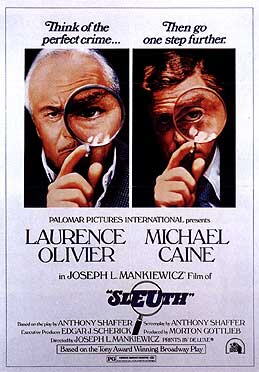
Films of Michael Caine #21: Sleuth (1972)


Cast: Laurence Olivier (Andrew Wyke), Michael Caine (Milo Tindle), Alex Cawthorne (Inspector Doppler).

Crew: Joseph L Mankiewicz (director), Morton Gottlieb (producer), Anthony Shaffer (writer), John Addison (music), Oswald Morris (cinematography), Richard Marden (editor), Ken Adam (production design).

WARNING! IF YOU HAVEN'T SEEN SLEUTH, DON'T READ ANY FURTHER!

Synopsis: Milo Tindle accepts an invitation to visit the country estate of English crime novelist Andrew Wyke. Milo is having an affair with Andrew’s wife, Marguerite, and wants to marry her. Andrew questions the younger man’s background and financial circumstances. He says Milo cannot afford to keep Marguerite, but the problem can be solved. Andrew persuades Milo to stage a burglary, stealing £250,000 of insured jewels from the house. But afterwards Andrew says this is all a ruse so he can murder Milo and claim the killing was self defence. The writer shoots several bullets from a revolver to prove he is serious before viciously humiliating Milo. Finally, he fires the revolver into the back of Milo’s head. Two days later, a policeman called Inspector Doppler arrives, investigating the disappearance of Milo. He interrogates Andrew and discovers dried blood. The writer claims it was all an elaborate double-bluff to humiliate Milo, but insists the final bullet was a blank.

The inspector arrests Andrew before peeling away his own face to reveal that Doppler is actually Milo. Andrew claims he knew that and was just playing along with the game. Milo says he doesn’t want to play a game – he wants revenge. Milo claims he murdered Andrew’s mistress and then hid four pieces of evidence in the house linking the writer to the crime. The police are due within minutes. Andrew doesn’t believe him, but when he tries to contact his mistress he learns she is dead – strangled. Andrew frantically searches to find all the clues, eventually locating and destroying the murder weapon. Milo reveals this was just another game. Andrew’s mistress is still alive. Milo taunts the author, telling him Marguerite is never come back. Andrew murders Milo but loses their final game – the police are outside, waiting to arrest him…

+++++++++++++++++++++++++++

Anthony Shaffer’s play Sleuth opened in 1970 and became a success on London’s West End, running for nearly 2400 performances. The show was also a smash hit on Broadway in New York, winning a Tony award. But Shaffer didn’t want his script turned into a film, believing any cinema version would stifle the play’s future success. He was persuaded to surrender the film rights and American director Joseph L Mankiewicz began working with Shaffer on an adaptation. Mankiewicz had won Oscars for writing and directing All About Eve (1950), and also for helming A Letter to Three Wives (1949). The two men added new material to keep Sleuth fresh for those who had already seen the play.

Sleuth only had a cast of two, so choosing the right actors was crucial. For the part of Andrew Wyke Shaffer favoured Anthony Quayle, who had originated the role on stage, and Alan Bates as Milo Tindle. Instead Mankiewicz secured the legendary Laurence Olivier as Wyke, even though the actor had once dismissed the play as ‘a piece of piss’. Olivier reportedly chose Caine to be his co-star. The two actors rehearsed for a fortnight before filming began. In an interview on the Sleuth DVD, Shaffer recalls the younger man was frightened of playing opposite the veteran. ‘Michael Caine was really scared about working with Larry Olivier,’ Shaffer says. ‘He thought Olivier would overwhelm him.’

In fact Olivier struggled for the first few days of rehearsals, having just been fired from the National Theatre. Caine talking about the turning point during a public interview at the NFT in 1998: ‘One day he came in with a little moustache and he stuck it on, and suddenly it all went right. He said: “I can never act with my bloody face! I have to have some bloody nose, or something on, and this will do.” But up until then he was floundering about, not know what he was talking about. Larry was crafty. He would do rehearsals, and he’d mumble away and then suddenly he could be this absolute giant of an actor, although he was shorter than me. Sometimes he’d come out of the bloody shadows, like a whirlwind at me, and take me completely by surprise, because he’d never do it in rehearsals. He was a very craft bugger, Larry, and you had to hang on. The greatest review I ever got was after about a week [of filming with Olivier]. He said to me, “I thought at the beginning, Michael, I had a servant. I see I have a partner.”’

Sleuth was shot during Spring 1972. All the exteriors were filmed at Athelhampton House in Dorset, with production designer Ken Adam temporarily adding a hedge maze to the grounds. The interiors were shot on elaborate sets at Pinewood Studios. ‘Ken Adam is a brilliant designer,’ Caine told the Evening Standard when a reporter visited the production in May 1972. ‘He’s given a very weird feeling to the sets. And that’s real oak, you know, in the hall, not a load of old plastic.’

In 1980 Caine told Film Comment that the 16-week shoot for Sleuth was the most exhausting film he had worked on. ‘Incredibly tiring. I’d have six-minute monologues at a time. I used to get home in the evening and say to Shakira, my wife, “I really can’t talk now. I’m sick of the sound of my voice. I don’t want to hear it again. You tell me everything, but don’t ask me any questions. Let me just sit here and listen.”’ With a cast of only two, neither actor could take a day off. Mankiewicz had to shot coverage of everything to give the editor pictures to cut to.

Sleuth was released in American cinemas with a PG rating during December 1972, just in time for consideration at annual awards ceremonies. The picture attracted raves from critics and nominations for Caine, Olivier and best picture at the Golden Globes. At the Oscars Caine and Olivier were both nominated as best actor, but were beaten by Marlon Brando’s performance in The Godfather (1972). Mankiewicz was nominated as best director for what proved to be his final film, while the score was also nominated.

Sleuth didn’t reach British cinemas until 1973, when it was rated AA. Reviews were strong, with many complimenting Caine for matching Olivier on screen in such a demanding part. The film eventually received four BAFTA nominations for Olivier, cinematography, art direction and screenplay. A late night screening of the film inspired a Manchester singer called Morrissey to write ‘This Charming Man’, providing his band The Smiths with their first hit single. The song borrowed a line of dialogue from Shaffer’s screenplay: ‘A jumped up pantry boy who never knew his place.’ ‘This Charming Man’ reached Number 25 in November 1983 and peaked at Number 8 when re-released in 1992.

Sleuth was released on video in 1987 and made its DVD debut in 2002. Shaffer died in November 2001, soon after recording his interview for the DVD. In November 2002 Caine told the Hollywood Reporter he was hoping to remake Sleuth with himself in Olivier’s role and British actor Jude Law taking over Caine’s part. Six months later Variety reported US filmmaking company Castle Rock had acquired the film rights to Shaffer’s play as a vehicle for Law. Playwright Harold Pinter had been commissioned to write a fresh adaptation, having never seen the 1972 film version. The report suggested Caine might co-star with Law in the new adaptation.

Reviews: ‘Although brilliantly plotted, flawlessly constructed, genuinely thrilling and more than usually attentive to character, Sleuth is essentially a piece for the theatre...’ – MFB
‘Mr Caine, with the help of spectacular make-up, shows a range of which one had not expected from this excellent player of layabouts and secret agents.’ – The Sunday Times

Verdict: Sleuth is a flawed diamond of a film – a priceless gem with sparkling dialogue, stunning production design, and two bravura performances from Olivier and Caine. But it still has blemishes. Mankiewicz’s film never truly escapes the theatricality of its source material. The middle section fails to convince because Inspector Doppler is all too obviously Caine in makeup, especially when the wrinkles on his forehead abruptly stop at the front edge of his bald cap. This distracts your attention and makes it difficult to discern whether or not Olivier’s character believes in Doppler. But Sleuth overcomes these problems to deliver a compelling thriller riddled with sly asides about prejudice, the class system and gamesmanship. This film is among the finest of Caine’s long career.

Saturday, November 25, 2006

Twelve question movie meme

Here's a movie meme borrowed I contracted from Optimistic Reader...

1. Popcorn or candy?


Popcorn - but never, ever, ever say yes if somebody serving at an American cinema asks if you'd like extra butter on your salted popcorn. What they mean is would you like some old sump oil I found on the floor of my garagge poured over your previously edible snack?

2. Name a movie you've been meaning to see forever.

Raging Bull. I don't know why, but I'm always underwhelmed by Scorcese. Come to think of it, I haven't seen Taxi Driver either. Tsk, what a cultural philistine.

3. You are given the power to recall one Oscar: Who loses theirs and to whom?

Best Picture for Oliver! In fact, any Oscar for any film that includes a screamer in its title.

4. Steal one costume from a movie for your wardrobe. Which will it be?

A Marlyn Monroe dress from Some Like It Hot. NO, not to wear, you freaks - think of the money you could make auctioning it off.

5. Your favorite film franchise is....

Rocky. And there's a sixth one coming out this Christmas, grud help us.

6. Invite five movie people over for dinner. Who are they? Why'd you invite them? What do you feed them?

William Goldman, Robert McKee, Charlie Kaufman, Anthony Minghella and John Cusack. They've all written movies, they've all got strong points of view and the arguments would be amazing - and witty. I wouldn't feed them anything except alcohol.

7. What is the appropriate punishment for people who answer cell phones in the movie theater?

Embed the point of an icepick into each other, permanently defeaning them.

8. Choose a female bodyguard: Ripley from Aliens. Mystique from X-Men. Sarah Connor from Terminator 2. The Bride from Kill Bill. Mace from Strange Days.

Ripley, of course. She can bring it.

9. What's the scariest thing you've ever seen in a movie?

The night scope sequence form Silence of the Lambs, when Clarice is in total darkness and Buffalo Bill reaches his hand towards her.

10. Your favorite genre (excluding "comedy" and "drama") is....

Sports films.

11. You are given the power to greenlight movies at a major studio for one year. How do you wield this power?

I'd hire the ten best screenwriters in Hollywood and pay them to mentor half a dozen exciting new writers for the year. Everybody has to write two complete scripts, including the ten best. By the end of twelve months we'd have 140 screenplays and - chances are - some great new movies to make.

12. Bonnie or Clyde?

Bonnie. Never cared much for Warren Beatty.

Films of Michael Caine #20: Pulp (1972)


Cast: Michael Caine (Mickey King), Mickey Rooney (Preston Gilbert), Lionel Stander (Ben Dinuccio), Lizabeth Scott (Betty Cippola), Nadia Cassini (Liz), Dennis Price (The Englishman), Al Lettieri (Miller), Leopoldo Trieste (Marcovic), Amerigo Tot (Partisan), Roberto Sacchi (The Bogeyman), Giulio Donnini (Typing Pool Manager), Joe Zammit Cordina (The Beautiful Thing), Luciano Pigozzi (Clairvoyant).

Crew: Mike Hodges (director), Michael Klinger (producer), Mike Hodges (writer), George Martin (music), Ousama Rawi (cinematography), John Glen (editor), Patrick Downing (production designer).

Synopsis: Mickey King is a pulp fiction author living in the Mediterranean. He is asked to ghost-write a famous person’s autobiography by a man called Dinuccio, but not given the name of his subject. Instead King is sent on a five day coach tour and told he will be contacted. The writer thinks an American called Miller is the contact. Instead King is met by a beautiful woman who takes him to meet the subject of the book. Preston Gilbert was a Hollywood star who appeared in dozens of films as a gangster before being deported to Europe. He dictates his memoirs to King in a week. Afterwards Gilbert organises a lunch for his friends and King at a restaurant. Gilbert is murdered by a man disguised as a priest, but King survives. A clairvoyant gives the writer clues about why somebody wanted to kill the former film star. Gilbert was involved with a scandal years earlier about a teenage girl who died at a hunting lodge while being raped by hunters. The others believed Gilbert was going to mention the incident in his autobiography. King goes to a beach where the girl’s body is buried. The hitman reappears, gunning for the author. King runs him over with a truck, discovering the assassin was Miller. The writer realises he has been shot in the leg. King is taken in and cared for by a powerful political family that was involved with the scandal. He is warned to stay silent or else he’ll be charged with killing Miller…

++++++++++++++++++++++++++++++++++++++++++++

A trio of Michaels – Caine, Hodges and Klinger – had startled cinema patrons with the brutal realities of Get Carter (1971). A year after that film, the three men reunited for Pulp (1972). This was made from an original screenplay by Hodges, with the working title Memoirs of a Ghostwriter. ‘I wanted to do something light, as a bookend to Carter, to get away from the violence,’ Hodges told interviewer Steven Paul Davies for the book Get Carter and Beyond: The Cinema of Mike Hodges. ‘Mind you, my humour might be described as very surreal and rather bleak.’

The plot about a young girl found dead on a beach was based on a scandal that rocked Italian society in the 1950s. Hodges’ script was also prompted by the rise of neo-fascism in Italy in the early 1970s. The director said Pulp’s off-beat style was inspired by John Huston’s film Beat the Devil (1954). American studio United Artists agreed to help finance Pulp. Hodges went to Italy on a research trip. But when the location manager try to secure the locations chosen by Hodges, they found themselves dealing with the Mafia. The director had a house on Malta and suggested the Mediterranean island as a new home for the production. The film was shot entirely on location during the winter of 1971-1972.

At the time Caine told journalists he did not enjoy working on Malta, complaining about the barren landscape and lack of trees. When asked what no visitor to the island should miss, the actor’s reply was short and pithy: ‘The plane home.’ Twenty years later, Caine had a different recollection of the movie in his autobiography. ‘Pulp never made any real money, but I … had a wonderful experience making it so I remember it with affection.’

Pulp was released in 1972, rated AA in Britain. Critics were bemused by the movie and it failed at the box office. Reviews were stronger in America but the film never got a chance to capitalise on them, quickly disappearing from cinemas. Sixteen years later it was released on video in the US, but has since been deleted. The picture has never been released on VHS or DVD in Britain. [Update: Pulp was finally released on Region 2 DVD in 2004.]

Mike Hodges declined to be interviewed at length for this book, but did talk about Pulp’s unhappy fate: ‘It puzzles and saddens me why it’s not on video of DVD. Some films seem to just get lost in the shuffle. Pulp is one. On the other hand Black Rainbow [a much praised but rarely seen Hodges film from 1990] is about to come out on DVD – so you never know! In a recent exchange of letters with J G Ballard, he voiced his love of Pulp. I’ve noticed that writers, in particular, like it.’

Reviews: ‘Hodges has not only got his distance in Pulp, he has also found a style and voice of his own. Always an adept actor, Caine is splendid here.’ – Time
‘A reasonably entertaining piece of rococo recall … at its best as visual camp. Caine … delivers his usual attractive turn.’ – Variety

Verdict: The word quirky could have been invented to describe Pulp. It shares plot similarities with Get Carter (1971), but it’s hard to imagine two more different movies. The first twenty minutes is a flurry of running gags and visual humour, with Caine’s world-weary voiceover a witty counterpoint to the on-screen action. After that, the movie settles into a slightly more conventional tale. The tone is uneven, but Hodges keeps driving the story forward fast enough to overcome this. There’s a succession of sub-textural references to the conventions of pulp fiction and cinema that are worthy of a thesis, but it’s the performances of Caine and Rooney that bring the film alive. Pulp is a cult movie in waiting.

Friday, November 24, 2006

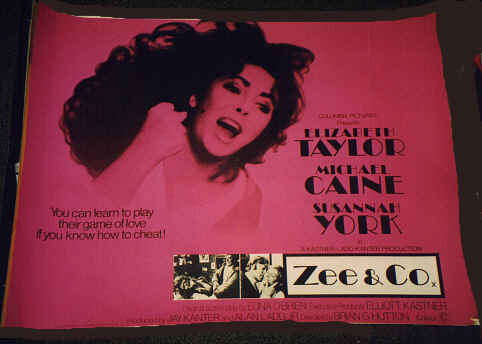
Films of Michael Caine #19: Zee & Co (1972)

(US title: X, Y & Zee)

Cast: Elizabeth Taylor (Zee), Michael Caine (Robert), Susannah York (Stella), Margaret Leighton (Gladys), John Standing (Gordon), Mark Larkin (Rita), Michael Cashman (Gavin).

Crew: Brian G Hutton (director), Jay Kanter and Alan Ladd Jr (producers), Edna O’Brien (writer), Stanley Myers (music), Billy Williams (cinematography), Jim Clark (editor), Peter Mullins (art direction).

Synopsis: Swinging Londoners Robert and Zee Blakeley have an open marriage and separate bedrooms. At a party Robert is intrigued by Stella, a beautiful young widow. They become lovers. Zee responds by insinuating herself into Stella’s life. When Robert and Stella go away on holiday, Zee crashes her husband’s car. He comes back to her again. Zee tries to commit suicide. Robert saves her but considers letting Zee die to escape her mind games. Stella visits Zee in hospital and admits to lesbian tendencies as a teenager. Robert is due to spend the night with Stella but Zee drags him to a party and gets him drunk. Next day Robert argues with Stella, who wants to end the affair. Robert sleeps with his secretary. Zee visits Stella’s new flat and seduces her. Robert arrives to find Zee triumphant…

Irish novelist Edna O’Brien wrote Zee and Co as an original screenplay in 1970. The strong female lead character attracted the interest of Elizabeth Taylor, at the time a major cinema star. American director Brian G Hutton was attached to the project. The role of Zee’s husband Robert was offered to Caine, after Peter O’Toole turned it down. Susannah York was chosen to play Robert’s mistress Stella. In his autobiography Caine says the chance to work with Taylor was his main reason for accepting the role, but he never regretted making the movie. O’Brien had the opposite reaction after discovering her script had been extensively rewritten to include a lesbian finale. The enraged author claimed Hutton had butchered her screenplay.

The picture was shot predominantly on sets at Shepperton Studios with limited location work around London. The 14-week production began filming in January 1971. When Taylor was on-set she arrived with at least three limousines to carry her entourage. During filming Caine told the Evening Standard about his early experiences on the picture. ‘When we began this film both Elizabeth and I were nervous of each other. It was difficult because we had to go right into fights and love scenes rolling around the bed and we never even knew each other. But after the first couple of days we admitted that we were nervous. I gave her a bit of a hug – you know, not being familiar, but just to make human contact and we were fine after that.’

The actor discussed Taylor during an interview with the Cranky Critic website in 1998. ‘She was the most extraordinary actress to work with. Elizabeth has a memory like a rat trap. She never flubbed a line. With Elizabeth, she had it in her contract that she didn’t have to be in the studio until 10 o’clock. I was always there at eight doing close-ups on my own with a continuity girl saying, “I love you darling. Take your trousers off.” I remember saying to Elizabeth, “I know for sure that you are a great star and a real professional.” She said, “How do you know?’ I said, “You are a great star because you don’t have to get here until 10 o’clock and I know you are a professional because you are never late!”’

The picture required Caine to perform love scenes, but he refused to be filmed naked. ‘I think the public is sick of it,’ the actor told Photoplay Film Monthly. ‘I’ve never been fully nude on the screen because I don’t believe I have anything that anyone would be interested in seeing. Nudity isn’t interesting unless a girl is undressing for me, personally.’

Zee and Co was released during January 1972 as an R-rated film in America, renamed X, Y & Zee. Critics praised the picture, with Taylor’s volcanic performance getting most of the kudos. The film reached British cinemas several months later, rated X. It was nominated as the best English-language foreign film at the Golden Globes in January 1973, but lost to Young Winston (1972). A year later the picture was re-edited and reclassified as a PG for the US. Zee and Co has never been released on video in Britain and is not available on DVD.

Reviews: ‘Not in years have three people more deserved the star billing they get in this Love Story for adults.’ – Variety
‘The film gradually sinks into a quagmire of repetition from which the only way out is through melodrama...’ – MFB

Verdict: Few of Caine’s films have dated as badly as Zee and Co. This hysterical, overwrought melodrama is ripe with symptoms of a Swinging 1960s hangover. Try to imagine a cross between Austin Powers and Who’s Afraid of Virginia Woolf? – then make it twice as bad. Taylor chews scenery like the world has run out of food, while parading around in clothes that make you beg to be struck colour blind. Susannah York is both drippy and winsome while Caine is left looking angry or frustrated in equal measure. You can’t care about the characters but you can laugh at their turgid, torpid love triangle. This film deserves to be enshrined as a camp classic – there’s certainly no other reason to watch it.

Thursday, November 23, 2006

Remember when Lost was appointment TV?

Yet another trailer mash-up: Brokeblade Mtn.

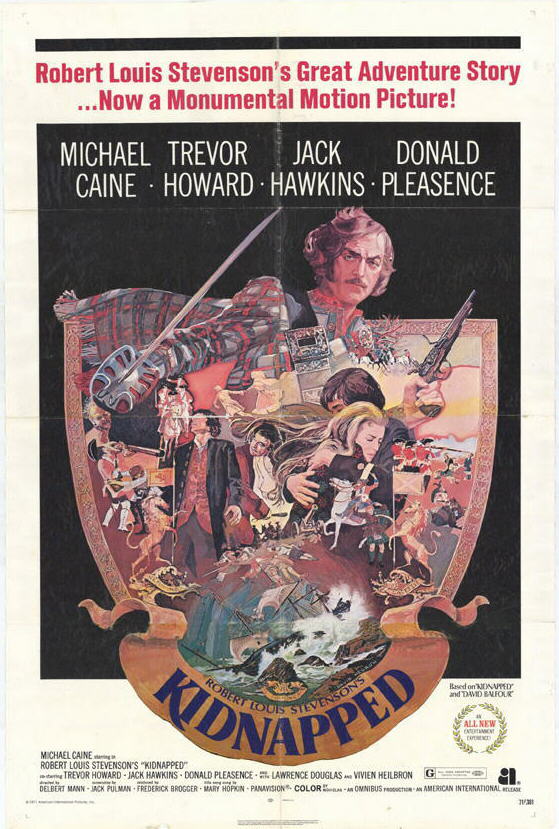
Films of Michael Caine #18: Kidnapped


Cast: Michael Caine (Alan Breck), Lawrence Douglas (David Balfour), Vivien Heilbron (Catriona Stewart), Trevor Howard (Lord Advocate), Jack Hawkins (Captain Hoseason), Donald Pleasance (Ebenezer Balfour), Gordon Jackson (Charles Stewart), Freddie Jones (Cluny), Jack Watson (James Stewart), Peter Jeffrey (Riach), Roger Booth (Duke of Cumberland), Geoffrey Whitehead (Lt Duncansby).

Crew: Delbert Mann (director), Frederick Brogger (producer), Jack Pulman (writer), Roy Budd (music), Paul Beeson (cinematography), Peter Boita (editor), Vetchinsky (art direction).

Synopsis: Scotland, 1746. In the aftermath of the battle at Culloden, Jacobite rebels are fleeing the forces of King George. The Stuart claim to the British throne is in tatters. Soon afterwards teenager David Balfour arrives at the House of Shaws, home of his uncle Ebenezer. The old man tries to arrange an accidental death for David. When that fails, Ebenezer has David kidnapped by a slave trader, Captain Hoseason. The 18-year-old is to be sold as a slave in America. But Hoseason’s ship runs over a boat carrying Alan Breck. The rebel leader was trying to reach a vessel bound for France. Hoseason’s ship crashes against rocks, throwing Breck and David into the water. The pair make it to shore and start walking to Edinburgh. David and Breck see innocent women and children murdered by government forces led by Mungo Campbell. They stop at the home of James Stewart, a former Jacobite. David is smitten by James’s daughter, Catriona. Next morning Mungo Campbell and his men come for James. Mungo is murdered by an unseen assassin and James is wounded. David, Breck and Catriona flee. Later they hear James survived and is going to stand trial in Edinburgh for murdering Mungo Campbell. David goes to the Lord Advocate and tries to give evidence that James is innocent, but the Lord Advocate refuses to listen. Unless Breck is captured, James will be found guilty in his place and executed. David inherits the House of Shaws after Ebenezer dies. Catriona begs David not to give evidence, or she will lose him and her father. Breck admits he killed Mungo Campbell. The Jacobite rebel surrenders himself, saving James…

In 1971 American director Delbert Mann was hired to shoot a new version of the much loved Robert Louis Stevenson novel Kidnapped. The tale had already been adapted for the cinema three times before, so the production sought a new approach. Screenwriter Jack Pulman drew on both Kidnapped and Stevenson’s sequel Catriona (also known as David Balfour) for his plot. Mann told Film Making magazine that most literary scholars considered the books had to be read together to be fully acceptable as classic novels: ‘Each depends on the other to give the reader full enjoyment.’

The movie was shot on location in Scotland over the Summer of 1971, using the working title of David and Catriona. Fresh from filming Get Carter, London-born Caine was cast in the unlikely role of Jacobite rebel Alan Breck. Mann said using a famous actor was important for a healthy box office. ‘Stars do still have a pull on the public. Michael, for example, is one star who can get the public in on his name!’ Stirling Castle stood in for Edinburgh Castle during the shoot, while the township of Kinross took of the place of Edinburgh circa 1746. Studio work was lensed at Pinewood, near London.

In the film’s official press book, Caine said he wanted to play Breck because Kidnapped would be seen by a far wider audience than most of his previous films. ‘It has a marvellous script by Jack Pulman, which is another reason why I accepted the part. Of course, I’ve had to adapt my Scots accent to make it sound easy and natural. It won’t fool the Scots, but I trust they’ll forgive me. After all, it’s my job to make Alan Breck easily understood by audiences all over the world.’

The funding for Kidnapped run out during filming and producer Frederick Brogger struggled to keep the cameras rolling long enough to finish. Caine deferred his salary to help the film stay solvent. Nobody was fully paid for the picture, and Caine rarely discusses Kidnapped. William Hill’s biography, Arise Sir Michael Caine, quoted the actor on the troubled production: ‘I never got paid for it so I refuse to discuss it. I’m a professional, and if I don’t get paid I don’t talk about it. They made it when they didn’t have the money to make it. I got a small percentage just so they would be able to release it, to get at least some money back on it. It was an absolute and utter disaster from beginning to end.’

The picture reached British cinemas in 1972, renamed Kidnapped and rated U. Critics were underwhelmed, but found praise for Caine’s acting, if not his accent. The film was not a box office success in the UK or the US, where it was rated G. Kidnapped was released in VHS in Britain during 1986 but has been deleted for more than a decade. It is much sought after by Caine collectors. The movie has never been available on DVD. [Update: Kidnapped was fleetingly released on DVD in 2005 and quickly deleted.]

Reviews: ‘Perhaps the fact that everyone eats so much porridge renders the script so constipated.’ – The Guardian
‘Disappointing version of Stevenson tale is made endurable by Caine’s pleasing performance as Alan Breck.’ – Maltin’s

Verdict: Kidnapped is a plodding adaptation of Robert Louis Stevenson’s interlinked novels that never gets out of second gear. Some nice scenery and a few skirling bagpipes cannot make up for the lack of excitement generated by this workmanlike effort. The central characters stroll around Scotland, searching for the end of the film. Part of the problem lies with source material that has never been made into a successful movie, despite numerous attempts. Caine does his best as Highland adventurer Alan Breck, but struggles to master a Scottish accent. At least his presence gives this drab, lifeless picture some much-needed novelty value.

Heroes coming to BBC 2 - next summer

It was only a matter of time. BBC 2 has announced its bought the British terrestrial broadcast rights to the hit American drama series Heroes. Each year UK channels travel to LA in search of the next big hit. Some buy wisely, such as Channel 4 acquiring Ugly Betty, and others by shows that look gold but prove to be something that comes out of a golden retriever's bottom.

One of the biggest new shows this year was Heroes, an ensemble saga about a dozen people from different parts of the world who discover they have suddenly acquired superhuman abilities. The pilot is a little show and obviously didn't impress any of the major British network buyers, because Sky, ITV, the BBC, Channel 4 and Channel 5 all passed on the chance to purchase Heroes. Who snapped it up? The SCi-Fi Channel. Grud, they must be grinning like loons now.

Anyways, it was only a matter of time before one of the terrestrial channels recognised their mistake and bought the non-digital rights. BBC2 won the day and will no doubt schedule Heroes in the same sort of slot where it used to show series like Buffy. For those of us who don't have cable, digital or a satellite dish, that means waiting until next summer to see Heroes. Can't wait. Now, could somebody please hurry up and schedule Friday Night Lights on a British channel?

Wednesday, November 22, 2006

What will you be doing in a year's time?

Last week I went to the post-graduation drinks for Screen Academy Scotland's Class of 2005-2006. The first batch of full-time MA screenwriting students have now gone back out into the world, in search of jobs, commissions and agents. For most of them, life hasn't changed that much since they were accepted for the post-graduate course in the summer of 2005. Several now have debt problems to overcome, having sacrificed work and income to do their MA. A few have made scripts they wrote on the course made into short films. To the best of my knowledge, none have secured commissions for screenwriting work as a consequence of the MA course.

But that's no surprise as it's still early days. The full-timers only handed in their final assignments in September. A week may be long time in politics, but eight weeks is not time at all in the world of film and TV. For example, I submitted my writing samples to BBC Scotland's soap opera River City back in April. But it was another five months before I got a response beyond acknowledgement of receipt. That's the nature of broadcast drama, it takes a long time for most things to come to fruition. The show has to come first and efforts to nurture potential new writing talent are a secondary priority - which is as it should be.

In September the production team of River City began choosing would-be writers from among the many unsolicited submissions it gets, and asking them to script sample scenes from supplied scene-by-scene breakdowns. Mine were for an episode that got broadcast on September 5th. Two and a half months later and there's a chance I might get some feedback on my efforts this week. If I don't get selected for the next stage of the new writer development process I'll be disappointed, but every professional in the industry can expect to be rejected more times than they're commissioned.

If I do get selected for the next stage [fingers crossed!], that's an invitation to participate in a two-day writers' workshop with the River City production team: writers, script editors, storyliners and producers. I think the next such workshop is planned for early in the new year. All the would-be scribes on that are given material for an upcoming episode and a week to write their first draft script - the same amount of time give to working professionals. From that, a few people might be talented and professional enough to get a first commission on the show.

It's a long process and there's no guarantees of success at any stage. I could be culled this week or I might get an invite to the workshop. I might get invited to the workshop but fall flat on my face there, or mess up the post-workshop script. The chances of making it all the way to a live commission for a broadcast episode are slender, at best. But there's still a chance, however slight it might be.

After six years of freelancing, I know you don't pin all your hopes on a single opportunity. That's why I'm still studying part-time for my screenwriting MA. That's why I spent six days of the last three weeks on a radio drama lab. That's why I'm working on a pilot script for a new returning drama series of my own devising, a project on which I'm being mentored by Adrian Mead. That's why I'm going down to London next weekend to take part in the TAPS script editing course. All of these are opportunties and all of them offer me a way forward, be it writing for River City, radio drama, television drama or becoming a TV script editor. It's a lot of plates to keep spinning, but I'm trying to maximise my chances of progress.

In a year's time I'll be going to my own graduation ceremoney at Screen Academy Scotland, hopefully to collect an MA in screenwriting. [It's my first time as a university student, so I'll definitely be doing the whole gown thing, no matter how daft it may look.] I'd like to think that by the time I get my piece of paper, I'll have gotten closer to one of my goals. Alas, I haven't got a crystal ball so I don't know what that will be yet. But I'm determined to make it happen. Onwards!

Tuesday, November 21, 2006

Tsk, that Chris Weston!

US creator Frank Millar is attached to write and direct a film version of Will Eisner's classic comic The Spirit. But that cheeky monkey Chris Weston thinks Miller should tackle another icon first...

Need cheering up?

Need cheering up? Like kittens? Then I have just the link for you.

Tony Jordan inverts Studio 60 - sort of

ITV announced yesterday it was developing two interlinked series created by Tony Jordan. ITV2 will be screening Echo Beach, a soap based in Cornwall, while ITV1 will broadcast Moving Wallpaper, a comedy-drama set behind the scenes at the making of Echo Beach. Putting aside the logistical nightmares entailed, this sounds like a British double-whammy version of Aaron Sorkin's Studio 60 on the Sunset Strip. That's a comedy-drama set behind the scenes at the making of a late night satirical sketch show - but it rarely bothers to include scenes from the sketch show. Moving Wallpaper will achieve much the same effect, while over on ITV2 viewers can watch the soap being made in Moving Wallpaper. I can feel the infinite recursion causality loop folding over upon itself already. For more on this, check out English Dave's thoughts on the matter.

Fiends: Stalingrad - the plot synopsis

Hindsight's a wonderful thing in some ways. It allows you to see past events with greater objectivity and - hopefully - learn from past mistakes. Unfortunately, it doesn't allow you to go back and prevent those mistakes from happening. But there can still be value from reviewing what you've done, in hope what you learn informs future choices. That's the theory. Let's see if the reality holds water.

Two years ago I pitched a revival of the WWII vampire strip Fiends of the Eastern Front to 2000 AD editor Matt Smith. He wasn't excited by the story I was pitching at the time and it didn't get a commission for the weekly. Putting aside the flaws and cliches in my story, 2000 AD was in the midst of several old strip revivals and didn't need another. Timing is a significant factor when it comes to getting any commission. You could write the best asteroid tumbling to Earth screenplay in the world, but you'd have trouble selling it the year after Armageddon and Deep Impact hit cinemas.

I mentioned my Fiends in Stalingrad idea to then-Megazine editor Alan Barnes, who kindly asked to see the plot synopsis. He also turned it down - for many of the same reasons as Matt - but suggested I back up and have another run at it. The concept of vampires in WWII was fine, the Stalingrad setting was a fresh angle on the material, but I hadn't made best use of the unique setting. Besides, Alan wanted a series like XTNCT by Paul Cornell and D'Israeli, where each episode worked as a standalone story with a beginning, middle and end, while also being part of a larger narrative. The Megazine is only published once every four weeks and on-going serials struggle to maintain any storytelling momentum in it.

So I went back to the drawing board and came up with a new tale, to be told in six episodes of eight pages each. [The synopsis for that appears below.] Alan liked it and commissioned me to start writing the scripts. I'd completed the first two episodes in December last year when Alan left the Megazine and Matt took over, inheriting my Fiends in Stalingrad tale. Matt seemed happy to continue with the series but made one request: the Megazine was shrinking its page count and Fiends in Stalingrad now needed to be eight episodes of six pages each. Could I rewrite the first two episodes to take that into account? Of course I could.

I went back into my first two scripts in January and ripped two pages out of each one. This had the beneficial effect of tightening up the storytelling. Unfortunately, I failed to notice I had effectively written a two episode prologue. I guess if they'd appeared as a 12-page opening instalment that wouldn't have mattered so much, but spread over two issues it meant not much happened in my story for two months. Happily, Colin MacNeil's luscious art with monochrome washes compensated for the flaws in my scripts and ensued a positive, if hesitant, early response from readers.

Colin made a massive difference to the story. Once the first two episodes had been tweaked, I was left with four episodes of plot to be spread over six scripts. The need to create cliffhangers that would hook readers into wanting to know what happened next - while at the same time trying to create complete done-in-one plots for each episode - meant I needed more incident and more plot to fill the six remaining scripts. So did what all sensible writers do. I asked Colin what he wanted to draw. You want to get the best from an artist? Make them a collaborative partner in your story, get them involved and they'll feel more involved.

It was Colin who suggested sending Constanta and his unwilling German soldiers to the Mamayev Kurgan, a hill in the centre of Stalingrad. That gave me a new ending for part three and a new episode four. The old episode four got split into components, with some of it forming a new episode five and the rest being carried over into episode six. It was all building towards the creation of the Golem, a living weapon that Russian Jews were planning to use against Constanta and his vampire. Perhaps my greatest regret is how little screen time I gave the Golem, especially considering what a great job Colin did with its design. In the original plot [see below], there would have been half an episode devoted to fighting the Golem. In the end it got a handful of panels and no more - one downside of the shortened page count for individual episodes.

Back when I was creating my new plotline for the Megazine, I struggled to find an easy method of telling a story in the vignette style Alan wanted. I realised the flashback narration device Gerry Finley-Day had used when he created Fiends back in 1980 was the easiest method of achieving the clarity I needed. But I still needed a method of replicating that without copying the exact plot device Gerry had used of a dead man's diary. Eventually I found a solution: an interrogation, in the style of a film called The Usual Suspects. That delivers vast swathes of exposition but in an entertaining and enthralling manner.

Of course, once any of the readers realised I had used The Usual Suspects as an inspiration, they would soon suspect Constanta and my story's narrator were one and the same. Sure enough, some eagle-eyed Megazine reader did exactly that and said so online. I needed a different ending and, if possible, a better ending. I looked at my cast of characters and found one who seemed to have no purpose, merely lurking at one side of the story, making the occasional cryptic comment. The perfect solution!

Now that the whole story's been published, I can definitely see a lot of places where I could improve upon it: the double prologue opening, the paucity of Golem action, a few other moments of foreshadowing I could have slipped into early scripts to set up elements that paid off later. The change in episode format forced me to change a lot of the story, but I think it changed for the better, mostly. I'm not sure each episode works on its own merits, but the story as a whole flows reasonably well. I suspect the complete story reads better in one sitting. In an ideal world, some kindly soul would collect the 48-page story as a graphic novel. In the meantime, it's nice to have written a series for the Megazine that didn't suck like a black hole...

FIENDS OF THE EASTERN FRONT: STALINGRAD
SIX PARTS OF EIGHT PAGES • MONO ART

PART ONE
1.1 November 2nd, 1942 - Constanta versus the Golem – a battle between the vampyr lord and the giant of clay, watched from one side by German soldier Karl Richter.
1.2 Full page splash of Constanta and the Golem fighting.
1.3 Three months later – February 2, 1943 – the battle of Stalingrad is over. The Germans have surrendered, the last pocket of resistance in the northern industrial sector has been quashed – long lines of pathetic prisoners shuffle through the snow-covered ruins of the city – walking past them is a Jewish Russian interpreter Mariya Charnosova – she has been summoned to the ruins of the Red October factory
1.4 Mariya meets with an NKVD official – you will interrogate a German prisoner called Richter – you have one hour – after that he is being flown out of the city for a prisoner exchange scheme – one of the politburo member’s sons is being held by the Germans and is wanted back – the Germans asked for Richter – we want to know why – why ask me – you speak fluent German - so do many other interpreters – it’s because I’m a woman, isn’t it? – you may get answers others might not
1.5 She is introduced to Richter – call me Karl – he is blind – legs and hands wrapped in bandages – missing several toes – close to starvation – she offers to get him food – a cigarette will do – he chokes on the posh Russian fag – he’d gotten used to Soviet style roll-ups, made using newspaper – ask your questions
1.6 You were found in a tunnel beneath the factory – what were you doing there? – waiting to die – I was the last men left of a squad sent behind Russian lines three months ago on a suicide mission – most of the others were killed – I think a few made it out – I lost my sight and told them to leave me behind
1.7 Karl says he survived below ground by drinking melting snow as it run down the sewer walls – sometimes I caught a rat and would feast on that – appropriate, really – you know what we Germans call this battle? Rattenkrieg, war of the rats – months of fighting in sewers and rubble, living like vermin amidst the ruins – I never thought I’d see the sun again –he touches the bandage over his eyes – now I never will
1.8 Mariya says he’s being swapped for an important Russian POW – why? – how did the Germans even know Karl was still alive? – I don’t know, he replies - Richter begs not to be given back to the Germans – I know too much, you see – I’m begging you – if you send me back, you’re condemning me to death - keep me safe and I’ll tell you everything I know – start at the beginning, Mariya says…

PART TWO
2.1 Karl recalls his first view of Stalingrad – Sunday August 23 – he was part of a Panzergrenadier squad that had raced across the steppe from the Don River, reaching the banks of the Volga in the late afternoon - upon wave of Stukas and Heinkels had been carpet-bombing the city for hours – Karl and his colleagues cheered as German fighters did victory rolls overhead
2.2 Full page splash of Stalingrad being bombed - blazing oil burning on the river – fireballs and columns of smoke rising a mile into the sky – we thought victory could only be days away, now the city had been bombed into submission
2.3 Karl says they didn’t realise the bombs would turn the city into a perfect killing ground for the Russians to use against them – fast forward to September 27 as he is part of a squad advancing on the Red October metalworks area, advancing with a Panzer tank – the factory is completely destroyed – every window and roof smashed – rusted machinery twisted out of recognition – the Panzergrenadiers fight along a bomb-ravaged gully – Russian guardsmen launch a savage counter-attack at close quarters with sub-machine guns and grenades
2.4 Karl survives the counter-attack but is sprayed by the blood of his dying colleagues – the Germans retreat past a trench where a family of Russian civilians are living in no man’s land – Karl remembers a boy looking at him with hatred – I realised your people would never surrender – we’d have to kill every last one
2.5 The NKVD officer calls Mariya out of the interrogation room – has the prisoner mentioned the Rumanian? No – last October the NKVD began getting reports of a ruthless Rumanian officer taking charge of the German efforts to secure the factory district – Germans were so terrified of his wrath they began deserting to our side – what was his name?
2.6 Mariya mentions the name Constanta and Karl makes the sign of the cross – he is the one who wants me back for this prisoner exchange – I know too much about him – tell me, Mariya says, perhaps I can use the information to ensure you stay with us – Karl says he had been warned about Constanta from his brother Helmut, a radio operator in a Panzer – Helmut wasn’t specific, he said I should do anything I could to avoid Constanta – despite the warning, I started asking questions
2.7 Karl tells the legend of Constanta – some says he’s ageless, even deathless – he’s supposed to have lived far longer than any mortal man – he is Rumanian nobility, coming from the city of Sighisoara in the province of Transylvania – he leads a cadre of creatures like himself – fearless, near impossible to destroy – merely to look into their eyes is to know terror – they drink human blood for sustenance
2.8 Mariya scoffs at such notions – propaganda and lies, spread by the Nazis – Karl says he thought so too, until fresh orders came through – we were to overrun the factory district – win or die trying – our new commander was Lord Constanta!

PART THREE
3.1 Karl recalls Constanta addressing his new command, saying they must become like their enemy to defeat the Soviets – the Russians strike at night, so shall we – they use the sewers and tunnels in daylight to infiltrate our positions, so shall we – Constanta says they will take no prisoners, soldier or civilian – he has a young Russian girl brought to him – she was caught spying on the Germans – you German have refused to fire on civilians, now you shall learn how I treat all my enemies
3.2 Full page splash as Constanta sucks the blood from the Russian girl
3.3 Constanta tosses the girl’s corpse aside – we launch our next attack at dusk, be ready – the Rumanian officer stomps off, leaving the German troops to dispose of the girl’s body – one of them uses his bayonet to saw off her head – we don’t want her becoming like our new commander, do we?
3.4 Cut back to Mariya and Karl – Mariya scoffs at this tale – vampyr are creatures of myth and legend, nothing more – I was like you, I didn’t believe, Karl agrees – but what I saw that night left me in little doubt – Mariya consults with her NKVD controller – this man is delirious, delusional – keep him talking is the only reply
3.5 October 1st – Constanta leads Karl and others through the main drain running down the Krutoy gully, reaching the Volga bank. Constanta goes ahead to check, leaving the German soldiers to discuss their commander in hushed whispers – how can they fight alongside such a monster? He’s as bad as the Russians – what are they to do? They don’t notice the mist creeping back from the Russian positions until Constanta suddenly appears. Choose your enemies carefully, my friends. It’s time to attack.
3.6 They launch themselves at the Soviet’s positions from behind, causing carnage. Karl witnesses Constanta being shot and stabbed by bayonets without being wounded. Vicious, brutal action with the Germans getting the upper hand.
3.7 The Russians counter-attack, encircling and pinning down the Germans. A sniper is brought in and begins picking off the Germans. Karl watches disbelievingly as Constanta becomes a bat, flying off to deal with the sniper.
3.8 Constanta reappears among the Germans and leads them to safety, but they sustain more losses along the way. Karl almost envied his comrades killed by a Russian bullet – quick and clean. At least they could rest in peace. We would not be so fortunate – not with what the Russians had in store – first glimpse of the Soviet anti-vampire squad, led by the bear-like figure of Josef Charnosov, clutching a silver sickle, hammer and fistful of wooden stakes.

PART FOUR
Karl and his brothers in arms are horrified to discover Constanta is bringing more Rumanians into the squad, to fill the gaps. Matters are made worse when they find Constanta has permitted his brethren to feed on the blood of dying Germans. Constanta says this is merely another kind of sacrifice, no different than if the soldiers had given their lives on the front line. Karl is ready to launch a mutiny when their position is attacked by a squad of Russian vampyr hunter-killers, the Smert Krofpeet (roughly translates as Death to Blood-Drinkers). The Soviets are armed with silver sickles for decapitating the Rumanians, along with hammers to pound wooden stakes into the hearts of the enemy. The attack is finally repelled, but most of the Rumanians and many of the Germans perish in the battle. The Smert Krofpeet leader is captured, tortured and interrogated by Constanta, according to Karl. The leader boasts the Russians have another plan for dealing with the vampyr, he only wishes he could be there to see Constanta die. Karl says the Soviet’s name was Josef Charnosov. Mariya is shocked – she has a brother called Josef, he’s been missing since… since October. Karl says Josef is dead – killed by Constanta.

PART FIVE
Mariya storms out to confront the NKVD leader – that’s why you choose me for this interrogation, isn’t it? We had suspicions. Now do your job – find out what happened to Constanta – or else. The plane coming to collect our prisoner is only minutes away from landing. Mariya returns to questioning Karl: what next?
Constanta disappeared for a week, leaving us to launch another pointless attack upon the factory district. We knew winter would be upon us soon. Rumours were circulating of an imminent Russian counter-attack, but nobody knew when or from where. Russians have been seen gathering earth from the banks of the Volga, nobody knows why. Constanta returns and leads his men into the sewers. They emerge into an underground chamber where a Russian Jew and three other Soviets soldiers are walking in a clockwise circle around a giant clay figure on the ground, chanting a refrain: ‘Shanti, Shanti, Dahat, Dahat!’ Constanta attacks and the Germans follow, wiping out the Russians – but not before the last chant is finished. The Jew gloats as he dies: now you shall join us in hell! Mariya guesses what happens next – the creature of clay comes to life. How did you know, Karl asks? It is called a Golem – my people summon it in times of great peril, when we are threatened with extinction – it is monster born form the power of the Cabbala. Cliffhanger image of the Golem rising up, its body growing red like a hot fire…

PART SIX
The final battle between the Germans, Constanta and the Golem. Its touch burns the soldiers, but Constanta is not so easily stopped. He is caught in the Golem’s grip but grabs a stick grenade from Karl and thrusts it into the creature’s maw. The last thing Karl sees is the Golem exploding, apparently destroying Constanta – but a flying fragment of the burning Golem hit Karl across the eyes and blinded him. I crawled away to die, he admits, but somehow I survived – despite my own wishes. Some urge commanded me to stay alive, perhaps so I could tell you my story – you believe it, don’t you? I don’t know what to believe, Mariya admits. A staff car with tinted windows arrives just before dawn to take Karl to the airstrip. Mariya escorts him outside, apologising that she couldn’t stop him being taken back. Perhaps Constanta did die when the Golem exploded? I doubt it, Karl says, flashing his fangs at her. He gets into the car, where the driver is revealed as Constanta. He winds the window up as the sun rises over the ruins of Stalingrad…

ENDS.
Monday, November 20, 2006

David Caruso madness at its finest

Every episode of CSI Miami starts with David Caruso uttering some bizarre line before The Who start screaming over the title sequence. Now some genius has cut more than seven minutes of Caruso-saying-half-a-line, putting-on-his-sunglasses, and saying-the-rest-of-the-line madness together on YouTube. Barmy.

Script for Fiends: Stalingrad #8


The latest issue of the Judge Dredd Megazine features the final part of FIENDS OF THE EASTERN FRONT: Stalingrad, written by me and illustrated by Colin MacNeil. Here's the script I wrote for the episode. You can have fun comparing and contrasting this with the published story, to see how Colin improved upon my suggestions. [Obviously, if you haven't seen the published episode yet, reading the script below may spoil the story for you!] Tomorrow, I'll publish the synopsis on which the Stalingrad story was based - it's amazing how much it changed in the telling...

FIENDS OF THE EASTERN FRONT: STALINGRAD #8 • Script: David Bishop • Art: Colin MacNeil • 6pp

PAGE ONE

1. A large panel, filling the left hand side of the page and depicting the Motherland statue that now stands atop the Mamayev Kurgan. February snow covers the hilltop but a few tourists are still climbing the steps up to the monumental statue. Leave room at the top for caption boxes, and at the foot of the page for the logo and credits.

CAPTION:
FEBRUARY 2, 1968. ATOP THE MAMAYEV KURGAN STANDS THE MOTHERLAND, A MEMORIAL TO ALL THOSE WHO DIED FIGHTING FOR STALINGRAD.

CAPTION:
SOME BELIEVE THE STATUE WILL COME ALIVE TO PROTECT US IF THE CITY’S EVER ATTACKED AGAIN.

TITLES: FIENDS OF THE EASTERN FRONT: STALINGRAD #8


2. The first of four landscape panels, stacked on the right hand side of the page. A lone figure stands in front of the statue, dwarfed by one of its massive feet. The figure is Mariya, wrapped up against the winter cold.

CAPTION:
IT’S TWENTY-FIVE YEARS SINCE I CAME FACE TO FACE WITH EVIL AND SURVIVED.


3. Profile view of 46-year-old Mariya’s careworn face and greying hair. She’s looking right to left across the panel. Leave room for captions.

CAPTION:
TWENTY-FIVE YEARS OF NIGHTMARES AND MEMORIES THAT REFUSE TO DIE…


4. Flashback to 1943. Profile view of 21-year-old Mariya’s young face and dark hair, inside the tent. She’s looking left to right across the panel.

CAPTION:
FEBRUARY 2, 1943.

MARIYA:
WAS CONSTANTA KILLED IN THE EXPLOSION?


5. Looking down past the microphone in the tent as Mariya demands answers from the blind Richter.

RICHTER:
NOTHING HUMAN COULD SURVIVE THAT.


PAGE TWO

1. NKVD Lieutenant Kamyen listens to the interrogation via headphones in another tent nearby, as seen in Part One.

JAG BALLOON:
BUT CONSTANTA WASN’T HUMAN.


2. Back to Richter, pleading with Mariya. Leave room for dialogue.

RICHTER:
EVEN IF HE DIED, THERE ARE MANY MORE LIKE HIM HELPING THE WEHRMACHT.

LINK:
I KNOW THEIR SECRETS. IF THIS PRISONER EXCHANGE GOES AHEAD, I’M A DEAD MAN.


3. Mariya folds her arms, unconvinced.

MARIYA:
HOW DO I KNOW YOU’RE NOT CONSTANTA? OUR ONLY DESCRIPTION OF HIM CAME FROM YOU.


4. Richter stands up, his chair tipped over, shouting at Mariya.

RICHTER:
GOTTEN HIMMEL, WHY WOULD I LIE? I’M BEGGING FOR YOUR PROTECTION!


5. Richter holds out his arms, palms upwards, towards Mariya.

RICHTER:
I’LL TAKE ANY TEST YOU CHOOSE TO PROVE I’M NOT VAMPYR, THAT I’M AS HUMAN AS YOU!


6. Mariya scowls in the foreground. Beyond Kamyen opens the tent flap.

KAMYEN:
[THE GERMANS ARE HERE FOR RICHTER.]*

CAPTION:
* TRANSLATED FROM RUSSIAN.


PAGE THREE

1. Kamyen walks toward Richter, cocking a pistol. Mariya is surprised.

MARIYA:
[WHAT ARE YOU DOING, LIEUTENANT?]

KAMYEN:
[GETTING THE ANSWERS YOU COULDN’T!]


2. Kamyen has pushed Richter to the ground and is pressing the pistol to the German soldier’s head.

KAMYEN:
WHAT HAPPENED TO THE GOLEM? TELL ME!

RICHTER:
PLEASE… I DON’T KNOW…


3. Kamyen executes Richter with a bullet through the head.

NO DIALOGUE


4. Mariya approaches Kamyen, who has his smoking pistol in plain view.

MARIYA:
[WHY EXECUTE HIM?]

KAMYEN:
[HE’S OF NO FURTHER USE – ALIVE.]


5. Mariya protests at the lieutenant’s action.

MARIYA:
[BUT HIS TESTIMONY ABOUT CONSTANTA, ABOUT VAMPYR HELPING THE ENEMY--]

KAMYEN:
[NAZI PROPAGANDA, DESIGNED TO CREATE FEAR AND CONFUSION.]


6. Kamyen crouches by Richter, ripping away the dead man’s ID disc.

KAMYEN:
[I COULDN’T LET HIM SPREAD ANY MORE LIES.]


PAGE FOUR


1. Looking down past Mariya to the kneeling Kamyen by Richter’s body.

KAMYEN:
[YOU DIDN’T BELIEVE RICHTER, DID YOU?]


2. Looking up past the pistol in Kamyen’s hand to a fearful Mariya.

MARIYA:
[N-NO, OF COURSE NOT...]


3. Kamyen looms over Mariya while pointing at Richter. Her Star of David emblem has escaped from inside her uniform and rests on her chest.

KAMYEN:
[GET HIS UNIFORM OFF – QUICKLY!]


4. Kamyen brandishes a letter while Mariya strips the corpse.

KAMYEN:
[THIS IS A LETTER FROM STALIN, AUTHORISING ANY AND ALL ACTIONS I CONSIDER NECESSARY FOR MY MISSION.]


5. Kamyen removes his cap.

KAMYEN:
[YOU WILL FORGET EVERYTHING YOU’VE HEARD ABOUT CONSTANTA, VAMPYR AND THE GOLEM.]


6. Kamyen removes his glasses.

KAMYEN:
[LIEUTENANT KAMYEN IS NO MORE. YOU’LL DENY MEETING HIM. HE NEVER EXISTED.]


PAGE FIVE

1. Mariya escorts Kamyen to the front passenger door of the German car. He’s now dressed in Richter’s uniform, but isn’t wearing the bandages.

CAPTION:
“FROM TODAY, I’M PANZERGRENADIER RICHTER.”


2. Kamyen’s in the front passenger seat, his tinted window halfway down. The driver has a vampyr cap badge. Mariya stands by car window.

KAMYEN:
[REMEMBER YOUR ORDERS, AND BE GRATEFUL FOR THAT EMBLEM YOU WEAR.]


3. Kamyen peels the skin away from his face, as if it’s a mask.

KAMYEN:
[FEW OF MY ENEMIES SURVIVE A MEETING WITH…]


4. Big picture for this twist: Kamyen was Constanta all along!

CONSTANTA:
[…CONSTANTA, LORD OF THE VAMPYR!]


5. A shocked Mariya clutches her Star of David as Constanta’s car goes.

NO DIALOGUE


PAGE SIX

1. A mirror image of this episode’s first page, with four landscape panels down the left and a big picture down the right to finish the story. The first landscape panel depicts 46-year-old Mariya in 1968, standing in the February snow, looking down at the Star of David in her hand.

CAPTION:
THE STAR OF DAVID SAVED ME. IRONIC, SINCE IT COST SO MANY THEIR LIVES DURING THE WAR.


2. Mariya looks up at the statue towering over her, the sun peering briefly through the clouds above the statue. Leave room for captions.

CAPTION:
I DISCOVERED THE REAL LIEUTENANT’S SKINNED CORPSE AFTER CONSTANTA HAD GONE.

CAPTION:
THE VAMPYR HAD WORN KAMYEN’S FACE LIKE A MASK, TO PROTECT HIMSELF FROM THE SUN.


3. Cut to 1943 as Mariya searches the rubble inside the shattered bunker.

CAPTION:
IT WAS ANOTHER WEEK BEFORE I FOUND WHERE THE GOLEM WAS CREATED.


4. Mariya holds up a tangled cradle of metal rods, the Star of David just discernible in their shape, the golem’s heart still protected inside them.

CAPTION:
ITS BODY HAD BEEN DESTROYED, BUT THE HEART WAS STILL SAFE – READY TO BRING ANOTHER GOLEM TO LIFE, IF MY PEOPLE EVER NEEDED IT.

CAPTION:
I KEPT THE HEART SAFE FOR MORE THAN TWENTY YEARS, BUT NOW IT HAS A NEW HOME.


5. A large panel, filling the right hand side of the page. A smiling Mariya walks down the steps set into the Mamayev Kurgan. Behind her the Motherland statue a white silhouette against dark winter clouds. The caption boxes should be at the foot of this panel, in line with Panel 4.

CAPTION:
SOME BELIEVE THE STATUE ATOP THE MAMAYEV KURGAN WILL COME ALIVE TO PROTECT US IF THE CITY’S EVER ATTACKED AGAIN.

CAPTION:
I DON’T NEED TO BELIEVE – I KNOW IT’S TRUE.

BOX:
THE END.

A moment of pause between tumults

Been a tumultuous few weeks. Things have been helter skelter since the middle of October and I haven't seemed to had time to focus on a single project. Frankly, I took on one too many things all happening simultaneously and struggled to keep the plates spinning. I thoroughly enjoyed BBC Radio drama lab over the past three weeks [more on that below], but spending two days a week at that stymied me from making much progress on other projects. I could do bits and pieces of work, but nothing substantial. For most things that was okay, but it's prevented me getting stuck into my next Black Flame novel. So I spent the weekend finishing off my much-delayed Phantom story in an effort to clear the decks. From now until Christmas I need to devote the bulk of my energies and times to writing the novel. Of course, that may be easier said than done.

TAPS have sent me the advance reading material for the TV script editing course I'm doing in London the weekend after next. I'll be away from home for four days, so that's another big hole in the writing schedule for the novel, but at least I've known that was coming and have done my best to work it into my schedule. No doubt there'll be other things that pop up over the coming weeks to distract me from the novel, but I'll simply have to find time for them as well. I've got another piece of assessed work for my screenwriting MA due on December 1st, a synopsis and step outline. The good news is I know exactly what I'm writing for that, so it's simply a case of doing it. The project I had been nurturing for the module has been set aside and instead I'm developing DANNY'S TOYS, an idea I pitched to get myself on the MA last year. That got a good response in class last Friday and I'm eager to do more with it, always a good sign.

I've also got a deadline on the mentoring project, but that's a case of reworking and improving the treatment I've already written. Again, it's a project I'm very happy with and about which I feel much more confident to develop further. Before starting the radio drama lab I was agonising over the story I'd started developing for the mentoring project. I'm so glad I decided to shelve that and move on to something else. It can be incredibly hard to know what to do when a project goes breasts vertical - is your writing the problem, or is the core idea simply not worth the candle? I'm glad I realised it was the latter in that case. As with DANNY'S TOYS, I feel I can stand up in a room full of strangers and confidently pitch the story I'm now developing for the mentoring project.

Now, before I plunge back into the Second World War where I'll be spending most of my time between now and Christmas, I thought I'd type up the last of my notes from the radio drama lab. It was a great learning experience and has completely re-energised my writing. The other scribes on the lab were friendly and enthusiastic, a real mixed bag of personalities and backgrounds, but all of us were eager to learn and supportive. The lab was a good place to be and some of the writing that emerged over the six days was simply stunning. We spent the final Friday listening to the scenes we'd written that had been recorded in a studio with professional actors the previous day. It was illuminating to hear what could be achieved in such a short space of time, and to analyse why some things worked well and others didn't.

Here are a few, final thoughts that emerged from the lab...

• Scenes need shape, as well as a beginning, middle and end
• Scenes have got to do more than one thing
• Every word, phrase and sentence is vital in shaping the audience's experience and their response to your story
• Does each scene have a clear, establishing image? Or are you using slow revelation, making the audience guess what's goingn on?
• If you're making the audience guess, you have to give them the answer by the end of the scene
• Make your characters distinct from each other via their voices and speech patterns
• Plays need stillness, movement, light, dark, silence, sound
• Radio drama needs contrasts, bother literal and metaphorical
• Make your central characters compelling, think about the detail of their lives
• Avoid flashbacks - it's much more interesting to see what people are doing now, rather than going backwards in a story to explain

Sunday, November 19, 2006

Fighting with your inner critic

Charlie and the Chocolate Factory scribe John August has a great post on his blog about those long, dark moments of the soul all writers face, and trying to distinguish between a failure of self confidence and finding yourself writing the wrong story. [Optimistic Reader also has a few things to say on the subject, too.] But my favourite bit from John August's posting is this nugget of wisdom he gleaned from another source...
At a workshop last week, one writer said her trick to getting through these bleak times started before she even began working on a project. She would write a half-page letter to herself about why she was excited about the project. Then she’d take this letter and seal it away. Hopefully, she’d never need to look at it again. But if she hit hopeless despair, she could rip that envelope open and be re-inspired.

Films of Michael Caine #17: Get Carter (1971)


Cast: Michael Caine (Jack Carter), Ian Hendry (Eric), Britt Ekland (Anna), John Osborne (Kinnear), Tony Beckley (Peter), George Sewell (Con), Geraldine Moffat (Glenda), Dorothy White (Edna), Petra Markham (Doreen), Alun Armstrong (Keith), Bryan Mosley (Brumby), Glynn Edwards (Albert), Bernard Hepton (Thorpe), Terence Rigby (Gerald Fletcher), John Bindon (Sid Fletcher), Godfrey Quigley (Eddie).

Crew: Mike Hodges (director), Michael Klinger (producer), Mike Hodges (writer), Roy Budd (music), Wolfgang Suschitzky (cinematography), John Trumper (editor), Assheton Gorton (production designer).

Synopsis: Professional killer Jack Carter works for two London gangsters, the Fletcher brothers. Jack is having an affair with Gerald Fletcher’s wife, Anna. Jack travels to Newcastle to investigate his brother’s death. Frank drowned after getting drunk and driving a car into a river, but Carter believes it was murder. He tries to get answers from Margaret, who sometimes slept with Frank. Jack is concerned about Frank’s teenage daughter Doreen. Looking for a bookie called Albert Swift, Carter meets an old enemy – Eric Paice. This leads Jack to Kinnear, a Newcastle crime boss. Carter also encounters a rival gangland figure, Cliff Brumby. The Fletchers send two men from London to bring Jack back but he escapes them. Kinnear’s girlfriend Glenda takes Carter to meet Brumby, who offers £5000 if Jack will kill Kinnear. Carter discovers his niece Doreen was used in a porn film made for Kinnear and arranged by Eric. The movie also featured Margaret, Glenda and Albert Swift. After seeing it, Brumby wanted to have sex with Doreen. Jack takes revenge on all those involved, leaving Eric until last. But Kinnear arranges for another assassin to get Carter. Just after he killed Paice, Jack is shot dead…

Ted Lewis’s novel Jack’s Return Home was still awaiting publication when it was optioned as a potential film by producer Michael Klinger. He got Caine interested in playing the lead. The actor saw the film as a way of portraying British criminals more realistically. ‘I was a co-producer,’ Caine told the San Bernadino County Sun in 2002. ‘One of the reasons I wanted to make that picture was my background. In English movies, gangsters were either stupid or funny. I wanted to show that they’re neither. Gangsters are not stupid, and they’re certainly not very funny.’

Mike Hodges was given the job of adapting the book into a film. It was his first cinema feature, having started in TV on documentary journalism series before helming dramas for the small screen. Hodges shared a background in documentaries with his cinematographer, Wolfgang Suschitzky. This proved useful in keeping the look and style of the film realistic. Hodges completed Get Carter in eight months, just 36 weeks elapsing from the day he received the unpublished novel until editing on the film was finished. ‘That was the white heat this film was made in,’ Hodges says on the commentary track of Get Carter’s DVD release. ‘The shoot was only 38, 40 days. That wouldn’t happen now days.’ The movie had a budget of just $750,000.

The bulk of the film was shot in the English city of Newcastle, with Hodges rewriting his script to incorporate new locations as they were found. The director had never worked with a cinema star like Caine before and admits he had trouble adjusting. But Hodges found the actor was not worried about his public image being damaged by the character of Carter: ‘Caine was prepared to be absolutely ugly and horrible. This picture was a career gamble, in my opinion.’

To satisfy American distributors MGM, Hodges cast Britt Ekland as Carter’s lover Anna. This gave the director freedom to fill the other roles with British character actors. The key role of gangland boss Cyril Kinnear went to John Osborne, writer of the landmark play Look Back in Anger. Caine and Osborne had become friends in the 1950s when both were struggling actors in London. One person who did not like the film’s star was Ian Hendry, cast as Eric Paice. ‘He was very jealous of Caine,’ Hodges recalls. Hendry had been a TV star in the early 1960s before drinking hurt his career. The night before shooting a scene where their characters meet for the first time at a race course, the director brought the two men together for a rehearsal. But Hendry was drunk and became abusive to Caine. Hodges says this disaster unwittingly succeeding in giving the filmed performances an extra edge.

Caine talked about the picture in a 1997 interview with the Guardian. ‘There was an extraordinary morality in Get Carter … one of the reasons Carter is prepared to kill everyone is that someone’s put a person with his surname into a pornographic film. And that’s an incredible moral judgement!’ Caine was proud that the film chose to show the reality of violence. ‘What you get these days, to a great extent, is a pornography of violence which is much more dangerous than a pornography of sex. I’d rather see people screwing each other than killing one another. Just one stab in the stomach – that’s all it takes to kill.’

‘Get Carter is a Jacobean tragedy,’ Hodges told Pitch Weekly in 2000. ‘It’s a heavy body count, and at its very heart is corruption. It’s the sense of violence. There’s not a lot of blood, and the violence is swift. You don’t wallow in it. It’s atmosphere.’

Roy Budd’s distinctive score added to that atmosphere. In his DVD commentary, Hodges says he was delighted by the music Budd provided to accompany the titles. ‘Imbedded in the theme was this melancholic little sound.’ The director asked Budd to take the handful of notes and use it as a refrain throughout the film. ‘It was so haunting.’
When the film was presented to the BBFC in November 1970, the censors required cuts to the scene where Carter stabs Albert to death. ‘The knife was more evident,’ Hodges told Premiere magazine in 2001. ‘I quite wisely took it out, because the less you see of the knife, the more effective the scene is.’ He had actor Glynn Edwards wear a white top to emphasise the blood, and replaced Albert’s dying breath with a ship’s mournful foghorn.

Get Carter was scorned by many reviewers when it was released across Britain in 1971, rated X. The grim mood, seedy subject matter and downbeat ending all came in for criticism, but it was the film’s depiction of violence that shocked and dismayed many. In America Get Carter was rated R and got buried as the second feature on a double bill with Dirty Dingus McGee (1970), a comedy western starring Frank Sinatra.
Get Carter’s archetypal story has provided fertile ground for other filmmakers. The movie was remade with a black cast in America as Hit Man (1972). Acclaimed US director Steven Soderbergh freely acknowledges the influence Get Carter had on his own revenge thriller The Limey (1999), featuring a former flatmate of Caine, Terence Stamp. A year later Sylvester Stallone starred in a new remake, Get Carter (2000), with Caine making a cameo appearance as the Brumby character.

Hodges’ film did not get released on VHS until 1993, when it was reclassified as an 18. But its re-emergence coincided with a new enthusiasm for British pop culture. A few months after Get Carter reached video rental stores, a new magazine called Loaded was launched. This celebrated teenagers and young men with cash in their pockets and a liking for lager. The magazine published a comic strip serialisation of the film, introducing Get Carter to a new generation. Caine became a British icon and the picture’s potent mix of brutal realism and eminently quotable dialogue marked it out as a classic British film. The movie’s critical reassessment had begun. ‘I used to think Get Carter was underrated,’ Caine told GQ in 1997. ‘But now it’s been rated, now it’s very rated.’

In June 1999 Get Carter was reissued in British cinemas to help publicise a video re-release. Three months later the BFI’s poll of the Top 100 British movies of the twentieth century placed Get Carter as the highest of seven Caine films on the list, voted 16th best overall. A year later a DVD version was issued, with a commentary track by Hodges and Suschitzky, augmented by comments from Caine. The actor rarely provides commentaries for DVDs, a sign of how highly he rates this picture.

Caine discussed Get Carter during an interview with Venice magazine in 2002, saying he based the performance on a professional killer he knew. Years after the film was released, the killer gave Caine his own verdict on it: ‘He said “I didn’t think that Get Carter was good, Michael. No family life. Why do you people in the cinema always ignore this. I’ve got a wife, a mortgage, one of my kids is in hospital. All you guys go around fucking all the woman, flashing all their money. I’m not gonna make any money, fucking convicted killer. In Get Carter you just showed the fancy side.”’

Reviews: ‘At any time this would be a revolting, bestial, horribly violent piece of cinema. It is all the worse for being given a quasi-realistic setting and because Caine (who should really know better than to stoop to this sort of thing) is a horribly effective smiling killer.’ – Evening News
‘So calculatedly cool and soulless and nastily erotic that it seems to belong to a new era of virtuoso viciousness.’ – New Yorker

Verdict: Get Carter is a stunning piece of cinema. More than thirty years after its release, the movie retains the power to shock and surprise, both from the bleakness of its content and how fresh it still looks. The swinging 1960s are well and truly over in this picture, the once industrious North reduced to a festering slag heap of corruption, pornography and violence. Caine gives a masterful performance as Carter, his movements precise and deadly. The moment when he watches his niece (who may be his own daughter) being abused in a porn film is Caine as his best, the horror and tears resolving into murderous implacability. Compared to the clutch of corblimey Cockney crime capers that blighted British cinema in the 1990s, Get Carter just keeps getting better with age.

Saturday, November 18, 2006

Veronica Mars: still alive and kicking

Rejoice! Entertainment Weekly reports the much-loved US drama series Veronica Mars is still alive: 'The CW just dropped us a note letting us know it's picked up Veronica Mars -- ordering an additional seven episodes to finish out the show's third season. Sure, that's not the standard nine fan-boys and -girls were probably hoping for, but at least TV's favorite teen sleuth will be working her magic through the spring. And seeing that the series is up 7 percent in the 18-34 demographic, is there any reason she shouldn't be?' So Veronica Mars will have 20 episodes instead of 22 this season, but I'm just happy it'll still be around come spring...

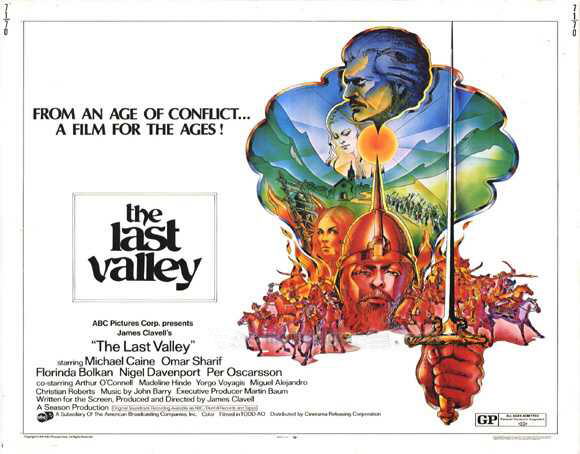
Films of Michael Caine #16: The Last Valley


Cast: Michael Caine (The Captain), Omar Sharif (Vogel), Florinda Bolkan (Erica), Nigel Davenport (Gruber), Per Oscarsson (Father Sebastian), Arthur O’Connell (Hoffman), Madeline Hinde (Inge), Yorgo Voyagis (Pirelli), Miguel Alejandro (Julio), Christian Roberts (Andreas), Brian Blessed (Korski), Ian Hogg (Graf), Michael Gothard (Hansen), George Innes (Vornez).

Crew: James Clavell (director, producer and writer), John Barry (music), John Wilcox (cinematography), John Bloom (editor), Peter Mullins (art direction).

Synopsis: In the early 17th Century Europe is riven by the Thirty Years War between Catholics and Protestants. A wandering teacher, Vogel, stumbles into a prosperous village untouched by the conflict. But a gang of marauding mercenaries also find the hamlet in its secluded valley. Vogel persuades their leader, the Captain, not to pillage the village. Instead the soldiers take up residence for the winter, protecting the valley and its inhabitants from other intruders. The Captain kills any dissenters among his own men to maintain order. Vogel acts as mediator between the villagers and the mercenaries, ensuring his own survival. A soldier called Hansen tries to rape one of the villagers, Inge, but she is rescued by Vogel. Hansen rides out of the valley and brings back two dozen men, determined to seize control of the hidden oasis. But the intruders are ruthlessly despatched by the Captain, with help from his men and the villagers. When spring comes the mercenaries ride out to war again and most die in battle. The Captain makes it back to the valley before dying. Vogel leaves the valley, returning to the world of war and plague beyond the hills…

J B Pick’s novel The Last Valley was first published in 1959. Ten years later James Clavell began adapting the historical epic for the big screen, as producer, director and screenwriter. Clavell was best known for writing blockbuster novels like King Rat, but he had also directed several films, including To Sir, with Love (1966). Caine got top billing for his role ahead of Omar Sharif, and a reported fee of $750,000. Caine studied German dialect records in preparation for playing the Captain.

The bulk of the $6 million movie was made at an Austrian location called Trins in Tirol, near Innsbruck. Filming took place over 14 weeks in 1969, with studio work at Shepperton near London. A battle sequence outside a castle was shot beside a lake near Windsor. The cast included George Innes, who had appeared with Caine in The Italian Job (1969). Interviewed exclusively for this book, Innes said The Last Valley was a massive endeavour: ‘They built an entire village, using local people. It was quite amazing. It was a huge movie, but the problem was they had to cut it down. Clavell said, “They’re going to make me cut this, they just won’t show a film of this length.” That’s what really did it in. The Last Valley is a movie of great scope but it lost a lot in the cutting.’

It lost a little more when presented to the BBFC in November 1970, with cuts required before the film was granted an AA certificate. Reviews for the picture were decidedly mixed. Some critics praised its intelligence and Caine’s performance, while others found the feature too talky and Caine’s accent disconcerting. Despite that, Caine was voted best actor of 1970 by Films and Filming magazine. The film failed at the British box office and did no better in America, rated GP (a forerunner of PG). It was released on VHS in 1986, reclassified as a 15 in Britain. The movie was issued on budget-price DVD in the UK during 2001, and is available on both formats in America.

Caine considers The Last Valley his most unjustly neglected film, as he told GQ magazine in 1997: ‘It went completely nowhere. It’s my elder daughter’s favourite film – not only of mine, but of all time. I thought that was a wonderful film, with an unbelievable score by John Barry.’

Reviews: ‘Elegantly shot, confidently acted, with a superb central performance, this historical spectacular is also modern and intimate.’ – MFB
‘A disappointing 17th Century period melodrama … too literal in historical detail to suggest artfully the allegories intended and, paradoxically, too allegorical to make clear the actual realities of the Thirty Years War.’ – Variety

Verdict: The Last Valley is a film with a lot on its mind. Conflicts of religion, morality and philosophy are all debated in a small scale setting, hinting at the greater war raging beyond the valley. The attention to historical detail and characterisation is compelling, but the film less so. The many subtexts threaten to overwhelm the text, with Clavell’s movie making its points too strongly for the good of the story. You don’t get the chance to make your own discoveries about what is driving the characters - instead they announce their motivations to all and sundry. Despite this, The Last Valley looks sumptuous and features a lush score by John Barry. Caine gives a fine, restrained performance as the Captain, his clipped Germanic accent utterly convincing from start to finish. If only Clavell’s direction had been just as accomplished…

Friday, November 17, 2006

Does that make you Crazy? This might.

The Guardian today kindly points to a blog that collects covers, live versions and mash-up of the Gnarls Barkley hit Crazy. You can hear Elton John singing Your Song over the top of Crazy, or Sign O’ The Times by Prince colliding with Crazy, or this amazing mash-up that features Crazy, Supertramp, the Who and no doubt several other ingredients. [That's enough Crazy-ness - Ed.]

Lord of the Rings vs Sin City

What happens if you take the sountrack from the Sin City trailer and overlay it on footage from Lord of the Rings? Enter White City...

Films of Michael Caine #15: Too Late the Hero

(Alternative titles: Robert Aldrich’s Too Late the Hero; Suicide Run)

Cast: Michael Caine (Tosh), Cliff Robertson (Lt Lawson), Ian Bannen (Thornton), Harry Andrews (Colonel Thompson), Ronald Fraser (Campbell), Denholm Elliott (Captain Hornsby), Lance Percival (Corporal McLean), Percy Herbert (Johnstone), Patrick Jordan (Sergeant Major), Henry Fonda (Captain Nolan), Ken Takakura (Major Yamaguchi).

Crew: Robert Aldrich (director and producer), Robert Aldrich and Lukas Heller (writers), Gerald Fried (music), Joseph Biroc (cinematography), Michael Luciano (editor), James Dowell Vance (art direction).

Synopsis: Japanese-speaking US navy linguist Lieutenant Lawson is sent to join a British operation on an island in the New Hebrides. An American Navy convoy will soon be passing the Japanese-controlled north coast of the island. The mission is to disable the enemy transmitter and have Lawson send a false message to the enemy in Japanese from a British transmitter. The operation is led by Captain Hornsby, who bungling costs the lives of several men on the way. When the British radio transmitter is damaged beyond repair, Hornsby decides to send the false message using the Japanese radio. Lawson refuses to help him, so Hornsby destroys the enemy transmitter. Only half the patrol gets away from the enemy camp, including Lawson and a British medic, Tosh. The survivors discover the Japanese have planes hidden on the island. Unless someone makes it back to base and alerts the Americans, the navy convoy will be decimated. The Japanese commander uses loudspeakers to talk to the patrol. He offers them a chance of survival – but only if all those still alive surrender. Three do but Lawson and Tosh keep going. They have to cross an open plain to get back to base but Japanese soldiers are waiting to gun them down. The pair makes a run for it, but only one of them makes it safely across…

Producer/director Robert Aldrich scored a box office hit with The Dirty Dozen in 1967. He used the money from that to establish his own studio, securing the independence he had long craved. Among the first films Aldrich made for his own studio was Too Late the Hero (1970). The picture was based on a story written by him and Robert Sherman, adapted into a screenplay by Aldrich and Lukas Heller. Caine was cast as surly private Tosh Hearne with American actor Cliff Robertson as the reluctant Lieutenant Sam Lawson.

Location shooting began near Subic Bay in the Philippines during January 1969. Too Late the Hero was the biggest film ever made in the country at that time. The cast and crew spent months filming in a rain forest. Aldrich decided he needed professional athletes rather than stunt men for the climatic sequence, where Hearne and Lawson had to run half a mile across an open plain. The director hired two members of the Detroit Lions American football team and flew them to the Philippines for a fortnight to act as stand-ins for Caine and Robertson.

Caine recalled working with Aldrich during an interview with Venice magazine in 2002. ‘Bob was great. He was a man’s, man’s, man’s, man’s man. He was tough, built like a brick chicken-house, an ex-football player. He made very macho movies and we spent 18 weeks in the jungle in the Philippines with him. It was an amazing movie to make, but we were glad to get out of there, I can tell you. There were these little snakes all over the jungle that looked just like twigs on a tree. And they were deadly. One day before we went in the jungle, this band of little native guys came out, none over five feet tall. These guys could actually smell the twig snakes and would survey the area before we went in! The only thing that worried me is if one of them had a cold.’

Robertson won a best actor Oscar for his role in Charly (1968) while Too Late the Hero was filming in the Philippines, but Aldrich refused to let him attend the awards ceremony. Instead Gregory Peck presented Robertson with the trophy in a special event at the airport when the cast and crew returned to America. Studio work was shot at Aldrich Studios in Los Angeles and the production wrapped by the end of June 1969. As part of his promotional duties for the film, Caine featured in a photo shoot for Playboy magazine. Dressed in character, he posed with half a dozen topless models for the October 1969 issue. Co-star Denholm Elliott appeared, looking somewhat bemused, in one of the pictures.

Originally scheduled for release in December 1969, Too Late the Hero reached US cinemas five months later, rated GP. Critics gave the picture a mediocre response and it failed to repeat the success of The Dirty Dozen (1967). In the UK it was rated X by the BBFC. The film was released on video in 1987 and made its DVD debut in 2001.

Reviews: ‘Too Late the Hero generates a great deal of excitement … but it is strong meat and pretty fly blown at that.’ – The Times
‘The latter half of the film builds up an effective sense of paranoia – reinforced by the irascible acting of Michael Caine and Cliff Robertson…’ – MFB

Verdict: Too Late the Hero is one of the many war-is-hell films that got pumped out in the late 1960s and early 1970s like so many cynical celluloid bullets. Aldrich recycles plot elements from his own output, such as a suicide mission featuring a dozen scoundrels – just as in The Dirty Dozen (1967). Too Late the Hero is a decidedly humourless effort, but the quality of acting helps overcome the stolid script. Caine is reliable as ever, well matched by Robertson. The film’s highlight comes at the climax with the duo running for their lives across the open plain, even if Aldrich telegraphs his finale in the movie’s first 20 minutes. It still remains gripping viewing, waiting to see who survives.

Thursday, November 16, 2006

Being my own worst enemy

There are times when I frustrate the hell out of myself. I spent most of yesterday not doing a job I should have done last weekend. I've got several pressing deadlines on key projects, but I'd already agreed to write a script for Team Fantomen in Sweden. I had hoped to fulfil that committment last Saturday and Sunday, but singularly failed to do so. My editor had asked for new elements to be added to my original plot, all of which were improvement, adding depth and texture to what would have been an exceedingly linear and simplistic tale.

Unfortunately, the creative chunk of my brain decided it needed time to process these changes and find the best way of implementing them. By the end of Sunday I'd managed to write the opening sequence and no more. Yesterday was my golden opportunity to finish the script, before heading to the studio today for the recording block portion of the BBC Radio drama lab I'm participating in. But I was still reworking the plot by lunchtime and only got halfway through the script by 10pm. So I've still that got to finish, which means I'll be back writing the Phantom on Sunday - again.

All the courses I'm doing, all the training and education and craft skills I'm gaining at the moment, are definitely improving my writing. But getting better as a writer means taking more time to write even simple stories. In the past I could rely on my natural storytelling instincts and hack stuff out. Now I find myself taking longer on jobs, because I want them to be the best I can make them. It's a significant change and one I'm only beginning to appreciate. Unfortunately, habit tells me I can write vast screeds of text to order. But that isn't the case so much anymore.

Anyways, I need to finish the Phantom script this week because then I can get paid for it before Christmas next month. Once the Phantom's out the way for the moment, I'll be devoting most of my waking moments between now and Christmas to my next Black Flame novel. Need to get the decks cleared, so I can focus on the book. But first, it's away to Pencaitland and into the studio with my scene, Sweet and Sour Sixteen.

Films of Michael Caine #14: Battle of Britain


Cast: Laurence Olivier (Air Chief Marshal Sir Hugh Dowding), Robert Shaw (Squadron Leader Skipper), Christopher Plummer (Squadron Leader Colin Harvey), Susannah York (Section Officer Maggie Harvey), Michael Caine (Squadron Leader Canfield), Ian McShane (Sergeant Pilot Andy), Kenneth More (Group Captain Baker), Trevor Howard (Air Vice Marshal Keith Park), Patrick Wymark (Air Vice Marshal Trafford Leigh-Mallory), Ralph Richardson (British minister in Switzerland), Curt Jürgens (Baron von Richter), Harry Andrews (Senior Civil Servant).

Crew: Guy Hamilton (director), Harry Saltzman and Benjamin Fisz (producers), James Kennaway and Wilfred Greatorex (writers), Ron Goodwin (music), Freddie Young (cinematography), Bert Bates (editor), Maurice Carter (supervising art direction).

Synopsis: In June 1940 advancing German forces drive the retreating British troops out of France and back across the English Channel. But rather than attempting an immediate invasion, the Germans pause – giving British forces time to regroup. The Royal Air Force (RAF) prepares for the next phase, the Battle of Britain. German planes outnumber those of the RAF by four to one. The Luftwaffe strikes on August 10, attacking vital radar stations and blowing up RAF airfields. The bombing runs continue for weeks, with British planes winning the dogfights in the air but losing a war of attrition. In September Reichmarschall Goering arrives in France to take charge of the campaign. After Berlin is bombed, he directs the Luftwaffe to attack London. This gives an advantage to the RAF and the Luftwaffe suffers heavy losses. The planned invasion is postponed – the Battle of Britain is over…

Battle of Britain sought to recreate one of the most famous aerial conflicts in history, using material from a 1961 book, The Narrow Margin by Derek Wood and Derek Dempster. To ensure authenticity, ten technical directors who had fought in the battle were on set – including several former Luftwaffe pilots. Dozens of planes that survived the Second World War were gathered to recreate the aerial skirmishes. Producer Harry Saltzman boasted he had assembled the eleventh largest air force in the world for his film.

More than a dozen of Britain’s most respected actors were cast in the principal roles, led by Laurence Olivier. Caine had been under contract to Saltzman but the producer had recently released him from the deal as a birthday present. Caine agreed to help fill out the cast for Battle of Britain, spending two weeks with the production in the role of Squadron Leader Canfield. The film was shot on location in Spain, England and France, with studio work at Pinewood near London. Helming the picture was Guy Hamilton, who had just directed Caine on Funeral in Berlin (1966).

Battle of Britain was released in the UK (rated U) during September 1969, with a US release following a month later (rated G). The film was dismissed by the critics and ignored by audiences, reportedly losing $10 million. It was first released on VHS in 1985 rated PG and re-released in 2000. Unfortunately, the tape is only available as a full screen edition, hampering the visual impact of the many aerial sequences. A widescreen DVD edition is due for release during 2003. [Update: A two-disc special edition DVD was released in 2004.]

Reviews: ‘Once they are airborne and covered with goggles and oxygen masks, it is impossible to distinguish between any of the actors.’ – Time magazine

‘On the ground an impressive assemblage of stars appear and disappear. But that is all they are given a chance to do … human interest is kept to an absolute minimum.’ – The Times

Verdict: Battle of Britain means well but drains all drama and suspense from what should be a gripping story. Striving for authenticity, it becomes a crashing bore. The script tries to create poignant character moments but evokes bathos, not pathos. The film’s big selling point is also its great weakness. The aerial conflicts are spectacular at first but take up far too much screen time. Few things date a film like special effects and Battle of Britain has some that would provoke laughter from a modern audience. Caine’s role is strictly a bit part, despite his prominent credit. File this film under noble failure.