Tuesday, May 30, 2006

All Blacks fight with hangbags - literally

Fisticuffs on the rugby pitch is often referred to by TV commentators at 'handbags', indicating the plays are fighting in an effeminate fashion. Judging by the news story quoted below, New Zealand's mighty All Blacks have no problems getting in touch with them softer, gentler personas [italics are my own]:
All Blacks flanker Chris Masoe was fined NZ$3,000 (£1,000) after being found guilty of hitting a man during a scuffle in a Christchurch bar.

The New Zealand Rugby Union fined Masoe after the incident which also involved ex-All Blacks captain Tana Umaga. Masoe reportedly punched a man in the jaw after tripping over his legs at about 7am on Sunday in Christchurch.

Umaga then grabbed a woman's handbag and hit Masoe twice across the head, at which Masoe allegedly burst into tears. The two players were out in the city after their Wellington Hurricanes' side lost Saturday's Super 14 final to the Canterbury Crusaders.

In the studio: BBC Radio vs Big Finish

So, a couple of weeks back I went to the studio BBC Radio Scotland currently uses to record a lot of its drama. Pencaitland is a converted schoolhouse in a lovely little village south of Edinburgh, complete with plush sofas, cream cakes and a studio booth that puts the Starship Enterprise to shame [at least NCC-1701]. The task for the day was recording all the dialogue for three 15-minute plays, plus some pick-ups left over from the previous day. For that the director, cast and crew had nine and a half hours, including lunch.

By way of comparison, Big Finish aims to tape all the dialogue for a 60-minute audio drama in eight hours, including lunch. But Big Finish devotes a lot more time to post-production, particularly the creation of suitable incidental music and sound. The BBC opts for a simpler soundscape and feeds most of its sound effects into the studio on the recording day, either by creating them on the spot or using pre-recorded sounds, effects and music.


At a Big Finish session, the actors are usually kept in separate, soundproof booths. This makes post-production treatment of the voices much easier, something that's particularly important when you're making predominantly science fiction. The voices of robots, computers and aliens are much easier to create in post, using human speech samples recording in the studio. But the BBC groups all the actors together in an open plan studio and records them simultaneously, allowing more interaction between them and freedom of movement.

It was fascinating to see the differences between how the BBC records its radio plays and how Big Finish Productions tapes the dialogue for its audio dramas. I haven't been to BFP's new home in west London, but must say the Pencaitland studios currently used by BBC Radio Scotland certainly trump the old Moat Studios near Stockwell tube station in South London. Of course, BBC Scotland is having a swanky new home built for it in Glasgow and, I imagine, will be recording its radio drama there soon.

Which method works better? to be honest, I think it's horses for courses. The nature of BFP's material tends to require much more in the way of post-production. The exception to this was the recent Cyberman mini-series, where director-writer Nicholas Briggs deliberately aped the BBC Radio method to achieve an urgency of performance [and foreshortening of post-production!] the usual Big Finish process doesn't always get. I'd love to have been in the studio for those sessions...

The irony of my day at Pencaitland was I got to hear all the recording sessions for two of the three plays tapes that day - but no my own. I had to leave after only the first take of the first scene, to rush back to Biggar for the opening of Sweet Charity. [Boy, does that feel like a lifetime ago!] But I did have the chance to hear the read-through and make some comments. Frankly, I had nothing of import to say - it's not my job to tell the director how to do his job [especially when he's vastly more experienced than me!], nor did the actors need my help to find the essence of their characters. Having now heard the finished play, I'm very happy with the results of that sunny day in early May.

My script, Ronald, went through four drafts and numerous tweaks along the way. There's not many lines of dialogue that survived from the start to the finish, and entire characters came and went during the writing process. But, most importantly, the theme of my story, the idea that got me the commission in the first place, did not change or alter. Producer-director David Ian Neville pushed me to find the best way of telling the story, but he never tried to interfere with my play, or turn it into a story that he wanted to tell.

I learned a hell of a lot from the experience over the past five months. Hopefully I'll get another chance to learn even more. For now, all I can do is wait for the finished play to be broadcast. It's only a 15-minute segment, one of five in its slot, one of more than a dozen dramas being broadcast on radio in the next week or so, so it's not going to get reviewed or drawn massive attention, but it's a real milestone for me, a step forwards in my career. For that, I'm more than grateful.

Monday, May 29, 2006

Making a rod for your own back

So I finally figured out a way to plot my putative next novel, what marketing types would call a brand extension. [The Guardian newspaper once called a comic strip I created as the work of an 'opportunistic marketing spiv'. Then again, the New Zealand Herald described me as a 'jaundiced misanthrope' when I was 23, so my card's been marked as a born cynic for quite some time...] The novel is a juggling act of real events, invented characters, historical facts, and the outrageously unlikely. Trying to blend all those seamlessly together in a compelling narrative while hopscotching my way through eight months of the Second World War was challenging, to put it mildly. But I finally cracked the best way of doing it last Thursday. Of course, that necessitated buying two more research books and skimming them for a few last details. Then it was a mad dash to complete a 5000 word proposal, complete with teaser text, dummy back cover copy for the book and a comprehensive cast [including descriptions of their traits, backstory and physical appearance].

A year or two back I was commissioned to write a 95,000 word novel based on the horror film franchise A Nightmare on Elm Street. I wrote the pitch in September 2003 and it went off to New Line for approval. Eight months later Suffer the Children was given the greenlight and Black Flame contracted me to write the novel. I printed out my plot synopsis, confident it would give me a comprehensive roadmap of how I was going to write the story. There's nothing like a detailed plot synopsis to guide you towards that wonderful day when you type THE END. Now, I'd never written a 95,000 word novel before. I'd written a Doctor Who novel called Empire of Death that ran to 99,000 words in its first draft, but I cut nearly a quarter of that verbiage in rewrites and it was only ever intended to be 75-80,000 words long.

So, imagine my surprise and dismay when I discovered my 'comprehensive roadmap' for Suffer the Children was more like the instructions of a confused dyslexic with Tourette's Syndrome after too many beers. The synopsis was all of a thousand words, if that, not nearly enough to help me fill nearly 100,000 words. The first thing to do in that situation is panic - you might as well get it out of the way, as you won't have time to panic later. I started having flashbacks to my last History exam, when I had four facts with which to write three comprehensive essays. Time to flannel.

So I printed out a large sign and stuck it to the wall beside my computer, as a way of reminding myself what I needed to achieve. The sign's still there - nien words, 48 letters and one question mark. It broke down into three simple instructions:-

• DESCRIBE EVERYTHING
• HOW DOES IT SMELL?
• USE ALL FIVE SENSES

I suspect I'm not a natural novelist, despite my capacity to produce a first draft in a few weeks. Certainly I'm no literary novelist. Long, languid passages of purple prose describing the characters' surroundings sit badly with me. I like the race to the finish, the pulse-pounding plot, the thrill of the chase. My tomes are designed to be page-turners, designed to drive the reader onwards, desperate to know what happens next. For Suffer the Children, I had to suppress that instinct and delve deeper into the thoughts and feelings of the characters and their world. I'm particularly bad at remembering to write about how things smell.

A novel is almost the only place you can easily awaken the olefactory senses of your audiences. Film, TV, computer games, radio drama, even plays in the theatre - these all tend to engage the other four senses, but you struggle to make the audience smell what the characters are smelling. In a novel, if you write well enough, you bring alive the odour of the moment in the reader's nostrils. If you want a good example of how to do this, try the fiction of Andrew Cartmel, a scribe who makes you smell every moment of a novel. More famously, pick up Patrick Suskind's Perfume, a novel all about the sense of smell, a book suffused with aromas like no other.

Anyway, I learned my lesson from Suffer the Children and now ensure any synopsis I write has enough juice to fulfil the needs of its intended audience. When it comes to story, you don't want to be caught short with 100 pages of prose, 15 minutes of screen time or one episode of comic strip to go...

Sunday, May 28, 2006

On My Radio (Play)

A nice surprise arrived in the post yesterday - an advance copy of my radio play Ronald, which'll be broadcast by BBC Radio 4 on Wednesday June 7th. It's the third in five linked plays set at a remote spiritual retreat, directed by David Ian Neville. He devised the Island Blue concept and invited five writers to create 15-minute plays to suit the setting. Poet Vicki Feaver leads off the week with Brave New World, followed by Stephen Potts' story Grandmother's Footsteps. Thursday features A Place in the Rain by Jules Horne. She's got a play called Outrageous Avatar being toured round Scotland at the moment by the Traverse Theatre [paste the URL below into your browser to find out more]. Finally, Louise Ironside provides the script for Friday's play, Looking After Billy. Louise is another theatre playwright, but she's also joined the writing stable of Scottish soap River City and had several episodes broadcast.

http://gorgeous-avatar.co.uk/2006/05/gorgeous-avatar-full-tour-dates.html

I feel humbled to have been invited to join such distinguished company, especially as I was a late substitute for whomeveer was meant to be writing the Wednesday Island Blue play. I've now loaded all the plays into iTunes and listened to mine a couple of times. Crawford Logan replies captures the bluff Northern character of Ronald, although he doesn't use the Liverpool accent I'd imagined in my head. Rose McBain is both sympathetic and prim as April, not an easy combination to pull off. Lesley Hart shines as Shonagh and Lucy Patterson doubles up as two characters, Dorothy and Tracy - not easy when they share a scene together.

I've no idea if my script hangs together, having lost all objectivity during the many and various rewrites and tweaks along the way. Certainly it's had a few nips and tucks during editing and post-production to achieve the required length. The script ran to 15 minutes and 56 seconds at the read-through, while the finished version is 13:44, and most of that 44 seconds is intro and outro music. But the edits have been done sympathetically and don't harm the plot. I spent most of my time at the recording finding sequences that could be snipped or topped and tailed for brevity. If all the different scenes I'd written during the drafts had been included to their full length, the play would have been closer to an hour than to quarter of an hour.

The next milestone will be on Tuesday, when the listing for Ronald and all the Island Blue plays appears in the new Radio Times. Come eight on Tuesday morning I'll be stood outside the newsagents, proudly reading and re-reading my name in print. You'd think I'd be used to it after 16 novels and nearly as many Big Finish audio dramas. But this is my first broadcast credit and it means a lot to me. Hopefully, it'll become the first of many, not merely a fluke.

Friday, May 26, 2006

Radio Times online listing for Island Blue: Ronald

WEDNESDAY 07 JUNE
Island Blue
7:45pm - 8:00pm
BBC Radio 4
Five plays set on a remote Scottish island. 3: Ronald, by David Bishop. Retreat leader April finds one of the guests particularly challenging. Why is he there and how can April get him to stop disrupting the other guests? With Crawford Logan, Rose McBain, Lucy Paterson, Lesley Hart.

The Shat sings to Geroge Lucas

What is says on the tin. No, really. Click the headline, you'll see...

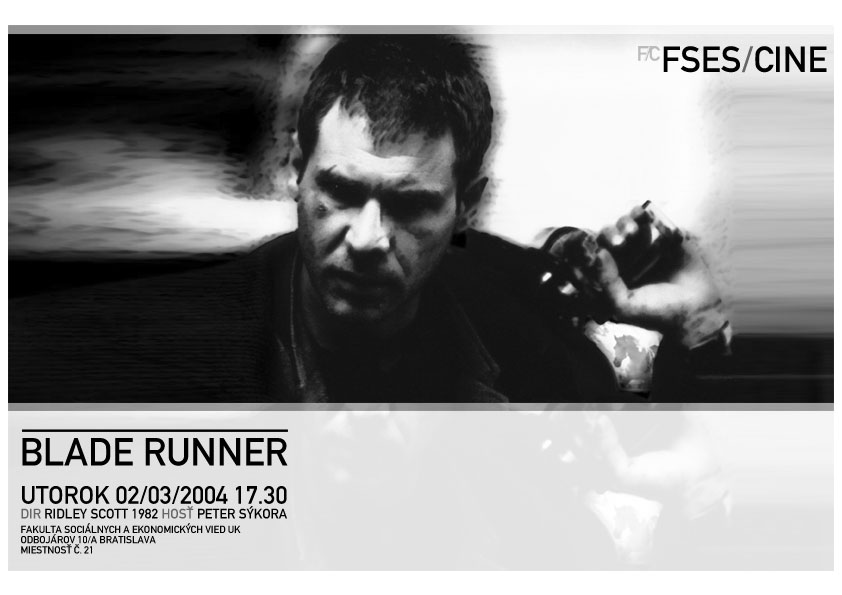
Blade Runner DVD: Final Cut is the deepest?

Variety reports that Blade Runner is getting a series of DVD releases over the coming months [see below]. Apparently Ridley Scott felt rushed when creating the Director's Cut that hit cinemas in the 90s and has been at work producing a definitive version, known as the Final Cut. [Pay attention at the back, there's be a quiz on all of this later.] Anyway, here's the guts of what Variety reported:
The restored "Director's Cut" will debut on homevid in September, and remain on sale for four months only, after which time it will be placed on moratorium. "Blade Runner: Final Cut" will arrive in 2007 for a limited 25th anniversary theatrical run, followed by a special edition DVD with the three previous versions offered as alternate viewing: Besides the original theatrical version and director's cut, the expanded international theatrical cut will be included. The set will also contain additional bonus materials.
So, can you wait until next year for the definitive, all-in-one version? Or will you be shelling out for an interim Director's Cut? At least Warners is being honest enough to tell everyone in advance it's plan, rather than duping people into buying one version before releasing a superior iteration within a year.

The Slowest Band in All the World

I can't believe it - there's a new Scritti Politti album due out in the next few weeks. For anyone who loved music in the mid 1980s, Scritti Politti was synonymous with ecstatic pop and lyrics that required a degree in philosophy [and a weighty dictionary] to decipher. Songs like Wood Beez [Pray Like Aretha Franklin] and Perfect Way were huge hits on both sides of the Atlantic. Scritti main man Green Gartside was collaborating with the likes of Miles Davis and Chaka Khan. But the Scritti story had much humbler beginnings, starting with a post-punk agit-prop collective. Early songs like Skank Bloc Bologna were not your typical pop confections, more impossible tracks to dance with that secured the group a lot of headlines and attention from the redoubtable John Peel.

The first album, Songs to Remember, eventually appeared in 1982 on Rough Trade. The big breakthrough came with Cupid & Psyche '85 on the more mainstream Virgin label, followed by Provision in 1988. It was another 11 years before Green got off his Gartside and released Anomie and Bonhomie, an album besotted with rap and hip-hop. That alienated anyone old enough to remember Cupid & Psyche with fondness, but failed to secure a new audience. [There was also a run of hit singles in the early 90s, including collaborations with the likes of Shabba Ranks, but these are now very hard to find]. After the relative failure of Anomie and Bonhomie in 1999, Scritti Politti slid off the radar again, apparently relegated to being a mid 80s phenom, fodder for VH1 nostalgia weekends.

The comeback started last year with a return to Rough Trade and Early, a compilation of those hard to find singles and EPs from the late 70s and early 80s. Now Green Gartside returns with his first album of new material in ages, called White Bread, Black Beer. Can't say I'm not excited - think I'll drag out all my old Scritti CDs and load them into iTunes today. The band's not exactly prolific: counting the new material, Scritti has released five albums [and a compilation] in 28 years since the group's first single came out in 1978. That's not what you'd call a Calvinist work ethic by any stretch of the imagination. The only outfit to match that elephantine gestation tendency is The Blue Nile, another group that rose to prominence in 1985. They've managed four albums in 21 years - turtles beware.

Amazingly, both Scritti Politti and Blue Nile frontman Paul Buchanan are out on tour this summer. If you enjoy either band, it's probably your last chance to see them before Halley's Comet returns in 2062.

Phew! Studio 60 saved from slot of doom

NBC has blinked first, shifting the new series from West Wing creator Aaron Sorkin to a different night in the autumn 2006 TV schedule. Studio 60 on the Sunset Strip was originally scheduled for Thursday nights on American TV at 9, pitting it against the hugely popular but familiar CSI. Then another network upped the ante and pitched its sudsy medical drama Grey's Anatomy into the same hour, creating the televisual equivalent to a World Cup Group of Death.

Against CSI, Sorkin's new comedy drama could expect to finish a decent second. Up against CSI and Grey's Anatomy, the show faced almost certain doom, with pundits doubting it would still be on air come the crucial sweeps season in November when ratings determine future advertising spend - and survival. So Studio 60 has been shifted to Monday nights at 10, where it'll face CSI's Miami iteration. That's still a strong show but the competition is not nearly so cutthroat as Thursday night. With any luck [and assuming the show's any good], Sorkin's new creation has a chance to being round long enough to generate a DVD boxed set...

Thursday, May 25, 2006

Incoming! More blazin' battle action

After two scintillating days of preparing my accounts for the last tax year [that sign I'm holding up? It's my Irony sign], I spent yesterday watching archive footage from the early months of World War II in the Pacific. That's prep for a proposal I've promised to deliver tomorrow, a putative franchise extension for Fiends of the Eastern Front. I always find it strange trying to mix and match historical fact with pure fiction. Yes, you want to get all the little details accurate - what unit fought in which battles, what sort of weapons they used, what they wore, ate, drank, did. But then you're injecting a supernatural element into that setting and the line between realism and the fantastic gets well and truly smudged. Ultimately, it's all too easy to get bogged down with research, blindng yourself with facts and military trivia.

I figure readers want a gripping story with a driving narrative. They want viewpoint characters with whom they can empathise and, ideally, care about. If readers start caring about your characters, they want to know what happens to those characters next. In a war story, that's all about who lives and who dies, the price of victory and the cost of failure. But you've got to keep it personal, keep it tight and taut. Hell, the first Star Wars film [the first released, that is - let's not talk about the prequels, okay?] is the story of a galactic rebellion, but essentially it's the story of a farmboy trying to figure out what to do with his life. All of us have wondered sometimes what we're doing with our lives, what is our purpose, right?

So that's the question I'm trying to keep at the front of my mind today. What are my characters trying to achieve, what are their goals and what are the obstacles to those goals? Two quotes stayed with me from all the material I watched and read yesterday. The first was a four word credo about fighting in the Pacific: "Survive. Win. Get home." The second was a short poem by an unknown US Marine:
When he gets to Heaven
To Saint Peter he'll tell
Another Marine reporting, sir,
I've served my time in Hell.

Wednesday, May 24, 2006

Why so few TV dramas set in newspapers?

Having enjoyed the first series of Life on Mars via the magic of DVD, the John Sim season of televisual entertainment has been extended by now watching State of Play. This six-parter by Paul Abbott was first broadbast on BBC 1 in 2003, but sadly passed me by at the time. Still, I've heard several students raving about it on my MA Screenwriting course, so decided to give the series a whirl. Bloody hell, it's good, isn't it? Not just gripping, but funny, intelligent and really makes you care about the characters. I've not convinced by John Sim's facial hair [he said, the pot calling the kettle black], but that's the only thing that jays in this TV drama masterpiece.

However, it raises an obvious question: why are so few TV dramas based in the world of newspapers? Cops and docs are the default setting for more TV drama, or variations thereupon. Some sad sod recently counted all the different medical dramas on British television in a week - 14 of them. From the cops side of the coin you also get all the legal dramas, such as New Street Law. You even get cross-polination: nostalgic cop show Heartbeat begat nostalgic medical show The Royal; Casualty and Holby City are getting their own law enforcement spin-off.

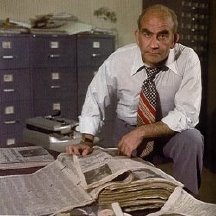
It's probably my background in daily newspaper journalism, but I've always felt there was a good TV drama to be had from the world of scoops and hacks. Lou Grant did this on US TV in the late 70s and early 80s, but there's surprisingly few other examples I can recall. The Standard was a short-lived series set in a Scottish newspaper, broadcast around the same time. Other than that, I'm struggling to think of any other obvious examples.

TV execs want settings and characters that can generate dozens, even hundreds of storylines full of conflict and drama. That's exactly what journalists are looking for, it's the nature of their job. Then there's the back-stabbing, tooth-and-claw competition for a story between hacks; the frustration of being deemed of secondary importance to TV and radio journalists; the rising challenge of online journalism; the long hours, stress and dubious personalities of those who work in papers. Sounds like strong material to me, but maybe I'm biased.

Anyway, can anybody recall other examples of TV dramas set in the newspaper world?

Tuesday, May 23, 2006

According to the BBC, I'm an "Emerging Writer"

Here's the advance publicity blurb from BBC Radio 4 for the quintet of plays that includes my story, Ronald:

Woman's Hour Drama – Island Blue
Monday-Friday 10.45-11.00am BBC Radio 4

Nestled on a remote Scottish island, the Island Blue centre offers a total retreat from the pressures of modern life. Inside an old converted Victorian mansion, there is space to relax, meditate and soak away the aches and pains of stressful living. Outside, the windswept, bracing landscape of one of Scotland's most northwesterly islands is guaranteed to blow away the cobwebs from visitors' souls. The centre is non-denominational but encourages visitors to explore their spirituality and lifestyle.

This week's five plays tell the stories of some of the people who visit and work at the retreat. They are written by emerging writers new to radio and performed by an ensemble of talented actors based in Scotland, including Robert Softley, runner-up in the Norman Beaton Fellowship, in his first major role for radio.

Producer/David Ian Neville

Fiends 3, Rest of the World 0

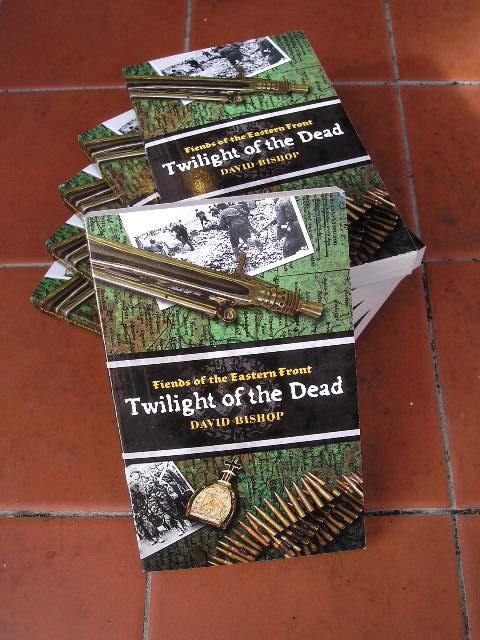
Author's copies of the final book in my Fiends of the Eastern Front trilogy have arrived [see above]. Twilight of the Dead isn't officially published for another couple of months, so the book turning up with an unexpected bonus. Bizarrely, it completes my big publications for 2006 - and we haven't even finished May yet. I've got plenty of comics work coming out over the next few months - Fiends: Stalingrad in the Megazine has another seven episodes, and several issues of The Phantom scripted by me will see print later in the year. But in terms of books and audios, that's me done for 2006.

This year I've got three novels published [Fiends 2 and 3, my third and final Nikolai Dante novel], my Inspector Morse guide book and four Sarah Jane Smith audio dramas. The work on most of these was done last year, but they're all been published this year. So what have I got lined up next? My first radio play is now only two weeks away from being broadcast, but I'll be nagging you all to listen to that when the time comes.

There's THRILL-POWER OVERLOAD, my history of the galaxy's greatest comic, 2000 AD. That's due for publication next February, to coincide with the weekly's 30th anniversary. I'm still searching for some elusive creators - anybody knowing the whereabouts of writers Tom Tully, Alan Hebden or Michael Fleisher can contact and I'll be remarkably grateful. Several very helpful people have put me in touch with creators and editorial staff who have previously eluded me. Among my jobs for June is interviewing these people, along with some update interviews with key players in the recent history of 2000 AD. Deadline for the book: end of August.

I've got full-length proposals for two new novels to write over the next two weeks, both for tomes to be published next year. I've promised to finished scripting Fiends in Stalingrad - and, quite frankly, my bank account could do with the money they'll bring in. A friend gave me a tip about a potential job, so I need to come up with some good ideas for that. [Excuse the vagueness, but I prefer to shout about jobs once they've been contracted - once bitten, twice shy.]

I've have a short story idea selected for a prose anthology based on popular comics characters The Phantom, to be published by America's Moonstone Books. There's no great money involved, but I've been knocking on the door at Moonstone for a while, so this is a chance to show them what I can do.

I've got a couple of feelers out for potential TV writing opportunities, but remain pessimistic about these. When the inevitable rejection arrives, my hopes are more resistant to crushing if I keep them well subdued. If, by some miracle, one of these chances turns into something meaningful, the surprise will be all the more pleasant.

Having had such a great learning experience on my first radio play, I'm eager to take a crack at another. I've got a good idea and some initial interest has been expressed. Now I've got to turn that into a pitch too good to turn down.

Bearing in mind all of these things, what am I doing today? Collating my receipts in anticipation of a trip to the accountant. He's a lovely chap, but I find prepping for my annual tax return about as much fun as a trip to the dentist.

Monday, May 22, 2006

Creative White Space in screenplays

Back in the days when I was a comics editor, the creatives [art editor, assistant editor and me] often enjoyed a wonderfully combative relationship - arguing amongst ourselves sometimes, but more often arguing with those in power. At the company where I was working then, there was a culture shift during the late 80s and early 90s from it being a creative-led publishing entity to a marketing-led company. Marketing was in charge, ergo marketing knew best - or so we got told. But being able to sell a few magazines didn't instaneously qualify our bosses to get involved with editorial decisions, at least as far as I was concerned.

So we used jargon and psuedo-science to keep the powers that be at bay. One of my favourite terms was Creative White Space - CWS for short. [That's not to be confused with BWS, Black With Stars, a shortform coined by pencillers to tell inkers they have to ink in an outer space background that conveniently saved the penciller from having to expend his time pencilling in some stars for the inker to ink around. BWS also stans for comic art maestro Barry Windsor Smith, but that's another matter entirely.]

Sometimes, often in fact, less is more. In magazine design, fewer coverlines give those you do use more impact. Fewer design elements make for a cleaner, more elegant design, IMHO. And it seems the use of CWS is just as important when it comes to writing screenplays, as demonstrated in a new posting by ICM Executive Story Editor Christopher Lockhart. Click the headline to jump direct to the relevant section.

If you're a wannabe screen scribe like me, you ought to be reading Lockhart's blog The Inside Pitch regularly. It's chock full of intelligent, interesting comments and observations. Me, I'd never heard of Vertical Writing until I read this latest posting. Now I might give it a crack, see if it suits my still-fledgling style...

From Brambostel to Viareggio [via Wakayama]

I heart Site Meter. When ennui takes hold [as Joy Division almost sang], I click the little Site Meter logo on this blog. It transports me to a page when I can find a world map showing the locations of the last 100 people to view the blog. Don't fret, I'm not planning to come round and ask you marketing questions, this is just for fun, kids. I suspect the actual location is more about where your ISP's server is based, rather than your own home town. Anyway, here's my top ten place names from the last hundred people to visit this blog...

10. Concord - cool name, cool plane
9. Round Rock - nicely evocative
8. Invercargill - sounds Scottish, actually at the foot of New Zealand
7. Woking - where The Jam came from
6. Brambostel - sounds like a horror writer
5. Old Saybrook - a random collection of words, masquerading as a place name
4. Viareggio - absolutely Italian
3. Burgos - this just makes me hungry
2. Jyvskyl - no vowels required to live here
1. Wakayama - top name of the day, this tickles the funnybone delightfully

More genius: 10 Things I Hate About Commandments

Another classic remix, superimposing the plot of a high school comedy on to The Ten Commandments. Features Samuel L. Jackson [no, really, it does], so expect swearing.

http://www.youtube.com/watch?v=u1kqqMXWEFs

Pure genius: Must Love Jaws

MUST LOVE JAWS is the latest in a bunch of remixed trailers, cut together with new voiceover and music to create an entirely different movie. This one is a love story about two men and a shark. Click the headline or paste this URL into your browser:

http://www.youtube.com/watch?v=92yHyxeju1U

Warning: don't be drinking coffee while you watch thi, otherwise you'll spent hours cleaning your keyboard afterwards...

Friday, May 19, 2006

Are you a child of the 80s?

If so, click the headline above and it should take you to a website chock full of links to 80s pop videos on YouTube. The Milli Vanilli effort is cinge-inducingly bad, but the boys from Freeez singing I.O.U. runs it a close second. Don't get me wrong, I still love the song, but the video? What were they thinking? See also the incredible mullet on the guy from Icehouse singing Crazy - choice, eh?

And there endeth the lesson

For all intents and purposes, the first year of my MA Screenwriting course spluttered to an end yesterday. Full-time students on the programme at Edinburgh's Napier University still have projects to finish for this, the second trimester, and in their final trimester tackle a major piece of work as the culmination of all that's gone before. For the part-timers, trimester three is devoid of, well, anything. No modules to do, no classes to attend, nothing. Go away and come back at the end of September to begin year two. Frankly, it feels a bit like being sent to your room for 19 weeks while the big kids get to stay up late and watch TV. I'm sure that's not the intention, but this tends to reinforce the feeling part-timers are second class citizens on the course, an after-thought in the greater scheme of things. So, how did the academic come to an end for the part-timers? This week we had to deliver the final pieces of assessed work for both our second trimester modules. For Script Development, that meant handing in a revised draft script for a 10-minute film, along with a critique of its development process. I'm pretty happy with my efforts on the script, and the critique's a fair catalogue of the genesis and evolution. I gave myself an advantage over the other part-timers by writing the firt draft of my script back in March, when only the outline was due. I got a P5 for the outline [a high pass but not one of distinction], which was about right. I believe the script has moved on a lot from that loose, initial outline - time will tell if the tutors agree with me...

On the Writing for Interactive module, all the screenwriting students had to give a ten-minute audio-vidual presentation for their interactive entertainment project. There was a wide range of subjects, style and levels of sophistication in the presentation - everything from the crudest Powerpoint efforts to stunning DVD movies with music, voiceover and copious animation. Me, I opted for Keynote, a piece of software in the iWorks 06 suite that's a Mac-friendlier version of Powerpoint. I find it much easier to work with than the Microsoft programme and was fairly pleased with what I produced. My outline document back in March got a D3 [strong distinction], so that's promising, and I don't think I disgraced myself yesterday. Again, time will tell what the tutors think of my efforts.

If anybody out there is contemplating applying for the next intake on the MA Screenwriting course, I'd have to urge caution before advocating the part-time route. Yes, having only half the workload of the full-timers makes it possible to maintain a steady income the rest of the week. Your earnings will suffer [grud knows, mine have], but it's possible to keep your head above water. How some of the full-timers are getting by, I just don't know. So you have to balance the economic benefits of being part-time against the problems mentioned above. The simple fact is the 2005-2006 MA Screenwriting intake suffered from being guinea pigs for Napier's first attempt at running such a course. At least the part-timers can come back for 2006-2007 and see if lessons have been learned.

Best of all, we should be installed in the shining new Screen Academy Scotland facilities, instead of the dismal dump that hosted our first trimester classes. The current terms has seen us bouncing around the building like refugees, always searching for a room in which to meet. You can sense the frustration of the tutors at having to battle through the situation, but that doesn't solve the problem.

Despite all these gripes and moans, I don't regret applying for the course. I've learned a lot, my attitude to writing and collaboration has undergone a sea change, and I've started to establish a network of contacts - both within and beyond Napier. It's been frustrating a lot of time, but it's also been worth persisting. My first broadcast credit is 19 days away and a significant part of that is due to what I've been learning and experiencing at Napier.

Now I've got the next four and a half months to fill until the new academic year begins. First of all, I need to earn some money. I've just done a countback on my finances. In the eight months since I started the MA Screenwriting course, my gross earnings have plunged by 45% in comparison to the previous eight months. Bloody hell! No wonder I've been permanently skint since Christmas - that's when the cashflow started grinding to a halt, but I hadn't adjusted my spending to take that into account. Guess my target for the next 19 weeks is simple: earn more money. Time to get down and dirty, embrace my inner hack for a while. Such is life...

Wednesday, May 17, 2006

It's official: Veronica Mars gets a third season

Let joy be unconfined - new US network the CW [created by the merger of the WB and UPN networks] has confirmed Veronica Mars will be getting a third season. Hurrah! Now I have to get back to my Keynote presentation for college tomorrow...

That is all.